Enjoy Free US Domestic Shipping on Orders Over $400+

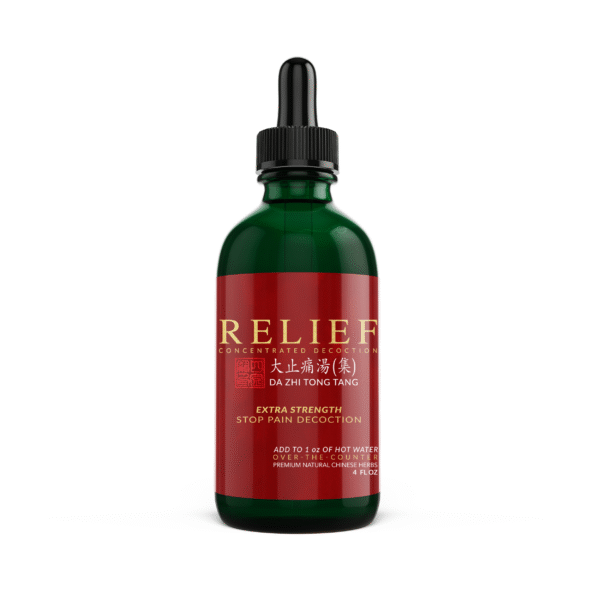
OTC Relief Concentrated Decoction™
Login to view prices
- ACM/CCM/TCM Global Status: Safe & Effective
Painkillers Numb. Relief Works.
Temporary isn’t enough. Relief helps the body correct the problem.
- Use with or without analgesics during transition.
- Designed for clinical protocols: 30, 90, 180 days.
- Trusted by Eastern and Western Physicians
Over-the-Counter · Si Jin Bao Proprietary Formula · 1999
大止痛湯
Extra Strength Stop Pain Decoction™
Where there is flow, no pain can go™
Over a Quarter-Century in Service
The Formula
Built on the Oldest Idea About Pain
通則不痛,不通則痛 — where there is free flow, there is no pain; where there is pain, there is no free flow. Relief™ takes that ancient line literally.
Relief™ is not a numbing agent. Rather than silencing pain receptors, it works to open the blockages that keep blood, oxygen, and energy from moving freely — addressing pain at its source. From an old injury that never quite healed to chronic pain that has been part of life for years, the goal is the same: restore the flow the body has been missing, so it can do what it was made to do.
The Principle
Where There Is Free Flow, There Is No Pain
For two thousand years, Chinese medicine has explained pain the same way: it is what the body produces when Blood and Qi cannot move freely. Injury, strain, and time create blockages in the body’s pathways; circulation slows; and pain announces the obstruction. Open what is blocked, and the pain has nothing left to report.
Relief™ is built to act at every link in that chain at once — moving what has stagnated, easing the inflammation that congestion creates, and restoring circulation so the relief holds.
A Note on Free Flow
The idea is older than any single text. Modern language describes the same territory in its own terms — circulation, microcirculation, inflammation, the movement of blood and oxygen through the body. The words have changed; the instruction has not. Find what is obstructed, and open it.
The Pattern
Blood Stasis & Obstruction · 瘀血阻滯
Relief™ is for pain that traces to blockage and stagnation — pain that lingers, settles into one place, and resists the usual measures. It may have begun with an injury, or built up quietly over years of wear. From acute to chronic, the target does not change: the blockage beneath the pain.
Use Relief™ When You Experience
- Persistent, chronic pain that affects daily life
- Back, neck, joint, or limb discomfort
- Muscle tightness or tension that feels “stuck”
- Head tension, soreness, or pressure
- Strains, sprains, or bruising after activity
How It Works
Six Herbs, One Direction of Force
Jī Xuè Téng and Chì Sháo carry the blood-moving work, breaking up the stagnation that lodges in injured or overworked tissue — while Chì Sháo also cools the heat that congestion generates. Chuān Niú Xī directs that action downward, with particular reach into the lower back, hips, and legs.
Bái Sháo nourishes and softens, relaxing tight tendons and muscles and replenishing the Blood the moving herbs set in motion. Dù Zhòng reinforces the structures that bear load — the lower back, the tendons, and the bones. And Huáng Qí supplies the energy that drives circulation forward and rebuilds tissue, so that flow, once restored, is sustained rather than momentary.
Together these six do not silence the signal of pain. They open the blockage the signal is reporting — and hold the pathway open long enough for the body to do the rest.
Clinical Recognition
When to Reach for It
Gentle yet powerful, Relief™ supports both acute and chronic pain. Because it works by restoring flow rather than blocking the pain signal, it can be taken alongside your usual pain reliever if needed. It is not an analgesic — it is a formula that works with your body to restore natural flow, not just silence symptoms.
- Extra-strength, all-natural support for chronic and everyday pain
- Helps open blockages and restore circulation and comfort
- Supports muscle, joint, and nerve health for natural mobility
- Smooth, great-tasting, and gentle on the stomach
- Alcohol-free and easy to use — just add to hot water and sip warm
通則不痛
The Si Jin Bao Preparation
Relief™ is a smooth, alcohol-free concentrated decoction prepared in small batches using traditional methods — easy to take, gentle on the stomach, and made to restore the flow the body has been missing. Because you are more than your pain — and your body remembers how to live without it.
Materia Medica · 本草
大止痛湯
Relief™
Extra Strength Stop Pain Decoction™
Where there is flow, no pain can go
Relief™ is built on six herbs in a vegetable glycerin base, structured around a single classical principle — where there is free flow, there is no pain. Two herbs move the Blood, one nourishes and softens it, one carries the work downward through the channels, one reinforces the sinew and bone that bear the load, and one supplies the Qi that drives it all. The cards below detail the nature, flavor, channels, and actions of each — drawn from Dr. Polite’s formulation and the classical materia medica — along with how each functions within this specific formula.
01
Herb 01
鷄血藤
Caulis Spatholobi
Millettia · Chicken-Blood Vine Stem
Category
Invigorates Blood & Tonifies Blood
Nature & Flavor
Bitter, sweet · Warm
Channels
Liver · Kidney
Actions
Promotes the movement of Blood; invigorates the channels and relaxes the tendons and muscles; nourishes and replenishes the Qi and Blood of the body. An uncommon herb that invigorates and tonifies at once — it moves stagnant Blood while replenishing the Blood it sets in motion.
Indications
Blood stasis and obstruction of the channels; stiffness and tension of the tendons and muscles; aching, numb limbs where Blood and Qi have lost free flow; Blood deficiency underlying chronic pain.
Classical Reference
Known as “chicken-blood vine” for the deep red sap that wells from its cut stem, Jī Xuè Téng entered the materia medica in the Qing period — prized for moving and building the Blood at once and for freeing the channels of the limbs.
Role in this Formula
The blood-moving and blood-nourishing anchor. It opens the channels while replenishing the Blood that travels through them — so the formula invigorates without depleting.
02
Herb 02
赤芍
Radix Paeoniae Rubra
Red Peony Root
Category
Invigorates Blood; Clears Heat & Cools Blood
Nature & Flavor
Bitter · Slightly cold
Channels
Liver
Actions
Dispels Blood stasis and alleviates pain; clears Heat and cools the Blood; clears Liver fire. Where obstructed Blood has congealed and generated heat, Chì Sháo disperses the stasis and cools the inflamed tissue.
Indications
Fixed, painful Blood stasis with heat signs; swelling and bruising in obstructed areas; pain with a hot, throbbing quality.
Classical Reference
Sháo Yào is recorded among the herbs of the Shén Nóng Běn Cǎo Jīng; the distinction between red peony, which disperses and cools, and white peony, which nourishes and softens, was drawn by later commentators — and this formula uses both.
Role in this Formula
Breaks up the stasis lodged in obstructed tissue and cools the heat congested Blood produces — the dispersing, heat-clearing counterpart to its white-peony partner.
03
Herb 03
白芍
Radix Paeoniae Alba
White Peony Root
Category
Tonifies the Blood
Nature & Flavor
Bitter, sour · Cool
Channels
Liver · Spleen
Actions
Nourishes the Blood; regulates menstruation; calms and curbs Liver Yang and alleviates pain; preserves Yin and adjusts the Ying and Wei. The nourishing, sinew-relaxing face of peony — it softens what the moving herbs disperse and tempers the Liver so movement is smooth rather than gripping.
Indications
Cramping and spasm of the tendons and muscles; pain from Liver disharmony; Blood and Yin deficiency underlying chronic pain.
Classical Reference
The nourishing, sour-astringent peony of the Shén Nóng Běn Cǎo Jīng tradition, classically paired with sweet, warming herbs to relax cramped sinews and to soften the Liver.
Role in this Formula
Softens and nourishes — relaxes the tendons and muscles, tempers the Liver, and replenishes the Blood the invigorating herbs put into motion.
04
Herb 04
川牛膝
Radix Cyathulae
Cyathula Root
Category
Invigorates Blood; Unblocks the Channels
Nature & Flavor
Sweet, slightly bitter · Neutral
Channels
Liver · Kidney
Actions
Invigorates the Blood; expels Wind and drains Dampness — for Wind-Damp painful obstruction, especially of the lower back; invigorates the channels and regulates the flow of Blood through the vasculature. Directs its action downward into the lower body.
Indications
Lower-back, hip, knee, and leg pain; Wind-Damp painful obstruction; chronic, migratory aching of the lower body with Blood stasis.
Classical Reference
Niú Xī is recorded in the Shén Nóng Běn Cǎo Jīng; later tradition distinguished Chuān Niú Xī (Cyathula) from Huái Niú Xī (Achyranthes), recognizing the Sichuan form as the one that excels at invigorating Blood and freeing the channels of the lower body.
Role in this Formula
Directs the formula’s blood-moving action downward and through the channels, with particular reach into the lower back, hips, and legs.
05
Herb 05
杜仲
Cortex Eucommiae
Eucommia Bark
Category
Tonifies the Yang; Strengthens Sinew & Bone
Nature & Flavor
Sweet · Warm
Channels
Liver · Kidney
Actions
Tonifies the Liver and Kidneys and strengthens the tendons, muscles, and bones; aids the smooth flow of Qi and Blood. Reinforces the load-bearing structures through which restored circulation must travel.
Indications
Weakness and aching of the lower back and knees; Liver and Kidney deficiency underlying chronic musculoskeletal pain; instability of the load-bearing joints.
Classical Reference
Listed among the upper-grade herbs of the Shén Nóng Běn Cǎo Jīng, the bark of Dù Zhòng has long been the classical choice for reinforcing sinew and bone and steadying the lower back — the framework on which sustained movement depends.
Role in this Formula
Anchors the work in the load-bearing structures — Liver, Kidney, tendons, and bone — so restored flow has a sound framework to move through.
06
Herb 06
黃耆
Radix Astragali
Astragalus Root
Category
Tonifies the Qi
Nature & Flavor
Sweet · Slightly warm
Channels
Spleen · Lung
Actions
Augments the Wei Qi and Lung Qi; stabilizes the Exterior and tonifies the Blood; promotes urination; discharges pus and generates flesh. Supplies the motive Qi that drives circulation and rebuilds tissue.
Indications
Qi deficiency underlying poor circulation and slow healing; fatigue accompanying chronic pain; sluggish recovery of injured or depleted tissue.
Classical Reference
Recorded in the Shén Nóng Běn Cǎo Jīng, Huáng Qí is the classical chief of the Qi tonics — described as raising and securing the Qi, generating flesh, and closing sores. In a blood-moving formula it provides the motive force, for it is Qi that commands the Blood.
Role in this Formula
Supplies the Qi that propels circulation forward and rebuilds tissue — converting a momentary opening into sustained flow.
07
Herb 07
蔬菜甘油
Glycerinum Vegetabile
Vegetable Glycerin
Nature (性)
Neutral · 平 Píng
Taste (味)
Sweet · 甘 Gān
Category
Excipient · Carrier
Traditional Actions (功效)
Harmonizes and guides the other medicinals to their target tissues. Analogous to synovial fluid — providing a medium for smooth movement and deep delivery throughout the decoction.
Role in this Formula
Excipient function: Dissolves and stabilizes the botanical constituents of the formula, ensuring consistent delivery in decoction form. Mucosal hydration: By attracting and retaining water, glycerin keeps the oral and digestive mucosa moist. Patient tolerance: Its naturally sweet, neutral profile makes the formula palatable for children and adults alike.
Modern Research
International Journal of Pharmaceutics · 2023
Glycerin serves as a co-solvent and humectant in oral liquid formulations, enhancing solubility of poorly water-soluble compounds, stabilizing active ingredients, and improving mucosal hydration.
Journal of Clinical Pharmacology · 2018
Oral glycerol has been widely used as an osmotic agent. Doses of 1–1.5 g/kg are safe and well-tolerated; its mechanism involves osmotic fluid redistribution between compartments.
Clinical Oral Investigations · 2022
Glycerin-containing oral moisturizers significantly improved xerostomia symptoms compared with water-based controls, enhancing mucosal hydration and prolonging moisture retention in the oral cavity.
Clinical Translation
Gān Yóu guides the physical delivery of the formula — ensuring the preparation reaches its target tissues and is tolerated long enough to do its work. A naturally sweet, neutral carrier that makes the decoction palatable for adults and children alike.
08
Herb 08
蒸餾水
Aqua Destillata
Distilled Water
Nature (性)
Neutral · 平 Píng
Taste (味)
Tasteless
Category
Vehicle · Neutral Carrier
Traditional Actions (功效)
Not a classical herb in its own right. Functions as a neutral carrier — a pharmaceutically pure vehicle that allows the active constituents of the classical herbs in the formula to extract, stabilize, and deliver without interference.
Role in this Formula
Biomedical role: A pharmaceutically pure solvent, ensuring consistent extraction and delivery of active compounds without introducing mineral ions, microbial contaminants, or chemical interference. Clinical relevance: Acts as a safe vehicle — analogous to saline in biomedicine — so that every dose of the formula performs identically, from the first bottle to the last.
Modern Research
Pharmacopeial Standard · Herbal Decoction Stability
Distilled water ensures stability, reproducibility, and safety in herbal decoction preparations by eliminating mineral ions and microbial contaminants that would otherwise compromise extraction consistency and shelf life.
Clinical Pharmacology · Oral Solution Vehicles
Distilled water is recognized in clinical pharmacology as the neutral carrier of choice for both intravenous and oral solutions, chosen specifically for its non-reactive profile with active ingredients.
Clinical Translation
Li Shi-zhen devoted an entire section of the Ben Cao Gang Mu (本草綱目) to the classification of waters — recognizing that the water in which a formula is prepared shapes the clinical outcome. SJB honors this principle by using pharmaceutically distilled water as the neutral vehicle for every decoction.
大止痛湯
Six Herbs, One Direction of Force
Two herbs move the Blood; one nourishes and softens it; one carries the work downward through the channels; one reinforces the sinew and bone that bear the load; and one supplies the Qi that drives it forward. No herb here merely masks. Each does a part of a single task — restoring the free flow in whose absence pain arises — in a single concentrated decoction, in service for over a quarter-century.
Dosage & Preparation · 用法用量
How to Prepare & Dose
Si Jin Bao Over-the-Counter Concentrated Decoctions™ are diluted in hot water, steeped briefly, and taken warm. Follow the four steps below, then refer to the age-appropriate dosing grid.
Preparation
The Four Steps
-
Step 01ShakeShake the bottle well before each use.
-
Step 02Add Hot WaterAdd the age-appropriate dosage into 1 oz of hot water, as you would for tea.
-
Step 03SteepCover and steep for 5 minutes, then allow to cool to a warm, drinkable temperature.
-
Step 04DrinkDrink warm, twice daily or as directed by your practitioner.
For best results: take on an empty stomach — approximately 30 minutes before or after food or drink.
Dosage
By Age Group
Newborn
15drops
Twice daily
1 Year
30drops
Twice daily
2–6 Years
40drops
Twice daily
7 Years to Adult
80drops
Twice daily
Treatment Protocols
Suggested Clinical Course
Acute
30 Days
Then Reevaluate
Subacute
90 Days
Then Reevaluate
Chronic
180 Days
Then Reevaluate
External Pairing Suggestion
Pair with Revive™
Practitioner Suggestion
复兴
Fù Xīng · Revive™
SJB Topical Herbaceutical
For practitioners working with stagnation-pattern pain — acute trauma, chronic musculoskeletal presentations, Bi syndrome, or pain that has not responded to conventional management — Relief™ can be paired with Revive™, SJB’s topical herbaceutical built around Frankincense, Myrrh, Chuan Xiong, Chi Shao, Wei Ling Xian, Du Zhong, and Xu Duan. The internal decoction works systemically while the external formula works locally, addressing the pattern from both directions:
- Internal: Moves Blood and Qi systemically, breaks chronic stasis, frees the channels, and rebuilds the Qi-Blood foundation that drives circulation throughout the body
- External: Carries Blood-moving and channel-opening herbs directly into the affected tissue via the menthol-ethanol carrier — fast onset, local invigoration, and immediate relief at the site of pain
Bottle Longevity
11½ days
at standard adult dosage
Research · 研究
大止痛湯
Relief™
Peer-Reviewed Evidence
Six Studies on the Herbs in Relief™
What follows is the peer-reviewed evidence on the six herbs that compose this formula — each selected for a documented role in moving Blood, resolving stasis, quieting inflammation, or restoring circulation.
01
Study 01
鷄血藤
Vine-Stem Phytochemistry & Activity
Molecules · 2019
Design
Constituent isolation & in vitro anti-inflammatory evaluation
Active Compounds
Flavonoids & isoflavones of Spatholobi caulis
Relevance
Direct — blood-activating, stasis-dissolving herb
Background
Spatholobi caulis — the dried vine stem of Spatholobus suberectus, known as Ji Xue Teng — is recorded in the Chinese Pharmacopoeia for its blood-activating and stasis-dissolving action and is used clinically for rheumatic arthralgia and painful obstruction. This study isolated characteristic constituents of the vine stem and evaluated their anti-inflammatory activity.
Findings
Active flavonoid and isoflavone constituents were isolated and shown to possess anti-inflammatory activity, with the possible mechanism examined preliminarily. The work provides a phytochemical basis for the herb’s long-documented use in resolving Blood stasis and easing the inflammatory component of painful, obstructed tissue.
Relevance to Relief™
Ji Xue Teng is the formula’s blood-moving and blood-nourishing anchor. This study supplies modern phytochemical support for the anti-inflammatory dimension of that classical action — the quieting of inflamed, congested tissue as stasis is dispersed.
Citation
Liu X-Y, Zhang Y-B, Yang X-W, et al. Anti-Inflammatory Activity of Some Characteristic Constituents from the Vine Stems of Spatholobus suberectus. Molecules. 2019. DOI: 10.3390/molecules24203750. PMCID: PMC6832230.
02
Study 02
赤芍
Effective-Substance & Mechanism Study
Frontiers in Pharmacology · 2022
Design
Stage-oriented pharmacodynamic study, blood-stasis rat model
Active Compounds
Paeoniflorin, oxypaeoniflorin, benzoylpaeoniflorin
Relevance
Direct — the formula’s core blood-stasis target
Background
Paeoniae Radix Rubra (Chi Shao) is classically used to clear heat, cool the Blood, and dispel Blood stasis. This study set out to identify the effective substances and pharmacodynamic mechanisms behind those actions, separating the herb’s effect on toxic-heat presentations from its effect on Blood stasis itself.
Findings
In the toxic-heat stage, the dominant pharmacodynamic effect was anti-inflammatory; in the Blood-stasis stage, the dominant effect was improvement of hemorheology and coagulation. Specific monoterpene glycosides — including paeoniflorin and oxypaeoniflorin — were identified among the constituents responsible, mapping the herb’s traditional “cool the Blood, dispel stasis” profile onto measurable changes in blood flow and inflammatory activity.
Relevance to Relief™
Chi Shao breaks up the stasis lodged in obstructed tissue and cools the heat congested Blood produces. This study documents exactly that dual action — anti-inflammatory where there is heat, hemorheology-improving where there is stasis — the precise mechanism the formula is built to recruit.
Citation
Elucidation of the Mechanisms and Effective Substances of Paeoniae Radix Rubra Against Toxic Heat and Blood Stasis Syndrome With a Stage-Oriented Strategy. Frontiers in Pharmacology. 2022. PMCID: PMC8931751.
03
Study 03
白芍
Review of Antinociceptive Pharmacology
Peer-Reviewed Review
Design
Review of analgesic / antinociceptive pharmacology
Active Compound
Paeoniflorin (Paeonia lactiflora)
Relevance
Direct — analgesic, tendon-relaxing action
Background
White Peony (Bai Shao) is the nourishing, sinew-relaxing face of peony, classically used to soften the Liver and release the cramping, gripping pain of tendons and muscles. Its principal monoterpene glycoside, paeoniflorin, is among the most-studied analgesic constituents in the Chinese pharmacopeia.
Findings
The analgesic and antinociceptive properties of paeoniflorin are documented across the published pain literature, providing a constituent-level basis for the herb’s traditional use in relieving spasm, cramping, and Liver-related pain.
Relevance to Relief™
Bai Shao softens and nourishes — relaxing the tendons and muscles and tempering the Liver so movement is smooth rather than gripping. Paeoniflorin’s documented analgesic action is the modern correlate of that pain-relieving, sinew-relaxing role.
Citation
Paeoniflorin analgesic properties (review of antinociceptive pharmacology). PMCID: PMC11365469.
04
Study 04
川牛膝
Mechanistic Review — Niuxi in Rheumatoid Arthritis
Frontiers in Pharmacology · 2025
Design
Mechanistic review with clinical RCT evidence
Active Compounds
Chikusetsusaponins & related metabolites
Relevance
Direct — anti-inflammatory joint action
Background
Chuan Niu Xi (Cyathula officinalis) and Huai Niu Xi (Achyranthes bidentata) — collectively “Niuxi” — are widely used for joint disease and rheumatoid arthritis. This review summarized the pharmacological mechanisms and therapeutic potential of their constituents against rheumatoid arthritis.
Findings
Of the metabolites surveyed, a subset showed multiple anti-arthritic activities spanning inflammation, immunoregulation, oxidative stress, angiogenesis, and cartilage and bone protection. In a randomized controlled trial, Niuxi-containing regimens combined with conventional therapy markedly reduced CRP, ESR, TNF-α, IL-6, and matrix metalloproteinase-3 in patients with rheumatoid arthritis — pairing mechanism with measured clinical effect.
Relevance to Relief™
Chuan Niu Xi directs the formula’s blood-moving action downward into the lower back, hips, and legs — the regions where Wind-Damp and Blood-stasis joint pain settle. This study documents the anti-inflammatory, joint-protective mechanism behind that channel-freeing role.
Citation
Effects and molecular mechanisms of Achyranthes bidentata Blume and Cyathula officinalis K.C. Kuan in the treatment of rheumatoid arthritis. Frontiers in Pharmacology. 2025. PMCID: PMC12328314.
05
Study 05
杜仲
Phytochemistry & Human Immune-Cell Assay
2025
Design
HPLC-DAD-MS/MS profiling + in vitro anti-inflammatory assay (human immune cells)
Active Compounds
Lignans, iridoids, phenolic acids (e.g. chlorogenic acid)
Relevance
Direct — anti-inflammatory; sinew & bone support
Background
In Chinese medicine the bark of Eucommia ulmoides (Du Zhong) is used to nourish the Liver and Kidneys and to strengthen the tendons and bones. This study analyzed the phytochemical composition of Eucommiae cortex and evaluated its anti-inflammatory effects in human immune-cell models.
Findings
The dominant bark constituents were characterized and their anti-inflammatory activity demonstrated in human immune cells — giving a contemporary, cell-based reading of the herb’s classical role in reinforcing the load-bearing structures and quieting the inflammation that accompanies chronic musculoskeletal strain.
Relevance to Relief™
Du Zhong anchors the formula in the Liver, Kidney, tendons, and bone — the framework restored flow must travel through. Its documented anti-inflammatory and osteoprotective activity supports both halves of that role: calming inflamed tissue and reinforcing the structure beneath it.
Citation
Eucommiae cortex: Comprehensive Phytochemical Analysis Connected with Its In Vitro Anti-Inflammatory Activity in Human Immune Cells. 2025. PMCID: PMC11944357. See also: osteoprotective scoping review, PMCID: PMC12868233.
06
Study 06
黃耆
Preclinical Systematic Review & Meta-Analysis
Frontiers in Pharmacology · 2018
Design
Preclinical SR & meta-analysis (22 studies, 484 animals)
Active Compound
Astragaloside IV (AS-IV)
Relevance
Direct — improves circulation; anti-inflammatory
Background
Astragaloside IV is a principal saponin of Astragalus membranaceus (Huang Qi). This meta-analysis pooled preclinical evidence on AS-IV in ischemia–reperfusion injury and examined the mechanisms through which it protects tissue under compromised blood supply.
Findings
Across the pooled studies, AS-IV produced significant tissue-protective effects, and its proposed mechanisms were promoting angiogenesis, improving circulation, and acting as an antioxidant, anti-inflammatory, and anti-apoptotic agent. The convergence on circulation and angiogenesis is the modern language for Huang Qi’s classical work: it is the Qi that drives the Blood.
Relevance to Relief™
Huang Qi supplies the motive Qi that propels circulation and rebuilds tissue, converting a momentary opening into sustained flow. AS-IV’s documented angiogenic, circulation-improving action is the constituent-level expression of that role.
Citation
A Preclinical Systematic Review and Meta-Analysis of Astragaloside IV for Myocardial Ischemia/Reperfusion Injury. Frontiers in Pharmacology. 2018. PMCID: PMC6038775.
Mechanism Notes
How the herbs work at a biochemical level.
Jī Xuè Téng
Characteristic flavonoid and isoflavone constituents of Spatholobus suberectus vine stem documented for anti-inflammatory activity — a modern correlate of the herb’s classical blood-activating, stasis-dissolving action (PMC6832230, 2019).
Chì Sháo
Paeoniflorin and related monoterpene glycosides documented to improve hemorheology and coagulation and to exert anti-inflammatory effects in blood-stasis models; the extract shows anticoagulant and antithrombotic activity in acute blood-stasis assays (PMC8931751, 2022; PMC5337344, 2017).
Bái Sháo
Paeoniflorin, the principal monoterpene glycoside of Paeonia lactiflora, documented for analgesic activity across the published pain literature (PMC11365469, 2024).
Chuān Niú Xī
Cyathula officinalis documented for anti-inflammatory action through MAPK and NF-κB pathway modulation, with reduced IL-6 expression in joint-disease models (PMC12328314, 2025).
Dù Zhòng
Eucommiae cortex documented for anti-inflammatory activity in human immune-cell models, and for osteoprotective effects on bone and connective tissue via BMP/SMAD, Wnt/β-catenin, OPG/RANKL, and MAPK/NF-κB signalling (PMC11944357, 2025; PMC12868233, 2025).
Huáng Qí
Astragaloside IV, a principal saponin of Astragalus membranaceus, documented to promote angiogenesis, improve circulation, and exert antioxidant and anti-inflammatory effects (PMC6038775, 2018).
Western Terminology
Western terminology commonly associated with these TCM patterns:
Antispasmodic · Anti-inflammatory · Muscle relaxant · Improves microcirculation · Adjusts the circulatory system · Restores proper blood flow · Removes intense inflammation · Addresses chronic migratory pain
通則不痛
Where there is free flow, there is no pain
No herb in this formula was published under the name Relief™ — it is a proprietary composition. But each of its six members has been examined on its own terms, and the findings converge on a single idea the classics stated long ago: pain follows obstruction. The modern studies name the mechanisms — improved hemorheology, dissolved stasis, quieted inflammation, restored circulation, reinforced sinew and bone. The instruction underneath them has not changed. Open what is closed, and the body remembers the rest.
Related products
-

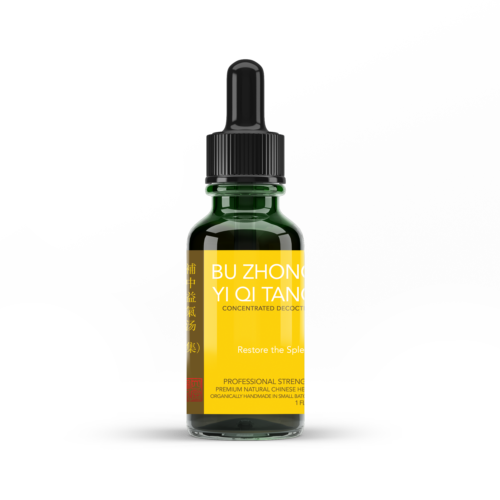
Bu Zhong Yi Qi Tang 補中益氣湯
Login to view prices -
Bao Ji Tang 保济湯
Login to view prices -
Da Cheng Qi Tang 大承氣湯
Login to view prices -
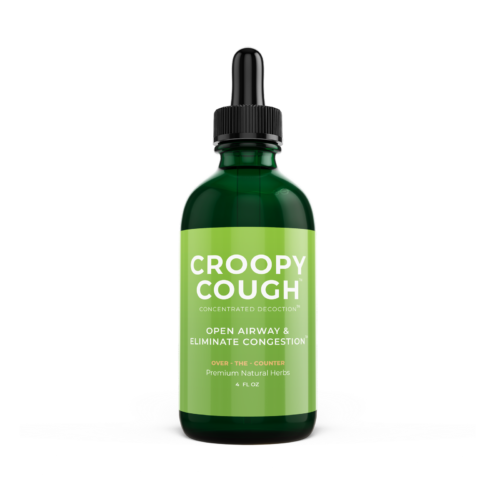
Croopy Cough Concentrated Decoction™
Minimum Order Quantity: 5 Login to view prices


Reviews
There are no reviews yet.