Enjoy Free US Domestic Shipping on Orders Over $400+

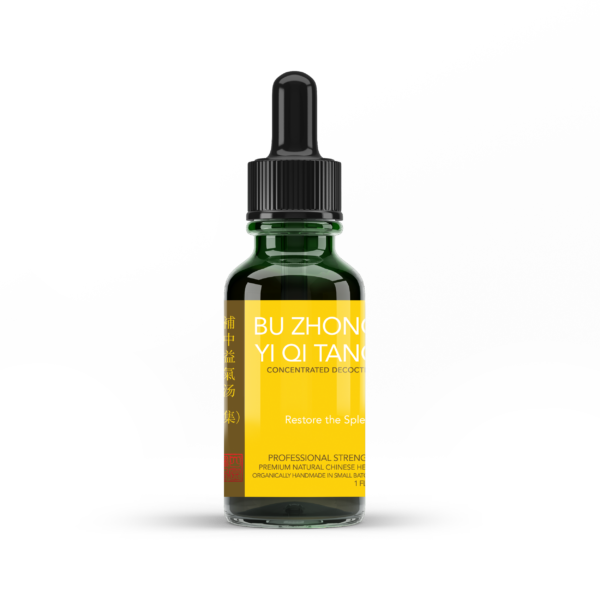
Bu Zhong Yi Qi Tang 補中益氣湯
Login to view prices
- ACM/CCM/TCM Global Status: Safe & Effective
Restore the Spleen™ – 1oz
This is Si Jin Bao’s version of a classical formula developed by famous physician Lǐ Dōng-Yuán in 1247. Dr. Dōng-Yuán originally designed Bu Zhong Yi Qi Tang during an epidemic of deadly febrile & gastrointestinal disease. Today it is widely used for Organ Prolapse, gastrointestinal disorders, and has even become widely used for the aftermath of childbirth or severe illness to rebuild the immune system. It remains one of the most common Chinese herbal formulas in history.
Classical Formula · Jin-Yuan Period · c. 1247
補中益氣湯
Tonify the Middle and Augment the Qi Decoction
Restore the Spleen™
Over Seven Centuries in Continuous Clinical Use
The Formula
Lift the Center, Raise the Qi
Bǔ Zhōng Yì Qì Tāng — the Tonify the Middle and Augment the Qi Decoction — is Si Jin Bao’s rendering of Li Dong-yuan’s landmark formula for a depleted center: it tonifies the Spleen-Stomach Qi and raises the sunken clear yang, lifting what has fallen and rekindling the source of the body’s energy.
The Spleen and Stomach are the root of the acquired Qi — the “middle” that turns food and air into the energy the whole body runs on. When overwork, worry, or long illness wears that center down, the Qi sinks: fatigue and weak limbs, a soft voice and shortness of breath, poor appetite and loose stools, and — when the Qi can no longer hold things in place — organ prolapse and chronic bleeding. Li Dong-yuan’s answer was not to drain the body, but to lift it.
Classical Foundation
From the Master of the Earth School
The formula appears in the Nèi Wài Shāng Biàn Huò Lùn (Clarifying Doubts about Injury from Internal and External Causes), written by Lǐ Dōng-Yuán in 1247. One of the Four Great Masters of the Jin-Yuan era and the founder of the “Earth” (Spleen-Stomach) school, Li taught that many illnesses arise not from an outside attack but from internal injury to the digestive center — and that to restore that center is to restore the whole. Among his insights was the sweet, warming method of clearing heat: that a fever born of Qi deficiency is quenched not by cold, draining herbs but by warmly rebuilding the exhausted middle.
A Note on Raising the Yang
Two light, ascending herbs — Shēng Má and Chái Hú — give the formula its signature action. In small measure they raise the sunken clear yang, lifting a center, and the organs it holds up, that has begun to fall.
The Pattern
Spleen-Qi Deficiency with Sinking Qi · 中氣下陷
The pattern is a Spleen-Stomach Qi too depleted to rise and to hold. It shows as the weariness of insufficiency — fatigue, weak limbs, a soft and halting voice, shortness of breath, spontaneous sweating — and as the consequences of sinking: poor appetite and loose stools, organ prolapse, chronic bleeding, and a low fever that worsens with exertion.
Clinical Indications
- Fatigue, weak limbs, and mental exhaustion
- Shortness of breath; soft, slowed speech; spontaneous sweating
- Poor appetite, loose stools, abdominal distension
- Organ prolapse and chronic bleeding; a low fever that rises with exertion
Classical tongue & pulse: a pale tongue with a thin white coating; a weak, forceless pulse.
How It Works
Eight Herbs: Tonify, and Lift
Huáng Qí takes the lead — powerfully tonifying the Middle Qi, raising the sunken yang, and securing the exterior against spontaneous sweating. Rén Shēn, Bái Zhú, and Zhì Gān Cǎo tonify the Spleen and augment the Qi, rebuilding the center’s strength, while Dāng Guī nourishes the Blood — for Qi and Blood are mutually rooted, and a depleted Qi soon thins the Blood.
Chén Pí regulates the Qi and harmonizes the Stomach, so the rich tonics move freely and do not stagnate. And Shēng Má with Chái Hú — light and ascending — raise the sunken clear yang, lifting the center and the organs it supports. Tonify the middle, and lift what has fallen.
Clinical Recognition
When to Reach for It
Reach for Bǔ Zhōng Yì Qì Tāng for a depleted, sinking center — fatigue and weak limbs, a soft voice and shortness of breath, poor appetite and loose stools, organ prolapse, chronic bleeding from a Qi that cannot hold, or a low fever that rises with exertion, with a pale tongue and a weak pulse.
Western conditions and terminology that are commonly associated with these TCM patterns:
- Uterine prolapse, rectal prolapse, gastroptosis, and hernial pain
- Chronic hepatitis, bronchitis, rhinitis, and laryngitis
- Aphthous ulcers; arrhythmia; hypertension
- Urinary incontinence, leukorrhea, and chyluria
補中
The Si Jin Bao Preparation
Si Jin Bao’s Bǔ Zhōng Yì Qì Tāng is a concentrated decoction prepared in small batches using traditional methods — vegan, alcohol-free, no fillers. A formula meant to rebuild the body’s own source of energy is itself kept clean and simple, so the center meets only the herbs and nothing it must labor to process.
Materia Medica · 本草
補中益氣湯
Bǔ Zhōng Yì Qì Tāng
Tonify the Middle and Augment the Qi Decoction
Restore the Spleen™
A center that has run down announces itself quietly: the voice goes soft, the limbs tire, the appetite fades, and in time things that should be held up begin to fall. Li Dong-yuan built this formula for exactly that. Astragalus and Ginseng do the heavy work of rebuilding the Qi, while two light herbs, Bupleurum and Cimicifuga, lift what has sunk. Below is each herb on its own terms: its nature, the channels it enters, its classical actions, and the part it plays here.
01
Herb 01
黃耆
Radix Astragali
Astragalus Root
CategoryTonify Qi · Raise the Yang
Nature & FlavorSweet; Slightly Warm
ChannelsSpleen · Lung
Actions
Tonifies the Qi and raises the yang; augments the protective (Wèi) Qi and secures the exterior; tonifies the Spleen and Lung.
Indications
Spleen and Lung Qi deficiency; sinking of Qi with prolapse; spontaneous sweating and fatigue.
Classical Reference
Recorded in the Shén Nóng Běn Cǎo Jīng (神農本草經) as a principal herb to tonify the Qi and raise the yang.
Role in this Formula
Leads the formula: powerfully tonifies the Middle Qi, raises the sunken yang, and secures the exterior against spontaneous sweating.
02
Herb 02
白朮
Rhizoma Atractylodis Macrocephalae
White Atractylodes Rhizome
CategoryTonify Qi · Dry Dampness
Nature & FlavorBitter, Sweet; Warm
ChannelsSpleen · Stomach
Actions
Strengthens the Spleen and augments the Qi; dries Dampness; stabilizes the exterior and stops sweating.
Indications
Spleen deficiency with Dampness; poor appetite, loose stool, and fatigue.
Classical Reference
Recorded in the Shén Nóng Běn Cǎo Jīng (神農本草經) as a principal herb to strengthen the Spleen and dry Dampness.
Role in this Formula
Strengthens the Spleen and augments the Qi, rebuilding the center’s strength alongside Rén Shēn.
03
Herb 03
炙甘草
Radix Glycyrrhizae Praeparata
Honey-Prepared Licorice Root
CategoryTonify Qi · Harmonize
Nature & FlavorSweet; Neutral (Warm when honey-prepared)
ChannelsHeart · Lung · Spleen · Stomach
Actions
Tonifies the Spleen and augments the Qi; harmonizes and moderates the other herbs in a formula.
Indications
Spleen qi deficiency; the need to harmonize a formula and temper its parts.
Classical Reference
Recorded in the Shén Nóng Běn Cǎo Jīng (神農本草經); honey-frying deepens its warming, Spleen-tonifying nature.
Role in this Formula
Tonifies the Spleen Qi and harmonizes the whole, binding the tonifying and the lifting into one action.
04
Herb 04
人參
Radix Ginseng
Ginseng Root
CategoryTonify Qi
Nature & FlavorSweet, Slightly Bitter; Slightly Warm
ChannelsSpleen · Lung · Heart
Actions
Powerfully tonifies the Original (Yuán) Qi; tonifies the Spleen and Lung; generates fluids and calms the spirit.
Indications
Severe Qi deficiency and collapse; Spleen and Lung Qi deficiency with fatigue and poor appetite.
Classical Reference
Recorded in the Shén Nóng Běn Cǎo Jīng (神農本草經) as the foremost herb to tonify the Original Qi.
Role in this Formula
Strongly tonifies the Qi, reinforcing the depleted center together with Huáng Qí.
05
Herb 05
陳皮
Citri Reticulatae Pericarpium
Aged Tangerine Peel
CategoryRegulate Qi
Nature & FlavorAcrid, Bitter; Warm
ChannelsSpleen · Lung
Actions
Regulates the Qi and harmonizes the Middle; dries Dampness and transforms Phlegm.
Indications
Qi stagnation of the Spleen and Stomach with distension, poor appetite, and nausea.
Classical Reference
Documented in the classical materia medica as a principal herb to regulate the Qi and harmonize the Middle.
Role in this Formula
Regulates the Qi and harmonizes the Stomach, so the rich tonics move freely and do not stagnate.
06
Herb 06
當歸
Radix Angelicae Sinensis
Chinese Angelica Root
CategoryTonify Blood
Nature & FlavorSweet, Acrid; Warm
ChannelsLiver · Heart · Spleen
Actions
Tonifies and invigorates the Blood; regulates the menses and disperses Blood stasis.
Indications
Blood deficiency with a sallow complexion and dizziness; irregular menstruation.
Classical Reference
Recorded in the Shén Nóng Běn Cǎo Jīng (神農本草經) as a principal herb to tonify and move the Blood.
Role in this Formula
Nourishes the Blood — for Qi and Blood are mutually rooted, and a depleted Qi soon thins the Blood.
07
Herb 07
柴胡
Radix Bupleuri
Bupleurum Root
CategoryRelease the Exterior · Raise the Yang
Nature & FlavorBitter, Acrid; Cool
ChannelsLiver · Gallbladder
Actions
Disperses and releases the exterior and reduces fever; spreads constrained Liver Qi; raises the clear yang.
Indications
Alternating chills and fever; Liver Qi constraint; sinking of the yang qi.
Classical Reference
Recorded in the Shén Nóng Běn Cǎo Jīng (神農本草經), long used to raise the yang and free constrained Qi.
Role in this Formula
With Shēng Má, raises the sunken clear yang, lifting a center that has begun to fall.
08
Herb 08
升麻
Rhizoma Cimicifugae
Bugbane (Cimicifuga) Rhizome
CategoryRelease the Exterior · Raise the Yang
Nature & FlavorAcrid, Sweet; Slightly Cold
ChannelsLung · Spleen · Stomach · Large Intestine
Actions
Raises the yang and lifts the sunken; releases the exterior and vents rashes; clears Heat and resolves toxicity.
Indications
Sinking of Qi with prolapse; early-stage rashes; Heat-toxin of the mouth, gums, and throat.
Classical Reference
Recorded in the Shén Nóng Běn Cǎo Jīng (神農本草經) as a principal herb to raise the yang and lift the sunken.
Role in this Formula
Raises the sunken clear yang, lifting prolapse — the signature ascending herb, paired with Chái Hú.
09
Herb 09
蔬菜甘油
Glycerinum Vegetabile
Vegetable Glycerin
Nature (性)
Neutral · 平 Píng
Taste (味)
Sweet · 甘 Gān
Category
Excipient · Carrier
Traditional Actions (功效)
Harmonizes and guides the other medicinals to their target tissues. Analogous to synovial fluid — providing a medium for smooth movement and deep delivery throughout the decoction.
Role in this Formula
Excipient function: Dissolves and stabilizes the botanical constituents of the formula, ensuring consistent delivery in decoction form. Mucosal hydration: By attracting and retaining water, glycerin keeps the oral and digestive mucosa moist. Patient tolerance: Its naturally sweet, neutral profile makes the formula palatable for children and adults alike.
Modern Research
International Journal of Pharmaceutics · 2023
Glycerin serves as a co-solvent and humectant in oral liquid formulations, enhancing solubility of poorly water-soluble compounds, stabilizing active ingredients, and improving mucosal hydration.
Journal of Clinical Pharmacology · 2018
Oral glycerol has been widely used as an osmotic agent. Doses of 1–1.5 g/kg are safe and well-tolerated; its mechanism involves osmotic fluid redistribution between compartments.
Clinical Oral Investigations · 2022
Glycerin-containing oral moisturizers significantly improved xerostomia symptoms compared with water-based controls, enhancing mucosal hydration and prolonging moisture retention in the oral cavity.
Clinical Translation
Gān Yóu guides the physical delivery of the formula — ensuring the preparation reaches its target tissues and is tolerated long enough to do its work. A naturally sweet, neutral carrier that makes the decoction palatable for adults and children alike.
10
Herb 10
蒸餾水
Aqua Destillata
Distilled Water
Nature (性)
Neutral · 平 Píng
Taste (味)
Tasteless
Category
Vehicle · Neutral Carrier
Traditional Actions (功效)
Not a classical herb in its own right. Functions as a neutral carrier — a pharmaceutically pure vehicle that allows the active constituents of the classical herbs in the formula to extract, stabilize, and deliver without interference.
Role in this Formula
Biomedical role: A pharmaceutically pure solvent, ensuring consistent extraction and delivery of active compounds without introducing mineral ions, microbial contaminants, or chemical interference. Clinical relevance: Acts as a safe vehicle — analogous to saline in biomedicine — so that every dose of the formula performs identically, from the first bottle to the last.
Modern Research
Pharmacopeial Standard · Herbal Decoction Stability
Distilled water ensures stability, reproducibility, and safety in herbal decoction preparations by eliminating mineral ions and microbial contaminants that would otherwise compromise extraction consistency and shelf life.
Clinical Pharmacology · Oral Solution Vehicles
Distilled water is recognized in clinical pharmacology as the neutral carrier of choice for both intravenous and oral solutions, chosen specifically for its non-reactive profile with active ingredients.
Clinical Translation
Li Shi-zhen devoted an entire section of the Ben Cao Gang Mu (本草綱目) to the classification of waters — recognizing that the water in which a formula is prepared shapes the clinical outcome. SJB honors this principle by using pharmaceutically distilled water as the neutral vehicle for every decoction.
補中
Tonify, and Lift
Four herbs rebuild the Spleen Qi, one nourishes the Blood that the Qi is rooted in, one keeps the tonic moving, and two light, ascending herbs raise what has sunk. Seven centuries ago, Li Dong-yuan gathered them into a single instruction that remains among the most-used in all of Chinese medicine: rebuild the center, and lift what has fallen.
Dosage & Preparation · 用法用量
How to Prepare & Dose
Si Jin Bao Concentrated Decoctions™ are activated in hot water, steeped briefly, and taken warm. Follow the four steps below, then refer to the age-appropriate dosing grid.
Preparation
The Four Steps
-
Step 01ShakeShake the bottle well before each use.
-
Step 02Add Hot WaterAdd the age-appropriate dosage into 1 oz of hot water, as you would for tea.
-
Step 03SteepCover and steep for 5 minutes, then allow to cool to a warm, drinkable temperature.
-
Step 04DrinkDrink warm, twice daily or as directed by your practitioner.
For best results: take on an empty stomach — approximately 30 minutes before or after food or drink.
Dosage
By Age Group
Newborn
3drops
Twice daily
1 Year
7drops
Twice daily
2–6 Years
10drops
Twice daily
7 Years to Adult
20drops
Twice daily
Treatment Protocols
Suggested Clinical Course
Acute
10 Days
Then Reevaluate
Subacute
30 Days
Then Reevaluate
Chronic
90 Days
Then Reevaluate
Bottle Longevity
11½ days
at standard adult dosage
Bu Zhong Yi Qi Tang CD Product Guide by SJB Team
Research · 研究
補中益氣湯
Bǔ Zhōng Yì Qì Tāng
The Modern Evidence
Ten Studies on Bu Zhong Yi Qi Tang and Its Herbs
This is one of the most-studied formulas in the whole tradition, known in Japan as Hochuekkito and carried into the modern clinic on two lines Li Dong-yuan would recognize: fatigue where the Qi has run down, and weakened resistance where the center can no longer defend the body. Two studies take up the formula whole; the rest look at its eight herbs in turn. What follows is that record.
01
Study 01
補中益氣湯
Meta-Analysis + Network Pharmacology
Front. Pharmacol. · 2024
Design
Meta-analysis of RCTs + network pharmacology
Intervention
Formula vs conventional treatment
Relevance
Direct — the Qi-deficiency fatigue pattern
Background
Qi-deficiency fatigue is the formula’s classic target. This study pooled randomized trials of the Buzhong Yiqi prescription for cancer-related fatigue and explored its core herbs by network pharmacology.
Findings
The pooled evidence indicated the prescription improved cancer-related fatigue versus conventional treatment; the network analysis pointed to Astragalus, Ginseng, and the other core herbs as the active contributors.
Relevance to Bu Zhong Yi Qi Tang
The formula, in its eight-herb composition, improved a fatigue syndrome — the depleted Qi it was built to rebuild.
Citation
Systematic review of Buzhong Yiqi method in alleviating cancer-related fatigue: a meta-analysis and exploratory network pharmacology approach. Front. Pharmacol. 2024;15:1451773. PMID: 39564104.
02
Study 02
補中益氣湯
Pharmacological & Clinical Review
Trad. Kampo Med. · 2021
Design
Review of 64 pharmacological studies + RCTs
Intervention
Whole formula (Hochuekkito / TJ-41)
Relevance
Direct — Qi-tonifying, immune-rebuilding
Background
Known in Japan as Hochuekkito, the formula is used to rebuild strength after illness. This review compiled its pharmacology and clinical trials against infection.
Findings
Across the literature the formula showed immuno-stimulatory effects against infection, immuno-modulative effects in allergy and inflammation, and ameliorating effects on exhaustion and frailty.
Relevance to Bu Zhong Yi Qi Tang
Gives a modern reading of the formula’s core action — rebuilding a depleted center, and with it the body’s defenses.
Citation
Basic pharmacological mechanisms and clinical evidence of the efficacy of hochuekkito against infectious diseases and its potential for use against COVID-19. Trad. Kampo Med. 2021;8(1):3-21. PMCID: PMC7753421.
03
Study 03
黃耆
Comprehensive Review
Front. Pharmacol. · 2020
Design
Comprehensive review
Active Compounds
Astragalus polysaccharide (APS), flavonoids, saponins
Relevance
Direct — tonifies Qi, immune
Background
Huáng Qí invigorates the Spleen and replenishes the Qi. This review compiled the pharmacology of its principal polysaccharide.
Findings
Astragalus polysaccharide is documented for immune regulation — enhancing immune-organ indices, promoting immune-cell proliferation, and stimulating cytokine release — alongside antioxidant and anti-aging activity.
Relevance to Bu Zhong Yi Qi Tang
Huáng Qí leads the formula’s Qi tonification and secures the exterior; this review documents the immune pharmacology behind that role.
Citation
A Review of the Pharmacological Action of Astragalus Polysaccharide. Front. Pharmacol. 2020;11:349. PMCID: PMC7105737.
04
Study 04
白朮
Comprehensive Review
Front. Pharmacol. · 2021
Design
Comprehensive review
Active Compounds
Sesquiterpenoids (atractylenolides), polysaccharides
Relevance
Direct — strengthens Spleen, dries Dampness
Background
Bái Zhú strengthens the Spleen and dries Dampness. This review compiled the ethnopharmacology and pharmacology of Baizhu.
Findings
Baizhu is documented for diuretic, anti-inflammatory, and gastrointestinal-regulating activity, with atractylenolides and polysaccharides as its key constituents.
Relevance to Bu Zhong Yi Qi Tang
Bái Zhú rebuilds the Spleen alongside Rén Shēn; this review documents the Spleen-supporting pharmacology behind that role.
Citation
A Review of the Ethnopharmacology, Phytochemistry, Pharmacology, Application, Quality Control, Processing, Toxicology, and Pharmacokinetics of the Dried Rhizome of Atractylodes macrocephala. Front. Pharmacol. 2021;12:727154. PMCID: PMC8595830.
05
Study 05
甘草
Phytochemical / Pharmacological Review
Phytother. Res. · 2018
Design
Phytochemical / pharmacological review
Active Compounds
Triterpenes (glycyrrhizin, glycyrrhetinic acid)
Relevance
Supporting — tonifies Spleen qi, harmonizes
Background
Gān Cǎo — here honey-fried — tonifies the Spleen qi and harmonizes a formula. This review summarized the chemistry and pharmacology of licorice.
Findings
Glycyrrhizin and glycyrrhetinic acid are documented for anti-inflammatory and antiallergic activity, with broad use across formulas to moderate and harmonize.
Relevance to Bu Zhong Yi Qi Tang
Zhì Gān Cǎo tonifies the Spleen Qi and harmonizes the whole; the review documents the anti-inflammatory pharmacology behind that role.
Citation
Liquorice (Glycyrrhiza glabra): A phytochemical and pharmacological review. Phytother. Res. 2018. PMCID: PMC7167772.
06
Study 06
人參
Systematic Review (RCTs + Animal)
Front. Pharmacol. · 2020
Design
Systematic review (8 RCTs + 30 animal studies)
Active Compounds
Ginsenosides (saponins), ginseng polysaccharides
Relevance
Direct — benefits Qi, anti-fatigue
Background
Rén Shēn has been used to benefit the Qi for millennia. This review assessed ginseng and its compounds for fatigue across clinical and animal studies.
Findings
The meta-analysis found ginseng superior to placebo on fatigue scales, heart-rate recovery, and clinical effect, with adverse events comparable to placebo.
Relevance to Bu Zhong Yi Qi Tang
Rén Shēn strongly tonifies the Qi alongside Huáng Qí; this review documents its anti-fatigue evidence.
Citation
Clinical and Preclinical Systematic Review of Panax ginseng C. A. Mey and Its Compounds for Fatigue. Front. Pharmacol. 2020;11:1031. PMCID: PMC7379339.
07
Study 07
陳皮
Systematic Review
J. Ethnopharmacol. · 2024
Design
Systematic review
Active Compounds
Flavonoids (hesperidin, nobiletin)
Relevance
Direct — regulates Qi, harmonizes the Middle
Background
Chén Pí is among the most-used qi-regulating herbs. This review summarized its chemistry and pharmacology.
Findings
Its principal flavonoids, hesperidin and nobiletin, are documented for anti-inflammatory, antioxidant, and digestive-regulating activity.
Relevance to Bu Zhong Yi Qi Tang
Chén Pí regulates the Qi so the rich tonics do not stagnate; this review documents the pharmacology behind that role.
Citation
Phytochemistry, pharmacological properties and pharmacokinetics of Citri Reticulatae Pericarpium: A systematic review. J. Ethnopharmacol. 2024. PMID: 38942157.
08
Study 08
當歸
Experimental Study (Mice)
Front. Pharmacol. · 2024
Design
Structural + in vivo blood-deficiency study (mice)
Active Compounds
Polysaccharides (APS), ferulic acid, ligustilide
Relevance
Direct — nourishes the Blood
Background
Dāng Guī is the classic blood tonic. This study tested Angelica polysaccharides in a blood-deficiency mouse model.
Findings
The polysaccharides promoted hematopoiesis — raising erythropoietin, G-CSF, and interleukin-3 and lowering TNF-α — enriching the blood by regulating cytokines.
Relevance to Bu Zhong Yi Qi Tang
Dāng Guī nourishes the Blood the Qi is rooted in; this study documents the hematopoietic pharmacology behind that role.
Citation
Structural analysis and blood-enriching effects comparison based on biological potency of Angelica sinensis polysaccharides. Front. Pharmacol. 2024;15:1405342. PMCID: PMC11215113.
09
Study 09
柴胡
Systematic Review
Pharm. Biol. · 2017
Design
Systematic review
Active Compounds
Saikosaponins (a, c, d, b₂)
Relevance
Direct — raises the yang
Background
Chái Hú is used to relieve the exterior, clear heat, regulate Liver-qi, and lift the yang-qi. This review compiled its saikosaponins and their activities.
Findings
Radix Bupleuri and its saikosaponins are documented for anti-inflammatory, immunoregulatory, and antiviral activity, acting largely through the NF-κB and MAPK pathways.
Relevance to Bu Zhong Yi Qi Tang
Chái Hú, with Shēng Má, raises the sunken clear yang; this review documents the pharmacology behind that ascending role.
Citation
A systematic review of the active saikosaponins and extracts isolated from Radix Bupleuri and their applications. Pharm. Biol. 2017. PMCID: PMC6130612.
10
Study 10
升麻
Comprehensive Review
Chin. Med. · 2024
Design
Comprehensive review
Active Compounds
Triterpenoid saponins (cycloartanes), phenylpropanoids
Relevance
Direct — raises the yang, lifts prolapse
Background
Shēng Má is used to raise the yang and lift the sunken, including for prolapse of the anus and uterus. This review summarized the chemistry and pharmacology of Cimicifugae Rhizoma.
Findings
The herb is documented for anti-inflammatory, antiviral, antioxidant, and neuroprotective activity, with triterpenoid saponins and phenylpropanoids among its constituents.
Relevance to Bu Zhong Yi Qi Tang
Shēng Má raises the sunken clear yang, lifting prolapse — its signature role, documented here.
Citation
Traditional uses, phytochemistry, pharmacology, quality control and clinical studies of Cimicifugae Rhizoma: a comprehensive review. Chin. Med. 2024. PMID: 38715120.
Mechanism Notes
How the formula’s herbs work at a biochemical level.
Huáng Qí
Astragalus polysaccharide (APS), flavonoids, and saponins documented for immune regulation, antioxidant, and anti-aging activity (PMC7105737, 2020).
Bái Zhú
Atractylenolides (sesquiterpenoids) and polysaccharides documented for diuretic, anti-inflammatory, and gastrointestinal-regulating activity (PMC8595830, 2021).
Zhì Gān Cǎo
Glycyrrhizin and glycyrrhetinic acid documented for anti-inflammatory and antiallergic activity, harmonizing the formula (PMC7167772, 2018).
Rén Shēn
Ginsenosides (saponins) and polysaccharides documented for anti-fatigue, antioxidant, and immune activity (PMC7379339, 2020).
Chén Pí
Flavonoids (hesperidin, nobiletin) documented for anti-inflammatory, antioxidant, and digestive-regulating activity (PMID 38942157, 2024).
Dāng Guī
Polysaccharides, ferulic acid, and ligustilide documented for hematopoietic and blood-enriching activity (PMC11215113, 2024).
Chái Hú
Saikosaponins documented for anti-inflammatory, immunoregulatory, and antiviral activity (PMC6130612, 2017).
Shēng Má
Triterpenoid saponins and phenylpropanoids documented for anti-inflammatory, antiviral, and neuroprotective activity (PMID 38715120, 2024).
Western Terminology
Western conditions and terminology commonly associated with these TCM patterns:
Chronic Hepatitis · Arrhythmia · Hypertension · Chronic Bronchitis · Chronic Rhinitis · Aphthous Ulcers · Chronic Laryngitis · Uterine Prolapse · Rectal Prolapse · Gastroptosis · Hernial Pain · Urinary Incontinence · Leukorrhea · Chyluria
補中
Rebuild, and Rise
Studied as a whole, the formula has been read into the modern clinic along the lines Li Dong-yuan drew: fatigue where the Qi is depleted, and immune function and frailty where the center can no longer defend the body. Beneath it, each of the eight herbs has been examined on its own — Astragalus and Ginseng tonifying, Angelica enriching the Blood, Bupleurum and Cimicifuga raising the yang. Seven centuries on, the mechanisms now have names for the single instruction the formula has always carried: rebuild the center, and lift what has fallen.
Related products
-

Chai Hu Shu Gan Tang 柴胡舒肝湯
Login to view prices -
Ban Xia Xie Xin Tang 半夏瀉心湯
Login to view prices -
Custom Concentrated Decoction™
Login to view prices -
Bao He Tang (保和湯)
Login to view prices

Reviews
There are no reviews yet.