Enjoy Free US Domestic Shipping on Orders Over $400+

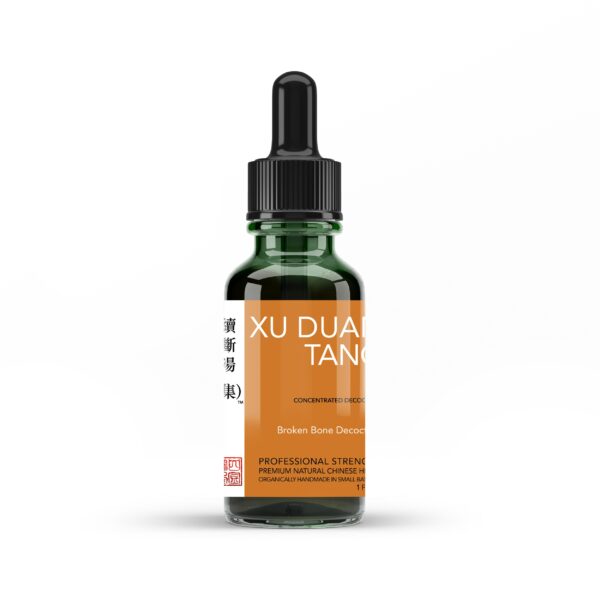
Xu Duan Tang 續斷湯
Login to view prices
- ACM/CCM/TCM Global Status: Safe & Effective
Broken Bone Decoction – 1oz
Xu Duan Tang Concentrated Decoction™ is a proprietary blend of herbs designed to unblock the channels and connect sinews and bones.
Concentrated Decoction · 續斷湯
續斷湯
Xù Duàn Tāng · Broken Bone Decoction™
Reconnect What Is Broken
Source Date · 1999 · 27+ Years in Service
Origin
An Internal Formula Built for the Healing of Bone, Sinew, and Connective Tissue
Xu Duan Tang™ is a Si Jin Bao proprietary concentrated decoction formulated in 1999 and named for its principal herb — Xù Duàn (續斷), literally “to reconnect what has been severed.” The herb’s classical reputation in Chinese medicine is unmatched for fractures, torn ligaments, dislocations, and the broader category of injuries where bone, sinew, and connective tissue need to knit back together. Built around this herb and reinforced with the classical trauma pair of Frankincense and Myrrh, two thousand years of orthopedic Chinese medicine sits in a single bottle.
The formula is taken internally. Where topical preparations like Trauma Paste™ and Revive™ work from the outside in — reaching the injured tissue through the skin — Xu Duan Tang™ works from the inside out. It tonifies the Liver and Kidneys (the classical anatomical home of bone and sinew), invigorates Blood to clear stagnation at the injury site, generates new flesh and tissue, and reconnects the architecture of the body where trauma, surgery, age, or chronic overuse has compromised it.
This is the formula clinicians reach for when an injury requires constitutional support — not just symptom relief. Used alone for internal trauma work, or paired with topical Trauma Paste™ for high-velocity injuries and acute trauma, or with Revive™ for chronic joint and tendon presentations. The internal work and the topical work amplify each other; the protocol depends on the case.
Pattern It Treats
Bone-and-Sinew Injury with Blood Stasis and Liver-Kidney Deficiency
The TCM pattern Xu Duan Tang™ addresses spans the full orthopedic spectrum: traumatic injury with Blood stasis in the acute phase, incomplete healing with Liver-Kidney deficiency in the subacute phase, and chronic Bi syndrome with sinew-and-bone weakness in the constitutional phase. The same formula meets all three because the underlying architecture — bone, sinew, and the Liver-Kidney axis that nourishes them — needs the same support at every phase of healing.
In Chinese medicine, the Kidneys govern the bones and the Liver governs the sinews (the tendons, ligaments, fascia, and connective tissue). When these organ systems are deficient, injuries heal slowly or incompletely; tissue weakens with age; old injuries reactivate as chronic pain. When Blood stasis is present from trauma, the local circulation that healing requires cannot establish itself. Xu Duan Tang™ addresses both layers in one formula.
Clinical Indications
- Acute traumatic injury — sprains, strains, contusions, falls, sports injuries
- Fractures — supporting bone remodeling and union, particularly in slow-healing patients
- Tendon and ligament injuries — partial tears, post-rupture rehabilitation, sustained overuse
- Post-surgical orthopedic recovery (joint replacement, fracture fixation, ligament reconstruction)
- Dislocations and joint instability — supporting the soft tissue that holds joints in position
- Chronic joint stiffness, sore lower back, sore knees, weakness in the legs
- Bi syndrome — arthralgia with cramping, spasm, and stiffness
- Abnormal uterine bleeding from Liver-Kidney deficiency (classical indication)
- Menorrhagia and menorrhalgia where blood stasis contributes
- Localized swelling, abscesses, and unresolved soft-tissue inflammation
How the Formula Works
Reconnection, Circulation, and Constitutional Support
Xu Duan Tang™ works through three integrated layers that together address the full course of orthopedic and trauma healing.
The reconnection layer — Xù Duàn (Dipsacus Root) — is the namesake and architectural core of the formula. Classical Chinese medicine identifies it as the foremost herb for fractures, torn sinews, and any injury where the structural integrity of bone or connective tissue has been compromised. It tonifies the Liver and Kidneys (the organ systems responsible for sinew and bone) and provides the constitutional foundation from which physical reconnection happens. Huáng Qí (Astragalus Root) reinforces this layer by tonifying the Spleen and Lung Qi that generates Blood, promotes flesh growth, and supports the tissue regeneration phase of healing.
The Blood-moving layer — Mò Yào (Myrrh) and Rǔ Xiāng (Frankincense) — is the classical Chinese medicine trauma pair, prescribed together since the Tang dynasty for injuries of any kind. Together they invigorate Blood, remove Blood stasis, alleviate pain, and reduce localized swelling. Dà Huáng (Rhubarb Root) reinforces this layer with a downward-draining action that clears stasis through the bowel — particularly important in acute trauma where blood and inflammatory byproducts can accumulate without a clear exit route. Bái Sháo (White Peony Root) nourishes Blood, softens the Liver, and releases the muscle spasms and cramping that almost always accompany orthopedic injury.
The guide layer — Bīng Piàn (Borneol) — is used in classical micro-doses as an aromatic guide herb. Its volatile compounds open the channels and direct the actions of the other herbs to the site of injury. Without Bing Pian, the formula’s tonifying and Blood-moving work would disperse generally through the body; with it, the formula concentrates where the patient needs it most.
The result is a single internal formula that addresses reconnection, circulation, and constitutional support — calibrated for the full arc of orthopedic healing from acute injury through chronic remodeling.
When to Reach for It
Clinical Recognition
Reach for Xu Duan Tang™ whenever an injury or chronic orthopedic pattern requires internal support — not just topical pain relief. The formula is appropriate from the moment of injury (acute trauma protocol) through the subacute consolidation phase and into chronic constitutional rehabilitation.
Western terminology commonly associated with these TCM patterns:
- Anti-inflammatory · Analgesic · Anti-spasmodic
- Bone-healing support · Connective-tissue regeneration
- Anti-edematous · Hemostatic / blood-stasis-resolving
- Adaptogenic for orthopedic recovery
- Anti-arthritic · Joint-stabilizing · Anti-fibrotic
Practitioner applications across disciplines:
- TCM and acupuncture clinics: the internal pillar of any orthopedic or trauma protocol; pairs with cupping, gua sha, tui na, and topical preparations
- Chiropractic practice: supports adjustment work by stabilizing the connective tissue that holds adjustments in place; appropriate for patients with chronic joint instability or recent acute injury
- Sports medicine: acute injury protocol (10 days), return-to-play consolidation (30 days), pre-season constitutional preparation (90 days)
- Orthopedic surgery and post-operative recovery: internal support for bone union, ligament reconstruction healing, and joint replacement recovery
- Integrative pain practice: chronic Bi syndrome, arthralgia, fibromyalgia presentations with blood stasis and Liver-Kidney deficiency components
- Geriatric practice: sore lower back, sore knees, weakness in the legs — the constitutional Liver-Kidney decline that accompanies aging
Pairing strategy: Xu Duan Tang™ is often most effective when paired with a topical Si Jin Bao formula. For acute high-velocity trauma (fractures, sports injuries, falls), pair with Trauma Paste™ topically. For chronic joint, tendon, and muscle presentations, pair with Revive™ topically. The internal work tonifies and reconnects from within; the topical work moves Blood and reduces inflammation at the injury site. The protocol depends on the case.
續斷
Reconnect What Is Broken
The name of the formula is the work of the formula. Xù Duàn — “to continue the broken” — describes both the herb and what the body does when given the right support. Twenty-seven years in continuous clinical use across TCM, chiropractic, sports medicine, and orthopedic practice. The same seven-herb architecture that has helped bones knit, sinews reconnect, and patients return to function — from acute trauma through constitutional rebuilding.
Materia Medica · 本草
續斷湯
Xù Duàn Tāng
Xu Duan Tang™ · Broken Bone Decoction™
Reconnect What Is Broken
Xu Duan Tang™ is built on seven classical Chinese herbs in a vegetable glycerin base, structured around the strategy of reconnecting bone and sinew, invigorating Blood, and tonifying the Liver-Kidney axis that nourishes the structural body. What follows is the materia medica drawn from the Shen Nong Ben Cao Jing, Li Shizhen’s Ben Cao Gang Mu; with attention to each herb’s role in this specific orthopedic and trauma formula.
01
Herb 01
續斷
Radix Dipsaci
Dipsacus Root · Teasel Root
Category
Tonifying Herbs — Yang Tonics that Strengthen Sinews & Bones
Nature & Flavor
Bitter, acrid, sweet · Slightly warm
Channels
Liver · Kidney
Actions
Tonifies the Liver and Kidneys, strengthens sinews and bones, promotes the movement of Blood, alleviates pain, generates flesh, and reconnects what has been severed. Xu Duan is the foremost classical herb for fractures, torn ligaments, dislocations, and any injury where structural integrity has been compromised. The name itself — “to continue the broken” — is the herb’s clinical reputation in three characters.
Indications
Fractures — supporting bone union and remodeling. Torn ligaments and tendons. Dislocations and joint instability. Chronic sore lower back and weak knees from Liver-Kidney deficiency. Threatened miscarriage from Kidney deficiency. Abnormal uterine bleeding from Liver-Kidney deficiency. Post-traumatic Bi syndrome with weakness in the legs.
Classical Reference
Listed in the Shen Nong Ben Cao Jing (神農本草經) as an upper-grade herb. The name Xù Duàn appears in the classical literature describing its specific clinical action: “continues what has been severed, knits what has been broken.” Li Shizhen’s Ben Cao Gang Mu emphasizes its preeminent role in fracture healing, noting that no other herb in the materia medica equals it for the reconnection of bone and sinew.
Role in this Formula
Xu Duan is the namesake and architectural core of Xu Duan Tang™. The entire formula is built around amplifying its reconnection action. Without Xu Duan, the other herbs would still invigorate Blood and clear stasis — but the structural reconnection work that defines the formula’s orthopedic identity would be absent.
02
Herb 02
黃耆
Radix Astragali
Astragalus Root
Category
Tonifying Herbs — Qi Tonics
Nature & Flavor
Sweet · Slightly warm
Channels
Spleen · Lung
Actions
Tonifies Qi and Blood, raises the Yang of the Spleen and Stomach, generates flesh, promotes tissue regeneration, expels pus, supports wound healing. Huang Qi is the foundational Qi tonic in the Chinese materia medica and has a documented dual action: tonifying the body’s Qi while specifically promoting the generation of new flesh at sites of injury, surgery, or chronic ulceration.
Indications
General Qi deficiency with fatigue and poor recovery. Slow-healing wounds and post-surgical recovery. Chronic ulcers and non-healing sores. Qi and Blood deficiency following trauma. Weak immunity with susceptibility to infection during recovery periods. Spontaneous sweating from Wei Qi deficiency. Post-partum recovery.
Classical Reference
Listed in the Shen Nong Ben Cao Jing as an upper-grade herb. The classical name Huáng Qí — “yellow leader” — reflects both the herb’s color and its preeminent role among Qi tonics. Modern pharmacological research has identified astragaloside IV and astragalus polysaccharides as key active compounds with documented angiogenic, immunomodulatory, and wound-healing actions.
Role in this Formula
In Xu Duan Tang™, Huang Qi provides the Qi-and-Blood foundation that supports the tissue regeneration phase of healing. While Xu Duan reconnects the structural architecture, Huang Qi generates the new flesh that fills the gap — particularly important in fractures with bone loss, ligament reconstruction, and post-surgical recovery where new tissue must be built.
03
Herb 03
没藥
Myrrha
Myrrh
Category
Herbs that Invigorate Blood & Remove Blood Stasis
Nature & Flavor
Bitter · Neutral · Aromatic
Channels
Heart · Liver · Spleen
Actions
Invigorates Blood, dispels Blood stasis, alleviates pain, reduces swelling, generates flesh, promotes the healing of sores. Mo Yao is one of the foremost Blood-moving herbs in the materia medica, with a particular affinity for the resolution of localized stasis from trauma, surgery, and chronic inflammatory accumulation.
Indications
Traumatic injury with Blood stasis — bruising, hematoma, swelling. Chronic pain from Blood stasis. Dysmenorrhea with stasis. Localized swellings and abscesses. Non-healing sores and ulcerations. Joint pain from Blood stasis in the channels. Post-traumatic stiffness.
Classical Reference
Recorded in classical Chinese pharmacopeia from the Tang dynasty forward. Mo Yao and Ru Xiang together — the “Mo Yao Ru Xiang pair” — have been the foundational Blood-moving trauma combination in Chinese medicine for over a thousand years, prescribed in countless classical formulas for injury, surgery, and chronic pain from stasis. Sun Simiao’s seventh-century writings reference the pair as standard for trauma work.
Role in this Formula
Mo Yao pairs with Ru Xiang as the classical trauma duo embedded within Xu Duan Tang™. Together they invigorate the local circulation that healing requires, clear the Blood stasis that accumulates at injury sites, and reduce the localized swelling that impedes recovery. Without this pair, the reconnection work of Xu Duan would proceed against a backdrop of stagnant blood and unresolved inflammation.
04
Herb 04
乳香
Olibanum · Resina Boswelliae
Frankincense
Category
Herbs that Invigorate Blood & Remove Blood Stasis
Nature & Flavor
Acrid, bitter · Warm · Aromatic
Channels
Heart · Liver · Spleen
Actions
Invigorates Blood and Qi, relaxes the sinews, alleviates pain, reduces swelling, generates flesh, promotes healing. Ru Xiang is paired with Mo Yao in nearly every classical trauma formula. Where Mo Yao emphasizes Blood movement, Ru Xiang emphasizes Qi movement and the relaxation of the sinews — making the pair complementary rather than redundant.
Indications
Traumatic injury with Qi-and-Blood stasis. Stiffness and tension in the sinews following injury. Joint pain with restricted range of motion. Chronic Bi syndrome with sinew contraction. Spasm and cramping accompanying orthopedic injury. Localized swelling. Slow-healing wounds. Sores and abscesses.
Classical Reference
Listed in the Ming Yi Bie Lu (名醫別錄, c. 500 CE) and elaborated extensively in Tang and Song dynasty pharmacopeia. Modern pharmacological research has identified boswellic acids as the principal active compounds — documented for 5-lipoxygenase inhibition, anti-inflammatory action, and the resolution of chronic inflammatory processes affecting connective tissue.
Role in this Formula
Ru Xiang completes the classical Mo Yao Ru Xiang trauma pair in Xu Duan Tang™. Its specific action on the sinews — relaxing the tension and contraction that accompanies orthopedic injury — addresses the spasm component that nearly every patient with musculoskeletal trauma experiences. Without it, the formula would clear stasis but leave the patient with persistent muscle guarding around the injury.
05
Herb 05
大黃
Radix et Rhizoma Rhei
Rhubarb Root
Category
Downward-Draining Herbs · Purgatives
Nature & Flavor
Bitter · Cold
Channels
Spleen · Stomach · Large Intestine · Liver · Heart
Actions
Drains downward, clears Heat, invigorates Blood, removes Blood stasis, clears toxic Heat from accumulation. Da Huang has a dual identity in the Chinese materia medica: best known as a purgative, but in trauma formulas it is used for its Blood-invigorating and stasis-clearing actions. The downward-draining direction is the key — it provides an exit route for the Blood stasis and inflammatory byproducts that accumulate at injury sites.
Indications
Acute traumatic injury with significant Blood stasis. Severe contusions and hematoma. Constipation accompanying trauma or post-surgical immobility. Inflammatory accumulation. Toxic Heat patterns with localized infection. Amenorrhea or delayed menstruation from Blood stasis.
Classical Reference
Listed in the Shen Nong Ben Cao Jing. Zhang Zhongjing used Da Huang extensively in trauma formulas in the Jin Gui Yao Lue (金匱要略), where it appears in Tao He Cheng Qi Tang — a foundational Blood-stasis-resolving formula whose architecture has influenced trauma medicine for two thousand years. The classical use of Da Huang in trauma is one of the oldest documented applications in the entire materia medica.
Role in this Formula
In Xu Duan Tang™, Da Huang provides the downward-draining exit route for the Blood stasis and inflammatory accumulation that the formula clears. In acute trauma, this matters enormously: without an exit route, the cleared stasis has nowhere to go and can manifest as bowel sluggishness, deepening inflammation, or stagnation reformation. Da Huang’s drainage action makes the Blood-moving work sustainable.
06
Herb 06
白芍
Radix Paeoniae Alba
White Peony Root
Category
Tonifying Herbs — Blood Tonics
Nature & Flavor
Bitter, sour · Slightly cold
Channels
Liver · Spleen
Actions
Nourishes Blood, softens the Liver, alleviates pain, releases spasms and cramping in the sinews, preserves Yin. Bai Shao is the foremost herb in the Chinese materia medica for the relief of muscle cramping and sinew spasm, with classical applications in everything from menstrual cramping to skeletal muscle spasm to smooth muscle hypertonicity.
Indications
Muscle cramping and spasm of any cause. Tendon and ligament tightness following injury. Abdominal pain with Liver-Spleen disharmony. Menstrual cramping. Calf cramps. Spasm secondary to orthopedic injury. Hyperactive Liver Yang with headache and irritability. Excessive sweating from Yin deficiency.
Classical Reference
Listed in the Shen Nong Ben Cao Jing. Zhang Zhongjing’s Sháo Yào Gān Cǎo Tāng (芍藥甘草湯) — the two-herb formula of White Peony and Licorice — remains the foundational Chinese medicine prescription for skeletal muscle cramping more than 1,800 years after its first publication. Modern pharmacological research has identified paeoniflorin as the principal active compound with documented antinociceptive, anti-inflammatory, and antispasmodic actions.
Role in this Formula
Bai Shao addresses the muscle spasm, sinew tightness, and cramping that nearly always accompany orthopedic injury and chronic Bi syndrome. While Ru Xiang relaxes the sinews aromatically, Bai Shao nourishes the underlying Blood deficit that contributes to spasm and cramping — addressing the issue both at the symptom level and at the constitutional level. The pairing of Bai Shao with the rest of the formula makes Xu Duan Tang™ effective for chronic-pain patients in addition to acute trauma.
07
Herb 07
冰片
Borneolum · Borneol Camphor
Borneol
Category
Aromatic Herbs that Open the Orifices
Nature & Flavor
Acrid, bitter · Slightly cold · Strongly aromatic
Channels
Heart · Spleen · Lung
Actions
Opens the orifices, restores consciousness, clears Heat, alleviates pain, generates flesh, and guides other herbs to their site of action. Bing Pian is one of the classical Chinese guide herbs — herbs whose principal function is to direct the actions of other herbs in a formula to specific tissues or sites. Its strong aromatic volatile compounds penetrate quickly through the channels and concentrate the formula’s effects.
Indications
Used principally as a guide herb in micro-dosed amounts within formulas. Classical indications include localized inflammation, ulceration with closed orifices, and any condition where formula actives need rapid penetration to a specific site. Topical applications include sores, swelling, and pain in well-localized presentations.
Classical Reference
Recorded in classical Chinese pharmacopeia from the Tang dynasty forward. Bensky & Gamble’s Chinese Herbal Medicine: Materia Medica specifies the appropriate internal dosing range for Bing Pian as a guide herb used in classical formulas. The dose used in Xu Duan Tang™ falls below even that conservative range — a deliberate clinical decision by Dr. Polite to use Bing Pian purely as a directional guide for the other herbs without any meaningful systemic action.
Role in this Formula
Bing Pian’s micro-dose role in Xu Duan Tang™ is purely directional. Its aromatic volatile compounds open the channels and concentrate the actions of the tonifying, Blood-moving, and reconnecting herbs at the site of injury rather than diffusely throughout the body. Without Bing Pian, the formula’s effect would disperse generally; with it, the patient feels the formula working at the specific tissue that needs it most. The dose is small enough that no concerning pharmacology is introduced — only the classical guide-herb action that has made Bing Pian indispensable to Chinese trauma medicine for over a thousand years.
P1
Preparation Ingredient
蔬菜甘油
Glycerinum Vegetabile
Vegetable Glycerin
Purpose
Carrier & Sweetener
Source
Plant-derived, food-grade
Properties
Sweet · Neutral · Naturally palatable
Function in Preparation
Why Glycerin, Not Alcohol
Xu Duan Tang™ is alcohol-free by design. Vegetable glycerin serves as the carrier and natural sweetener — producing a good-tasting, well-tolerated profile that supports compliance across the full 10/30/90-day protocol. The glycerin extracts and stabilizes a meaningful range of the herbal actives while remaining safe for patients who cannot or should not consume ethanol — including those on pain medication, post-surgical patients, athletes, and patients in long-term recovery protocols.
P2
Preparation Ingredient
蒸馏水
Aqua Destillata
Distilled Water
Purpose
Extraction Medium
Source
Purified, pharmaceutical-grade
Properties
Neutral · Free of contaminants
Function in Preparation
Extraction & Concentration
Distilled water serves as the primary extraction medium for the water-soluble actives in the seven classical herbs. The concentrated decoction is then stabilized in vegetable glycerin for shelf-stable delivery. The pharmaceutical-grade water ensures the formula’s therapeutic action comes from the herbs alone, with no contaminants or mineral interference.
續斷
Seven Herbs, One Architecture
Each herb in Xu Duan Tang™ contributes to the formula’s reconnection architecture: Xù Duàn rebuilds the bone-and-sinew structure that injury has compromised; Huáng Qí generates the new flesh that fills the gap; Mò Yào and Rǔ Xiāng — the classical trauma pair — move Blood and Qi, clear stasis, and release sinew tension; Dà Huáng provides the downward exit route that makes the Blood-moving sustainable; Bái Sháo resolves the spasm and cramping that injury produces; and Bīng Piàn, in classical micro-dose, guides every other herb to the site that needs them. The result is a complete internal trauma and orthopedic formula calibrated for the full arc of healing.
Dosage & Preparation · 用法用量
How to Prepare & Dose
Si Jin Bao Concentrated Decoctions™ are activated in hot water, steeped briefly, and taken warm. Follow the four steps below, then refer to the age-appropriate dosing grid.
Preparation
The Four Steps
-
Step 01ShakeShake the bottle well before each use.
-
Step 02Add Hot WaterAdd the age-appropriate dosage into 1 oz of hot water, as you would for tea.
-
Step 03SteepCover and steep for 5 minutes, then allow to cool to a warm, drinkable temperature.
-
Step 04DrinkDrink warm, twice daily or as directed by your practitioner.
For best results: take on an empty stomach — approximately 30 minutes before or after food or drink.
Dosage
By Age Group
Newborn
3drops
Twice daily
1 Year
7drops
Twice daily
2–6 Years
10drops
Twice daily
7 Years to Adult
20drops
Twice daily
Treatment Protocols
Suggested Clinical Course
Acute
10 Days
Then Reevaluate
Subacute
30 Days
Then Reevaluate
Chronic
90 Days
Then Reevaluate
Bottle Longevity
11½ days
at standard adult dosage
Research · 研究
續斷湯
Xù Duàn Tāng
Peer-Reviewed Evidence
Six Studies on the Herbs in Xu Duan Tang™
What follows is peer-reviewed research on the principal active herbs in Xu Duan Tang™ — with focus on the namesake reconnection herb (Xù Duàn), the constitutional anchor (Huáng Qí), the classical trauma pair (Mò Yào and Rǔ Xiāng), the muscle-spasm and stasis-clearing layer (Bái Sháo and Dà Huáng). These studies are provided for practitioner reference.
01
Study 01
續斷
Comprehensive Phytochemistry & Pharmacology Review
Plants (Basel) · 2023
Design
Comprehensive review of Dipsacus and Scabiosa genera
Active Compounds
Iridoid glycosides, asperosaponins (triterpenoid saponins), phenolic acids
Relevance
Direct — Xu Duan is the namesake and architectural core of the formula
Background
Dipsacus asperoides (Xu Duan, Chinese teasel root) has been used in Chinese medicine for over two thousand years for fractures, ligament injuries, sinew-and-bone weakness, and threatened miscarriage from Liver-Kidney deficiency. The 2023 review synthesized the modern phytochemistry of the Dipsacus and Scabiosa genera, cataloguing the active constituent classes that account for the herb’s documented orthopedic and bone-healing applications.
Findings
The review identified iridoid glycosides, triterpenoid saponins (asperosaponins), and phenolic acids as the principal active classes. These compounds were documented to support osteoblast activity, modulate bone-resorption signaling pathways, and exert anti-inflammatory effects on connective tissue — the cellular mechanisms underlying Xu Duan’s classical “reconnects what has been severed” action. Additional documented activities include neuroprotective, antioxidant, and immunomodulatory effects relevant to post-traumatic recovery.
Relevance to Xu Duan Tang™
Xu Duan is the namesake and architectural core of the formula. The entire prescription is built around amplifying its reconnection action. This review provides modern phytochemical and mechanism-level evidence supporting the herb’s preeminent classical role in fracture healing, ligament repair, and orthopedic recovery.
Citation
Comprehensive review of the genera Dipsacus and Scabiosa — phytochemistry, ethnopharmacology, and pharmacological mechanisms. Plants (Basel). 2023. PMCID: PMC10180103.
02
Study 02
黃耆
Pharmacological & Mechanism Study
Molecular Medicine Reports · 2017
Design
Mechanism study — angiogenesis and fibroblast proliferation
Active Compounds
Astragalus polysaccharide (APS), astragaloside IV
Relevance
Tissue regeneration and “generates flesh” classical action
Background
Huang Qi (Astragalus membranaceus) is the foundational Qi tonic in the Chinese materia medica and has a documented classical dual action: tonifying the body’s Qi while specifically promoting the generation of new flesh at sites of injury, surgery, or chronic ulceration. Modern research has focused on identifying the molecular mechanisms underlying this clinically observed wound-healing effect.
Findings
Astragalus polysaccharide (APS) was documented to accelerate wound healing through three integrated mechanisms: stimulation of angiogenesis (new blood vessel formation at the wound site), promotion of fibroblast proliferation (the cellular substrate for new connective tissue), and acceleration of tissue regeneration. Astragaloside IV demonstrated additional anti-inflammatory and immunomodulatory effects supporting the wound-healing environment. The combination of mechanisms maps directly onto the herb’s classical “generates flesh, expels pus, supports wound healing” action.
Relevance to Xu Duan Tang™
In Xu Duan Tang™, Huang Qi provides the Qi-and-Blood foundation that supports tissue regeneration during orthopedic recovery. While Xu Duan reconnects the structural architecture, Huang Qi generates the new flesh that fills the gap — particularly important in fractures with bone loss, ligament reconstruction, and post-surgical recovery where new tissue must be built.
Citation
Astragalus polysaccharide promotes wound healing through angiogenesis and fibroblast proliferation. Molecular Medicine Reports. 2017. PMCID: PMC5436241.
03
Study 03
乳香 没藥
MAPK Signaling & Adjuvant-Induced Arthritis Study
Scientific Reports · 2015
Design
In vivo adjuvant-induced arthritis study with metabolomic profiling
Active Compounds
Boswellic acids (Ru Xiang), furanosesquiterpenoids (Mo Yao)
Relevance
Direct — documents the classical Mo Yao Ru Xiang trauma pair
Background
The Mo Yao Ru Xiang pair — Myrrh (Commiphora myrrha) and Frankincense (Boswellia carterii) — has been the foundational Blood-moving trauma combination in Chinese medicine for over a thousand years, prescribed in countless classical formulas for injury, surgery, and chronic pain from Blood stasis. This 2015 study evaluated the pair’s mechanism of action in adjuvant-induced arthritis, with attention to whether the classical synergy could be documented at the molecular level.
Findings
The combination of Frankincense and Myrrh produced significant reduction in paw swelling and inflammatory cytokine levels in the arthritis model. Mechanism studies identified suppression of the MAPK signaling pathway and modulation of arachidonic-acid metabolism as the principal molecular targets. The combined extract produced greater effect than either herb administered alone — the synergistic interaction that TCM practitioners have observed clinically since the Tang dynasty now documented at the cellular level.
Relevance to Xu Duan Tang™
Mo Yao and Ru Xiang together form the Blood-moving and pain-relieving core of Xu Duan Tang™. This study provides modern mechanism-level evidence supporting the pair’s classical use in trauma, orthopedic injury, and chronic pain from stasis — with particular relevance to arthritis, post-traumatic stiffness, and the inflammatory component of acute injury.
Citation
Frankincense and myrrh suppress inflammation via regulation of the metabolic profiling and the MAPK signaling pathway. Scientific Reports. 2015. PMCID: PMC4556964.
04
Study 04
白芍 没藥
Osteoarthritis Animal Model & In Vitro Study
Nutrients · 2020
Design
Monosodium iodoacetate-induced osteoarthritis model + in vitro assays
Active Compounds
Paeoniflorin, albiflorin (Bai Shao); terpenoid resins (Mo Yao)
Relevance
Bai Shao + Mo Yao combination — the joint-and-orthopedic pairing
Background
Both Paeonia lactiflora (Bai Shao) and Commiphora myrrha (Mo Yao) have been used in Chinese medicine for over a thousand years for joint pain, inflammation, and orthopedic disorders. Although the pairing appears across numerous classical formulas, this 2020 study was the first to formally evaluate the two herbs as a combined extract (HT083, mixed at a 3:1 Bai Shao to Mo Yao ratio) for osteoarthritis-specific endpoints.
Findings
The HT083 combination demonstrated antinociceptive and anti-inflammatory effects in the osteoarthritis animal model, with documented cartilage protection in vitro. The combination was reported to be more effective than either herb alone for the orthopedic endpoints evaluated. The study provides modern evidence that the classical Bai Shao + Mo Yao pairing is functionally synergistic for joint and cartilage applications — supporting the formula architecture that pairs these two herbs in orthopedic prescriptions.
Relevance to Xu Duan Tang™
Xu Duan Tang™ contains both Bai Shao and Mo Yao as core members of its architecture — the same pairing this study evaluated. The documented cartilage protection and antinociceptive action support the formula’s application across the joint-and-orthopedic spectrum, including osteoarthritis, post-traumatic arthritis, and chronic Bi syndrome with cartilage involvement.
Citation
Commiphora Extract Mixture Ameliorates Monosodium Iodoacetate-Induced Osteoarthritis. Nutrients. 2020. PMCID: PMC7284963.
05
Study 05
白芍
Comprehensive Pharmacology Review
Open Life Sciences · 2024
Design
Comprehensive review of paeoniflorin pharmacology
Active Compounds
Paeoniflorin (principal active monoterpene glycoside)
Relevance
Skeletal muscle spasm relief and antinociceptive action
Background
Paeoniflorin is the principal active compound of Bai Shao (White Peony Root) and accounts for the herb’s classical action of nourishing Blood, softening the Liver, and releasing spasms in the sinews. Zhang Zhongjing’s foundational Sháo Yào Gān Cǎo Tāng (Bai Shao + Gan Cao) remains the Chinese medicine prescription for skeletal muscle cramping more than 1,800 years after its first publication — making the modern characterization of paeoniflorin’s mechanism a long-awaited validation of classical clinical observation.
Findings
The 2024 review documented paeoniflorin’s antinociceptive action through multiple central and peripheral pathways, with effects on skeletal muscle spasm relief, smooth muscle hypertonicity, and inflammatory pain. Mechanisms included GABA-A receptor modulation, suppression of pro-inflammatory cytokine release, and direct effects on muscle contractility. The compound was documented as effective across both acute and chronic pain models, supporting Bai Shao’s classical role in both injury-related spasm and chronic pain syndromes.
Relevance to Xu Duan Tang™
Bai Shao addresses the muscle spasm, sinew tightness, and cramping that nearly always accompany orthopedic injury and chronic Bi syndrome. This review provides modern pharmacological evidence supporting the herb’s classical “softens the Liver and releases the sinews” action — particularly relevant to Xu Duan Tang™’s use in post-traumatic muscle guarding, chronic muscle tension, and the spasm component of orthopedic patterns.
Citation
Paeoniflorin analgesic and antispasmodic action: a comprehensive review. Open Life Sciences. 2024. PMCID: PMC11365469.
06
Study 06
大黃
Comprehensive Review — Compounds, Processing & Pharmacology
Frontiers in Pharmacology · 2024
Design
Comprehensive review of rhubarb pharmacology & clinical applications
Active Compounds
Emodin, rhein, chrysophanol, aloe-emodin (anthraquinones)
Relevance
Blood-stasis-resolving action and downward-draining role in trauma
Background
Dà Huáng (Rheum palmatum) was first documented in the Shen Nong Ben Cao Jing and used continuously since for both its purgative and its Blood-invigorating actions. Zhang Zhongjing used Da Huang extensively in trauma formulas in the Jin Gui Yao Lue, where it appears in Tao He Cheng Qi Tang — a foundational Blood-stasis-resolving formula whose architecture has influenced trauma medicine for two thousand years. This 2024 review synthesized the modern pharmacology of rhubarb’s principal active anthraquinones.
Findings
Emodin, rhein, chrysophanol, and aloe-emodin were documented as the principal active anthraquinones. Key compounds (including emodin-8-O-β-D-glucopyranoside) were shown to enhance blood rheological parameters and arterial blood flow, with anticoagulant effects reported as comparable to aspirin in some models. The review confirmed Da Huang’s bidirectional regulatory effect on blood — the classical action of “invigorating Blood and removing stasis” now documented at the molecular level. Additional documented activities include anti-inflammatory, antimicrobial, and immunomodulatory effects.
Relevance to Xu Duan Tang™
In Xu Duan Tang™, Da Huang provides the downward-draining exit route for the Blood stasis and inflammatory accumulation that the formula clears. In acute trauma, this matters enormously: without an exit route, the cleared stasis has nowhere to go and can manifest as bowel sluggishness, deepening inflammation, or stagnation reformation. This review provides modern pharmacological evidence supporting Da Huang’s classical role in trauma formulas.
Citation
The application of rhubarb concoctions in traditional Chinese medicine and its compounds, processing methods, pharmacology, toxicology and clinical research. Frontiers in Pharmacology. 2024. PMCID: PMC11335691.
Mechanism Notes
How the principal herbs work at a biochemical level.
Xù Duàn
Asperosaponins (triterpenoid saponins) and iridoid glycosides documented to support osteoblast activity, modulate bone-resorption signaling, and exert anti-inflammatory effects — the biochemical basis for the classical “reconnects what has been severed” action in fracture and ligament healing.
Huáng Qí
Astragaloside IV and astragalus polysaccharides documented to stimulate angiogenesis, promote fibroblast proliferation, and accelerate wound and tissue regeneration — the molecular mechanism for the classical “generates flesh” action.
Mò Yào
Furanosesquiterpenoids and terpenoid resins documented for anti-inflammatory action, COX-2 inhibition, and microcirculation enhancement — the classical Blood-stasis-clearing action at the molecular level.
Rǔ Xiāng
Boswellic acids (acetyl-11-keto-β-boswellic acid in particular) documented as 5-lipoxygenase inhibitors with anti-inflammatory and analgesic action on connective tissue and joint structures — the modern pharmacology of the classical “relaxes the sinews and alleviates pain” action.
Dà Huáng
Emodin, rhein, chrysophanol, and aloe-emodin anthraquinones documented for blood-stasis-breaking action through improvements in blood rheology and arterial flow — the molecular basis of Da Huang’s classical role in trauma formulas where Blood stasis requires a downward exit route.
Bái Sháo
Paeoniflorin documented for antinociceptive, anti-inflammatory, and antispasmodic action on skeletal and smooth muscle — the modern mechanism for the classical “softens the Liver and releases the sinews” action that resolves cramping and spasm.
Western Terminology
Western terminology commonly associated with these TCM patterns:
Anti-inflammatory · Analgesic · Anti-spasmodic · Bone-healing support · Connective-tissue regeneration · Anti-edematous · Hemostatic / blood-stasis-resolving · Adaptogenic for orthopedic recovery · Anti-arthritic · Joint-stabilizing · Anti-fibrotic · Wound-healing
續斷
Tradition Meets Mechanism
The research supports what TCM practitioners, chiropractors, sports medicine providers, and orthopedic clinicians have been observing for twenty-seven years — and what classical Chinese physicians documented across two thousand years before that. Asperosaponins from Xu Duan support osteoblast activity and bone reconnection. Astragalus polysaccharide drives the tissue regeneration that fills what injury has emptied. Boswellic acids and furanosesquiterpenoids from the classical Mo Yao Ru Xiang pair suppress MAPK-mediated inflammation and clear Blood stasis. Paeoniflorin from Bai Shao releases the muscle spasm that injury produces. Rhubarb anthraquinones provide the downward-draining exit route that makes Blood-moving work sustainable. Seven herbs, six mechanisms, one formula — built on architecture documented continuously since the Tang dynasty, and carried forward through twenty-seven years of clinical use across TCM, chiropractic, sports medicine, and orthopedic practice.
Related products
-

Ba Wei Di Huang Tang 八味地黃丸
Login to view prices -
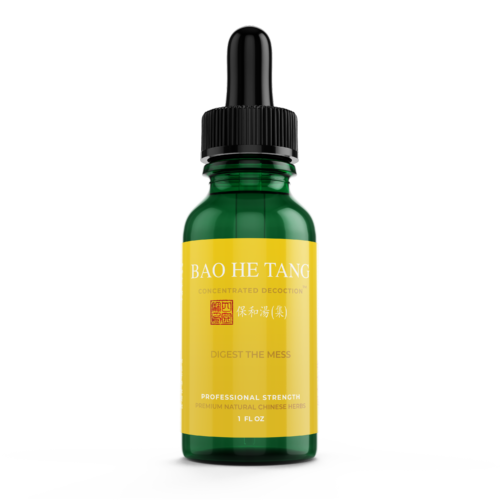
Bao He Tang (保和湯)
Login to view prices -
Bao Ji Tang 保济湯
Login to view prices -
Ban Xia Xie Xin Tang 半夏瀉心湯
Login to view prices

Reviews
There are no reviews yet.