Enjoy Free US Domestic Shipping on Orders Over $400+

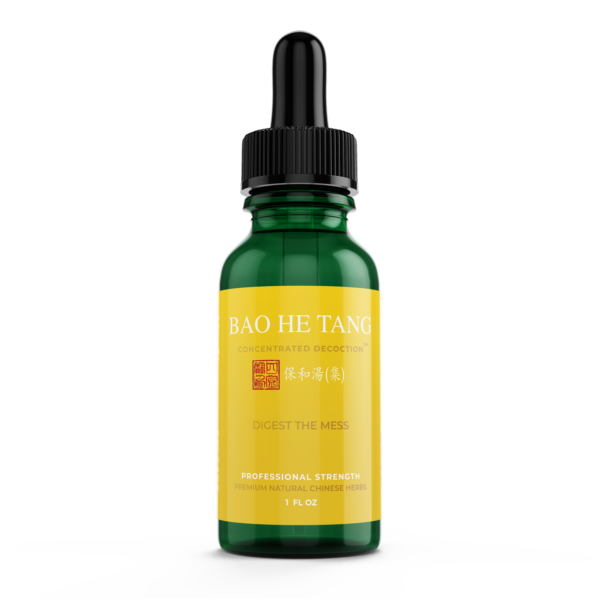
Bao He Tang (保和湯)
Login to view prices
- ACM/CCM/TCM Global Status: Safe & Effective
Digest the Mess™
Description · 配方簡介
保和湯
Preserve Harmony Decoction
Digest the Mess™
544 Years in Continuous Clinical Use
In 1481, the Jin-Yuan master Zhu Dan-xi — one of the four great masters of the Jin-Yuan dynasties — published a six-herb formula he had been refining for decades in his clinic in Yiwu. He called it Bao He Tang: Preserve Harmony. Five and a half centuries later, it remains one of the most prescribed formulas in Chinese medicine. The reason is simple: human beings still eat too much, eat too late, and eat the wrong things. Bao He Tang was built for exactly that patient.
Classical Foundation
Rooted in the Nei Jing & Nan Jing
The formula was built on a principle the Huang Di Nei Jing (黃帝內經) laid down more than two thousand years earlier — that the Stomach’s job is to descend. Su Wen Chapter 11 establishes that the Fu organs function by descending turbid Qi; when this descent is obstructed, the entire middle Jiao falls out of rhythm. The Ling Shu expands the teaching, describing how accumulated food generates heat, which in turn scorches fluids and produces phlegm.
The Nan Jing (難經), in its discussion of the five zang and six fu, calls the Stomach the “sea of grain and water” (水穀之海) — the root of acquired Qi. When the sea becomes congested, nothing downstream functions properly. Zhu Dan-xi’s formula addresses each link in this chain: the stagnation itself, the dampness the stagnation creates, and the heat that develops when food sits too long in the middle Jiao.
The Pattern it Treats
Food Stagnation in the Stomach · 食滯胃脘
Bao He Tang is the definitive formula for Food Stagnation in the Stomach. This is an excess pattern of the middle Jiao, where undigested food sits and blocks the Stomach’s natural descending function. As the stagnation persists, dampness accumulates around it, and heat develops from the prolonged obstruction — all three layers must be addressed at once, which is exactly what this formula does.
Clinical Presentation
- Epigastric and abdominal distention, fullness, or a “stuck” heavy feeling after eating
- Belching with a sour or foul odor; acid regurgitation
- Nausea, occasional vomiting of undigested food
- Aversion to food; loss of appetite
- Loose stools or diarrhea containing undigested food particles
- Symptoms that clearly follow an episode of dietary indiscretion
TongueThick, greasy coat — white if damp predominates, yellow if heat has developed
PulseSlippery, often forceful in the right guan position
How the Formula Works
Three Layers, One Prescription
Zhu Dan-xi built Bao He Tang to address three things in sequence: the stagnation itself, the dampness the stagnation creates, and the heat that develops when food sits too long in the middle Jiao.
Shan Zha leads the formula and goes straight after meat and fatty-food accumulation. Shen Qu and Lai Fu Zi extend the reach to grains, starches, and alcohol — and descend rebellious Qi so belching and reflux settle down. Ban Xia, Chen Pi, and Fu Ling (the Er Chen Tang core embedded within the formula) transform the dampness that always shows up when food sits. And Lian Qiao clears the heat that develops at the end of the chain.
That is why the formula has survived 544 years of clinical use. It is complete. It addresses the problem, the consequence of the problem, and the consequence of the consequence — in one balanced prescription.
Clinical Recognition
When to Reach for It
Bao He Tang is the formula for active food stagnation with a thick, greasy tongue coat and a slippery, forceful right guan pulse. Think: the patient who ate something and hasn’t been right since.
- The child who overdid it at a birthday party and spiked a fever the next day
- The adult with functional dyspepsia that traces clearly to a dietary trigger
- Acute gastroenteritis that isn’t quite letting go
- The “I feel like a brick is sitting in my stomach” complaint that doesn’t respond to antacids
- Post-antibiotic sluggish digestion that won’t reset on its own
When you see the stagnation, this is the formula that has been earning its name for five centuries.
四金寶藏
Si Jin Bao’s Preparation
Si Jin Bao’s Bao He Tang Concentrated Decoction™ preserves Zhu Dan-xi’s original seven-herb architecture in an alcohol-free, kid-friendly liquid concentrate. Manufactured under ACM/CCM/TCM Global Standards. Safe & Effective clinical status. 544+ years in service.
Materia Medica · 本草
保和湯
Bao He Tang
Digest the Mess™ · Preserve Harmony Decoction
Each herb in Bao He Tang plays a defined role within the classical decoction. The cards below detail the nature, taste, channels entered, and clinical actions of every ingredient — along with how each herb functions within this specific formula.
01
Herb 01
山楂
Fructus Crataegi
Hawthorn Fruit
Nature
Slightly Warm
Taste
Sour, Sweet
Channels Entered
Spleen · Stomach · Liver
Category
Herbs that Relieve Food Stagnation
General Actions
Reduces food stagnation, with particular affinity for accumulation from meat and greasy foods. Transforms Blood stasis and dissipates clumps, making it useful in post-partum abdominal pain and hernial disorders. In charred form (Shan Zha Tan), mildly astringes the intestines for chronic dysentery.
Role in this Formula
Shan Zha leads the prescription by targeting accumulation from meat and fatty foods — historically the most common trigger for the Bao He Tang pattern. Its sour, sweet nature both stimulates appetite and breaks down lodged food, making it the clinical anchor of the formula.
Classical Reference
First recorded in Tao Hong-jing’s Ben Cao Jing Ji Zhu (本草經集注, c. 500 CE) and extensively expanded in Li Shi-zhen’s Ben Cao Gang Mu (本草綱目, 1578), which noted its particular affinity for “undigested meat lodged in the middle.”
02
Herb 02
神曲
Massa Medicata Fermentata
Medicated Leaven
Nature
Warm
Taste
Sweet, Acrid
Channels Entered
Spleen · Stomach
Category
Herbs that Relieve Food Stagnation
General Actions
Dissolves food stagnation, particularly from grains, alcohol, and fermented substances. Harmonizes the Stomach and strengthens the Spleen’s transformative function. Traditionally used as a carrier to help mineral and shell medicines (such as Mu Li, Long Gu) digest properly in the middle Jiao.
Role in this Formula
Extends Shan Zha’s reach into grain and alcohol stagnation, covering the broader spectrum of dietary triggers. Its warming nature gently supports the Spleen so the formula’s dispersing action does not weaken the middle.
Classical Reference
First described as a fermented preparation in Yao Xing Lun (藥性論, Tang dynasty). The fermentation process mirrors the digestive action the herb produces in the body — a clinical elegance noted by generations of commentators.
03
Herb 03
萊菔子
Semen Raphani
Radish Seed
Nature
Neutral
Taste
Acrid, Sweet
Channels Entered
Lung · Spleen · Stomach
Category
Herbs that Relieve Food Stagnation
General Actions
Reduces food stagnation from grains and starches. Directs Lung Qi downward, transforms Phlegm, and stops cough and wheezing — particularly in the elderly or debilitated. Resolves distention, belching, and acid regurgitation through its descending action.
Role in this Formula
Descends rebellious Stomach Qi — addressing the belching, reflux, and hiccups that accompany food stagnation. Without Lai Fu Zi, the formula would resolve stagnation without correcting the upward counterflow that produces the most uncomfortable symptoms.
Classical Reference
Recorded in the Song dynasty Ri Hua Zi Ben Cao (日華子本草). Li Shi-zhen later observed: “Of all the dispersing seeds, Lai Fu Zi descends Qi the fastest” — a clinical pearl that has shaped its formulation ever since.
04
Herb 04
半夏
Rhizoma Pinelliae Preparata
Pinellia Rhizome (prepared)
Nature
Warm · Toxic (raw)
Taste
Acrid
Channels Entered
Spleen · Stomach · Lung
Category
Herbs that Warm and Transform Phlegm
General Actions
Dries Dampness, transforms Phlegm (especially cold and damp types). Descends rebellious Qi and stops vomiting — among the most important antiemetic herbs in the materia medica. Dissipates nodules and disperses clumps. Always used in prepared form (Fa Ban Xia, Jiang Ban Xia, Qing Ban Xia) to mitigate toxicity.
Role in this Formula
Part of the Er Chen Tang (二陳湯) core embedded within Bao He Tang. Transforms the dampness and phlegm that inevitably accompany prolonged food stagnation, and reinforces Lai Fu Zi’s downward-directing action on rebellious Stomach Qi.
Classical Reference
First recorded in the Shen Nong Ben Cao Jing (神農本草經, Han dynasty) as a middle-grade herb. Li Shi-zhen devoted extensive commentary to the preparation methods, each of which shifts the clinical emphasis — a distinction every serious herbalist respects.
05
Herb 05
陳皮
Pericarpium Citri Reticulatae
Aged Tangerine Peel
Nature
Warm
Taste
Acrid, Bitter
Channels Entered
Spleen · Lung
Category
Herbs that Regulate Qi
General Actions
Regulates Qi, strengthens the Spleen, and dries Dampness — the principal aromatic herb for middle Jiao Qi stagnation. Transforms phlegm, redirects rebellious Stomach Qi, and stops nausea. Its acrid-bitter combination makes it uniquely suited to pair with tonifying herbs without creating stagnation.
Role in this Formula
Second pillar of the Er Chen Tang core. Regulates Qi in the middle Jiao so the descending and dispersing actions of the formula can fully take effect — without this Qi-moving bridge, the other herbs would be working against stagnant terrain.
Classical Reference
Shen Nong Ben Cao Jing. The herb’s name itself reflects a clinical principle: 陳久者良 — “the older, the better.” Authentic Chen Pi is aged for years, with Xin Hui Chen Pi from Guangdong considered the premium grade.
06
Herb 06
茯苓
Poria
Poria · Hoelen
Nature
Neutral
Taste
Sweet, Bland
Channels Entered
Heart · Spleen · Kidney
Category
Herbs that Drain Dampness
General Actions
Promotes urination and drains Dampness without injuring the body’s fluids. Strengthens the Spleen, harmonizes the middle Jiao, and calms the Spirit — one of the few herbs that addresses all three burners gracefully. Its bland-sweet neutrality makes it among the most frequently paired herbs in the entire materia medica.
Role in this Formula
Completes the Er Chen Tang core. Drains the Dampness that accumulates around undigested food and gently protects the Spleen from the formula’s dispersing action — preserving the middle Jiao even as the stagnation is cleared.
Classical Reference
Shen Nong Ben Cao Jing, classified as superior-grade. Fu Ling appears in over 100 formulas within the Shang Han Lun alone — Zhang Zhong-jing’s most reached-for damp-resolving herb.
07
Herb 07
連翹
Fructus Forsythiae
Forsythia Fruit
Nature
Cool
Taste
Bitter
Channels Entered
Heart · Lung · Gallbladder
Category
Herbs that Clear Heat and Relieve Toxicity
General Actions
Clears Heat and relieves toxicity. Disperses Wind-Heat in the exterior and reduces nodules and swellings. Known traditionally as 瘡家聖藥 — “the sacred medicine for sores” — for its unmatched ability to resolve accumulated heat-toxin in skin and tissue.
Role in this Formula
Clears the Heat that develops when food sits too long in the middle Jiao. Its inclusion is a signature of Zhu Dan-xi’s nuanced thinking — he recognized that prolonged stagnation always generates low-grade heat, and that balancing the warm dispersing herbs with a single cooling herb prevents the formula from being drying or inflammatory.
Classical Reference
Shen Nong Ben Cao Jing. The herb’s designation as “the sacred medicine for sores” traces to Tang-dynasty commentary, and its use in digestive formulas — rather than exclusively dermatological ones — is widely credited to Zhu Dan-xi’s clinical innovation.
08
Herb 08
蔬菜甘油
Glycerinum Vegetabile
Vegetable Glycerin
Nature (性)
Neutral · 平 Píng
Taste (味)
Sweet · 甘 Gān
Channels Entered (歸經)
Not classically assigned
Category
Excipient · Carrier
Traditional Actions (功效)
Harmonizes and guides the other medicinals to their target tissues. Analogous to synovial fluid — providing a medium for smooth movement and deep delivery throughout the decoction.
Role in this Formula
Excipient function: Dissolves and stabilizes the botanical constituents of the seven classical herbs, ensuring consistent delivery in decoction form. Mucosal hydration: By attracting and retaining water, glycerin keeps the oral and digestive mucosa moist — particularly supportive in patients where food stagnation has produced dryness or irritation. Patient tolerance: Its naturally sweet, neutral profile makes the formula palatable for children and adults alike, which is why SJB chose it over alcohol-based carriers.
Modern Research
International Journal of Pharmaceutics · 2023
Glycerin serves as a co-solvent and humectant in oral liquid formulations, enhancing solubility of poorly water-soluble compounds, stabilizing active ingredients, and improving mucosal hydration.
Journal of Clinical Pharmacology · 2018
Oral glycerol has been widely used as an osmotic agent. Doses of 1–1.5 g/kg are safe and well-tolerated; its mechanism involves osmotic fluid redistribution between compartments.
Clinical Oral Investigations · 2022
Glycerin-containing oral moisturizers significantly improved xerostomia symptoms compared with water-based controls, enhancing mucosal hydration and prolonging moisture retention in the oral cavity.
Clinical Translation
Gān Yóu guides the physical delivery of the formula — ensuring the preparation reaches its target tissues and is tolerated long enough to do its work. A naturally sweet, neutral carrier that makes the decoction palatable for adults and children alike.
09
Herb 09
蒸餾水
Aqua Destillata
Distilled Water
Nature (性)
Neutral · 平 Píng
Taste (味)
Tasteless
Channels Entered (歸經)
None · Vehicle Substance
Category
Vehicle · Neutral Carrier
Traditional Actions (功效)
Not a classical herb in its own right. Functions as a neutral carrier — a pharmaceutically pure vehicle that allows the active constituents of the seven classical herbs to extract, stabilize, and deliver without interference.
Role in this Formula
Biomedical role: A pharmaceutically pure solvent, ensuring consistent extraction and delivery of active compounds without introducing mineral ions, microbial contaminants, or chemical interference. Clinical relevance: Acts as a safe vehicle — analogous to saline in biomedicine — so that every dose of the formula performs identically, from the first bottle to the last.
Modern Research
Pharmacopeial Standard · Herbal Decoction Stability
Distilled water ensures stability, reproducibility, and safety in herbal decoction preparations by eliminating mineral ions and microbial contaminants that would otherwise compromise extraction consistency and shelf life.
Clinical Pharmacology · Oral Solution Vehicles
Distilled water is recognized in clinical pharmacology as the neutral carrier of choice for both intravenous and oral solutions, chosen specifically for its non-reactive profile with active ingredients.
Clinical Translation
Li Shi-zhen devoted an entire section of the Ben Cao Gang Mu (本草綱目) to the classification of waters — recognizing that the water in which a formula is prepared shapes the clinical outcome. SJB honors this principle by using pharmaceutically distilled water as the neutral vehicle for every decoction.
保和
Preserve Harmony
Zhu Dan-xi wrote this formula down in 1481. The patients have changed. The middle Jiao has not. A formula survives five centuries because practitioners keep reaching for it — and Bao He Tang has earned that longevity. That is why it has outlasted empires.
Dosage & Preparation · 用法用量
How to Prepare & Dose
Si Jin Bao Concentrated Decoctions™ are activated in hot water, steeped briefly, and taken warm. Follow the four steps below, then refer to the age-appropriate dosing grid.
Preparation
The Four Steps
-
Step 01ShakeShake the bottle well before each use.
-
Step 02Add Hot WaterAdd the age-appropriate dosage into 1 oz of hot water, as you would for tea.
-
Step 03SteepCover and steep for 5 minutes, then allow to cool to a warm, drinkable temperature.
-
Step 04DrinkDrink warm, twice daily or as directed by your practitioner.
For best results: take on an empty stomach — approximately 30 minutes before or after food or drink.
Dosage
By Age Group
Newborn
3drops
Twice daily
1 Year
7drops
Twice daily
2–6 Years
10drops
Twice daily
7 Years to Adult
20drops
Twice daily
Treatment Protocols
Suggested Clinical Course
Acute
10 Days
Then Reevaluate
Subacute
30 Days
Then Reevaluate
Chronic
90 Days
Then Reevaluate
Bottle Longevity
11½ days
at standard adult dosage
BHT CD PRO Product Sheet by SJB Team
Research & Western Correlations · 現代研究
Modern Evidence for a Classical Formula
Bao He Tang has been the subject of considerable clinical research over the past three decades. The studies below span digestive, hepatic, and metabolic applications — confirming at the mechanism level what Zhu Dan-xi observed clinically in 1481.
— Clinical Studies
Published Research
Functional Dyspepsia
Clinical study examining Bao He Wan in the treatment of functional dyspepsia, demonstrating improvement in postprandial fullness, early satiety, and epigastric burning.
Jiang Xudi et al. · Medical Journal of Chinese People’s Health, Vol. 20, No. 2, 2008
Non-Alcoholic Fatty Liver Disease
Research evaluating Bao He Wan — both alone and combined with Hu Zhang (Polygoni cuspidati) — for treatment of fatty liver, showing reduction in fat degeneration and inflammatory necrosis markers.
Long Zaisheng et al. · Journal of Practical Traditional Chinese Medicine | Yang Yujie et al. · Acta Universitatis Medicinalis Anhui, March 2010
Gastroesophageal Reflux Disease
Study on the effectiveness of Bao He Wan combined with Western proton pump inhibitors for GERD, showing improved outcomes over PPI monotherapy.
Yuan Hung · Liaoning Journal of Traditional Chinese Medicine
Diabetic Gastroparesis
Clinical observation of Bao He Wan in the treatment of mild gastric paralysis in diabetic patients, focused on restoration of gastric motility and relief of postprandial discomfort.
Liu Jincheng et al. · Chinese Journal of Natural Medicine, April 2000
Pediatric Constipation
65-case clinical study applying Bao He Wan with modifications in pediatric constipation — particularly cases traceable to food accumulation and sluggish Spleen function.
Yang Guan et al. · New Medicine, Vol. 25, 2012
Hyperlipidemia
Clinical observation in 39 hyperlipidemia cases treated with Bao He Wan plus additions — aligned with Shan Zha’s known effect on lipid metabolism.
Hu Yukun & Li Kunsan · Chinese Medicine Magazine of China, Vol. 6, Issue 5, 2006
— Mechanism Notes
How the Herbs Work at a Biochemical Level
Shan Zha
Extensively studied for effects on lipid metabolism and lipase activity — confirming the traditional use for fatty-food stagnation. Active constituents include flavonoids, triterpene acids, and organic acids.
Lai Fu Zi
Contains sulforaphene and related compounds shown to enhance gastric motility and accelerate gastric emptying — explaining its classical action of descending rebellious Qi.
Chen Pi
Rich in hesperidin, narirutin, and d-limonene. Demonstrated effects on gastric motility, bile secretion, and smooth muscle relaxation — the pharmacological basis of its Qi-regulating action.
Ban Xia
Demonstrated antiemetic mechanisms through central and peripheral pathways — consistent with its classical indication for nausea and vomiting from Stomach Qi counterflow.
Lian Qiao
Contributes documented mild antimicrobial activity via forsythin, phillygenin, and related lignans — supporting the traditional use in mild food poisoning and acute gastroenteritis.
— Western Terminology
Commonly Associated Functions
When communicating with MDs, PAs, and patients who require Western framing, the following terminology describes Bao He Tang’s functional scope:
Digestive enzyme support · Prokinetic · Carminative · Mild anti-microbial · Anti-inflammatory (GI tract) · Appetite-regulating · Lipolytic · Anti-dyspeptic
544+ YEARS
Ancient Formula, Modern Evidence
544 years of continuous clinical use tells you most of what you need to know. What modern research adds is a mechanism-level confirmation of what Zhu Dan-xi observed in 1481 — that this particular seven-herb combination does something the individual herbs cannot do alone.
Related products
-

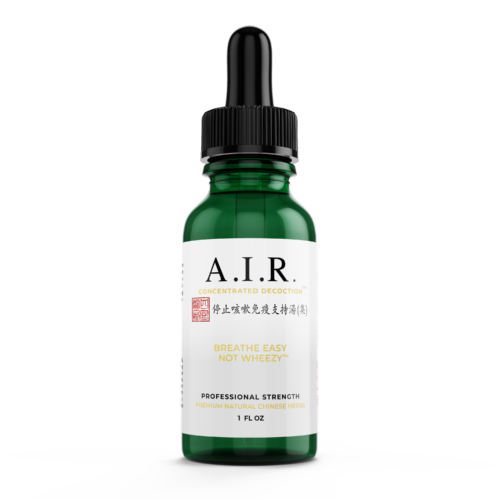
A.I.R. 停止咳嗽免疫支持湯(集)
Minimum Order Quantity: 5 Login to view prices -
Ding Chuan Tang 定喘湯
Login to view prices -
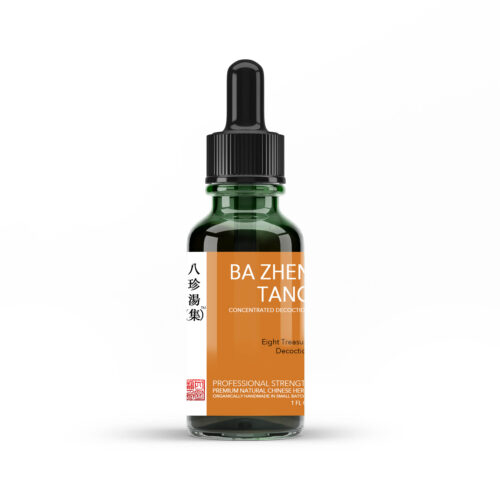
Ba Zhen Tang 八珍湯
Login to view prices -
Ba Wei Di Huang Tang 八味地黃丸
Login to view prices

Reviews
There are no reviews yet.