Enjoy Free US Domestic Shipping on Orders Over $400+

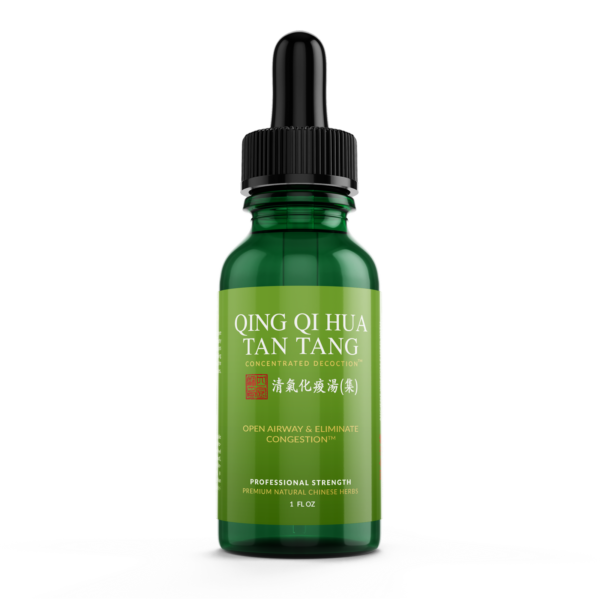
Qing Qi Hua Tan Tang 清氣化痠湯
Login to view prices
- ACM/CCM/TCM Global Status: Safe & Effective
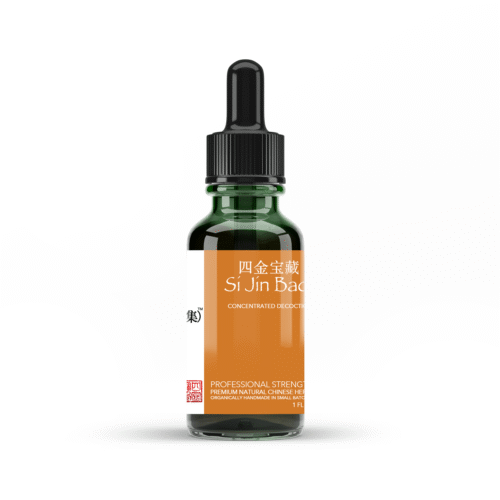
Open Airway & Eliminate Congestion Decoction – 1oz
This is Si Jin Bao’s version of a classical formula developed by famous physician Wu Kun in 1584. Dr. Wu Kun used this formula for febrile disease, congestion, coughing, bronchitis, and Sinusitis (including sinus infection). One of the major ingredients, 黃苓Huang Qin, in modern research has revealed the flavone Baicalin. It is noted to help potentiate the effectiveness of western Anti-biotics.
Classical Formula · 清氣化痰湯
清氣化痰湯
Clear the Qi & Transform Phlegm Decoction
Over Four Centuries in Service
Origin
A Ming-Dynasty Answer to Phlegm-Heat
Qing Qi Hua Tan Tang was recorded in 1584 by Wu Kun, a Ming-dynasty physician from Anhui known for his analytical approach to formula composition. His Yi Fang Kao (醫方考, Investigations of Medical Formulas) was among the first texts to break down not just what each formula did, but why it worked — a critical lens applied to more than 780 prescriptions.
Wu Kun built this formula on the foundation of Er Chen Tang, the ancient Two-Cured Decoction that had served as the base for treating Phlegm for centuries. By removing the neutralizing Gan Cao and the sour Wu Mei, then adding Dan Nan Xing, Gua Lou Ren, Huang Qin, Xing Ren, and Zhi Shi, he transformed a mild, broadly-acting Phlegm remedy into a targeted strike against Phlegm that had turned hot.
The conceptual backbone came from Zhu Danxi, the Jin-Yuan master whose principle still anchors this formula today: “One who treats Phlegm well does not treat the Phlegm, but treats the Qi.” Qing Qi Hua Tan Tang embodies that teaching — restore the descent and circulation of Qi, and the Phlegm that congested it will transform and move on its own.
Classical Foundation
Wu Kun’s Own Words
In the Phlegm Chapter of the Yi Fang Kao, Wu Kun explains his choice of each herb with a precision that has kept practitioners returning to this formula for four centuries:
From the Yi Fang Kao · 醫方考
“When Qi becomes excessive it transforms into Fire; when Fire recedes, it returns to being Qi and settles back into its proper place. Therefore, to transform Phlegm, one must first clear the Qi. Nan Xing and Ban Xia dry Phlegm-Damp. Xing Ren and Chen Pi facilitate stagnant Phlegm. Zhi Shi attacks accumulated Phlegm. Huang Qin drains Phlegm-Heat. Fu Ling percolates Phlegm-Damp. And Gua Lou — Gua Lou descends the Qi and disperses the Phlegm.”
A century later, the physician Wang Ang codified the formula’s reputation in his 1682 Yi Fang Ji Jie (Analytic Collection of Medical Formulas), calling it “the universal formula for Phlegm-Fire” — a designation that has traveled with it ever since.
Pattern It Treats
Phlegm-Heat Clumping in the Lungs
The pattern begins when Heat, whether from stagnated Qi, dietary excess, emotional pressure, or an external pathogen that has turned inward, meets the body’s fluids. Under the steady pressure of Heat, those fluids thicken, condense, and harden into sticky, yellow Phlegm. Once formed, this Phlegm lodges in the Lungs and blocks the downward flow of Lung Qi — and now both the Heat and the Phlegm reinforce each other in a loop that the body cannot easily break.
The Spleen, meanwhile, is not blameless. In TCM understanding, the Spleen is the source of Phlegm and the Lung is the storehouse. If Heat has scorched the middle burner, the Spleen’s transporting and transforming functions falter, and more Phlegm is produced upstream even as the Lungs work to clear what is already there. Qing Qi Hua Tan Tang addresses both ends of this chain.
Clinical Presentation
- Cough with thick, sticky, yellow or yellow-green sputum that is difficult to expectorate
- Sensation of fullness, oppression, or tightness in the chest and diaphragm
- Wheezing, shortness of breath, or bronchial spasm — especially with phlegmatic component
- Thick nasal congestion, sinus pressure, or post-nasal drip — often with yellow or green discharge
- Dry mouth, sore throat, or dry stools from the underlying Heat
- Possible low-grade or tidal fever in more active presentations
- Irritability or restlessness from the Heat component
Tongue:Red body, with a yellow greasy coating — thicker toward the center and root
Pulse:Slippery and rapid (huá shuò, 滑數) — the signature of Phlegm combined with Heat
How the Formula Works
Three Concurrent Actions
The eight herbs in Qing Qi Hua Tan Tang work on three simultaneous fronts — clearing the Heat, transforming the Phlegm, and restoring the normal descent of Lung Qi. No single herb carries the formula alone; each addresses one aspect of a complex, self-reinforcing pattern.
Dan Nan Xing and Gua Lou Ren anchor the Phlegm-clearing work. Dan Nan Xing — arisaema processed with bile — is cold and bitter, specifically targeting stubborn Phlegm that has been scorched by Heat into a sticky, tenacious form. Gua Lou Ren moistens, loosens, and guides the Phlegm downward and out. Huang Qin drains Heat from the Lungs directly, cooling the source of the transformation that is turning Qi into Fire and fluids into Phlegm.
Ban Xia and Ju Hong Pi — the surviving pair from Er Chen Tang — dry residual Dampness and transform Phlegm at the level of the middle burner, reminding the body how to move fluids properly rather than stagnate them. Fu Ling supports the Spleen so that no new Phlegm forms while the old is being cleared; it addresses the root even as the other herbs address the branch.
Xing Ren and Zhi Shi restore the Qi mechanism. Xing Ren directs Lung Qi downward — the direction it has lost in this pattern — stopping cough and easing wheezing. Zhi Shi breaks up the Qi stagnation in the chest and middle burner, opening the space that Phlegm-Heat has occupied. Together they release the fullness and oppression that are this pattern’s signature.
When to Reach for It
Clinical Recognition
Reach for Qing Qi Hua Tan Tang when the presenting picture centers on thick, yellow or colored Phlegm that is hard to move, accompanied by a sense that the chest is tight, full, or obstructed. The tongue tells the story — red body, yellow greasy coating — and the pulse confirms it with a slippery-rapid quality.
Common modern presentations where this formula fits cleanly:
- Acute or sub-acute bronchitis with productive, colored sputum
- Acute exacerbation of chronic bronchitis, especially in smokers or long-term phlegm-producers
- Post-viral cough that has turned productive and lingering
- Hot-type asthma presentations where Phlegm-Heat dominates over cold or deficiency patterns
- Sinus infection with thick, colored discharge and pressure
- Productive cough in pediatric cases with yellow phlegm and red tongue
Qing Qi Hua Tan Tang is not the formula for dry cough with scant phlegm, for cough rooted in Yin deficiency, or for pure Wind-Cold patterns where no Heat has yet developed. It works on what has already transformed — the Phlegm-Fire pattern that Wang Ang recognized as its defining territory.
清氣化痰
Four Centuries, One Pattern
Wu Kun wrote this formula down in 1584. It was his answer to a pattern he saw everywhere in his practice — Phlegm that had turned hot and clogged the Lungs. The pattern is still here today. The formula still works. That is why practitioners keep reaching for it four centuries later.
Materia Medica · 本草
清氣化痰湯
Qing Qi Hua Tan Tang
Clear the Qi & Transform Phlegm Decoction
Each of the eight herbs in Qing Qi Hua Tan Tang has its own character, channel path, and classical lineage. What follows is a full materia medica for every ingredient in the bottle — drawn from the Shen Nong Ben Cao Jing, Li Shizhen’s Ben Cao Gang Mu, and Bensky’s modern synthesis.
01
Herb 01
膽南星
Arisaema cum Bile
Bile-Processed Arisaema Rhizome
Category
Herbs that Cool & Transform Phlegm-Heat
Nature & Flavor
Bitter, slightly acrid · Cool
Channels
Lung · Liver · Spleen
Actions
Clears Heat and transforms Phlegm-Heat — particularly Phlegm that has turned thick, sticky, and yellow under the pressure of internal Fire. Extinguishes Wind and arrests tremors, addressing Wind-Phlegm patterns that may accompany the core presentation. More cooling and less drying than its unprocessed parent, Tian Nan Xing, thanks to the bile processing.
Indications
Cough with thick, difficult-to-expectorate yellow sputum; chest fullness; wheezing with phlegmatic quality. Also used for Wind-Phlegm presentations with spasms, seizures, facial paralysis, or stroke-related patterns — though those are not the focus in this formula.
Classical Reference
The raw arisaema (Tian Nan Xing) appears in the Shen Nong Ben Cao Jing as a lower-grade herb — potent and effective, but requiring skilled preparation. The bile-processed form described here was refined over centuries; Li Shizhen’s Ben Cao Gang Mu (1578) specifically notes the superiority of bile-preparation for clearing Phlegm-Heat over the drying, raw form.
Role in Formula
Dan Nan Xing is the central Phlegm-clearer of Qing Qi Hua Tan Tang. Wu Kun chose the bile-processed form specifically because the pattern is Phlegm combined with Heat — raw arisaema would be too drying and too warm. Dan Nan Xing reaches the stubborn, heat-scorched Phlegm that ordinary phlegm-transforming herbs cannot touch.
02
Herb 02
瓜蔞仁
Semen Trichosanthis
Trichosanthes Seed (Snake Gourd Seed)
Category
Herbs that Cool & Transform Phlegm-Heat
Nature & Flavor
Sweet · Cold
Channels
Lung · Stomach · Large Intestine
Actions
Clears Heat and transforms Phlegm-Heat with a moistening quality — rare among Phlegm herbs, most of which dry. Descends the Lung Qi and disperses clumped Phlegm in the chest. Moistens the intestines to promote bowel movement, which in turn helps relieve Heat from the upper body.
Indications
Cough with sticky, hard-to-move yellow phlegm; chest pain and oppression from Phlegm-Heat clumping; constipation from Heat. The seed portion (as used here) is more lubricating and descending than the whole fruit.
Classical Reference
Listed in the Shen Nong Ben Cao Jing, which records Gua Lou’s ability to “disperse Hot clumping in the chest” — an observation that has guided its use for two millennia. Zhang Zhongjing famously used the related whole fruit in Gua Lou Xie Bai Bai Jiu Tang for chest bi syndrome, establishing its reputation for Phlegm obstruction in the chest.
Role in Formula
In the Yi Fang Kao, Wu Kun singles out Gua Lou specifically: “Gua Lou descends the Qi and disperses the Phlegm.” While most other herbs in the formula dry, Gua Lou Ren moistens — protecting Lung fluids from being excessively damaged by the more aggressive Phlegm-drying herbs.
03
Herb 03
黃芩
Radix Scutellariae
Scutellaria Root, Chinese Skullcap
Category
Herbs that Clear Heat & Dry Dampness
Nature & Flavor
Bitter · Cold
Channels
Lung · Stomach · Gallbladder · Large Intestine
Actions
Clears Heat from the upper burner — particularly Lung Heat. Dries Damp-Heat, especially in the middle and lower burners. Drains Fire, calms ascending Liver Yang, and cools blood Heat. Modern research on Huang Qin’s flavone baicalin has identified anti-inflammatory and antiviral activity, which helps explain why the classical indications for Lung Heat include many patterns now understood as infection or inflammation.
Indications
High fever, cough with thick yellow sputum, thirst, irritability, sore throat, jaundice, dysentery, urinary burning. The upper portion of the root (zhu qin) is preferred for clearing upper-burner Heat as used here.
Classical Reference
Recorded in the Shen Nong Ben Cao Jing as a middle-grade herb, Huang Qin has been a central Heat-clearer since the Han dynasty. Li Shizhen devoted extensive commentary to it in the Ben Cao Gang Mu, noting that Huang Qin “reaches the Lung and Large Intestine, cools the blood, and quiets fetal disturbance.“
Role in Formula
Huang Qin is Wu Kun’s direct Heat-clearer. While Dan Nan Xing and Gua Lou Ren transform and move the Phlegm, Huang Qin addresses the Heat that is causing Phlegm to form in the first place — cutting the loop at its source. Wu Kun’s own line: “Huang Qin drains Phlegm-Heat.”
04
Herb 04
半夏
Rhizoma Pinelliae Praeparatum
Prepared Pinellia Tuber
Category
Herbs that Warm & Transform Phlegm-Cold
Nature & Flavor
Acrid · Warm · (Slightly toxic; must be prepared)
Channels
Spleen · Stomach · Lung
Actions
Dries Dampness and transforms Phlegm — the classical action that earned Ban Xia its place in the Er Chen Tang base. Descends rebellious Qi and stops vomiting. Disperses accumulation and reduces focal distention in the middle burner. Always used in prepared form (ginger-processed or alum-processed); raw pinellia is toxic.
Indications
Productive cough with copious phlegm; nausea and vomiting; epigastric fullness; Plum-pit Qi (globus sensation in throat); dizziness from Phlegm-Damp. The workhorse phlegm herb of Chinese medicine.
Classical Reference
Listed in the Shen Nong Ben Cao Jing among the lower-grade herbs — powerful, but requiring skilled preparation to remove toxicity. Zhang Zhongjing used Ban Xia in dozens of formulas across the Shang Han Lun and Jin Gui Yao Lue, establishing its centrality in the treatment of Phlegm-Damp patterns. The bile-preparation tradition described by Li Shizhen was specifically developed to adapt Ban Xia (and arisaema) for Phlegm-Heat use.
Role in Formula
Ban Xia is one of two herbs Wu Kun kept from the underlying Er Chen Tang. Though warming in nature, it is balanced here by the cold Dan Nan Xing, Gua Lou Ren, and Huang Qin — the formula’s overall thermal character lands on the cool side. Ban Xia’s specific job is to dry the Dampness component of the Phlegm and to descend Stomach Qi that may be rebelling upward as nausea or cough.
05
Herb 05
橘紅皮
Exocarpium Citri Rubrum
Red Tangerine Peel (Pummelo)
Category
Herbs that Regulate Qi
Nature & Flavor
Acrid, bitter · Warm · Aromatic
Channels
Lung · Spleen
Actions
Ju Hong is the red, outer layer of the mature tangerine peel — drier and more aromatic than the standard Chen Pi. Regulates Qi, dries Dampness, and transforms Phlegm. The aromatic quality helps disperse stagnation in the chest and upper burner specifically, making it especially well-suited for cough and chest fullness from Phlegm-Damp.
Indications
Cough with copious phlegm; chest oppression and fullness; epigastric distention; nausea. Particularly chosen when the pattern involves phlegm stuck in the upper burner rather than strictly the middle.
Classical Reference
The separation of Ju Hong (red peel) from Chen Pi (whole aged peel) as a distinct medicinal emerged during the Song-Yuan period. By Li Shizhen’s Ben Cao Gang Mu (1578), Ju Hong was well established as the preferred form when the emphasis fell on clearing the upper burner and transforming phlegm. Its aromatic potency was seen as particularly useful for Lung patterns.
Role in Formula
The second surviving herb from Er Chen Tang. Wu Kun specifies Ju Hong rather than plain Chen Pi for good reason — its stronger upper-burner affinity and aromatic Phlegm-transforming quality are ideal for the Lung-centered pattern this formula treats. In his words: “Xing Ren and Chen Pi facilitate stagnant Phlegm.”
06
Herb 06
杏仁
Semen Armeniacae Amarum
Apricot Seed (Bitter)
Category
Herbs that Stop Cough & Calm Wheezing
Nature & Flavor
Bitter · Slightly warm · (Slightly toxic)
Channels
Lung · Large Intestine
Actions
Stops cough and calms wheezing by directing Lung Qi downward — addressing the core dysfunction of this pattern, in which Lung Qi has lost its natural descent. Also moistens the intestines and promotes bowel movement, which helps draw Heat downward and out.
Indications
Cough (dry or productive, hot or cold), wheezing, shortness of breath, constipation from dry intestines. Versatile across presentations; the Lung-descending action is its defining quality.
Classical Reference
In the Shen Nong Ben Cao Jing, Xing Ren is described as treating “cough, Qi rebelling upward, thunderous sounds [in the chest], sore throat, and inability to breathe properly.” Zhang Zhongjing used it in Ma Huang Tang and Ma Xing Shi Gan Tang, cementing its role as the classical Lung-descending herb for cough and wheezing across multiple pattern types.
Role in Formula
Xing Ren is the cough-specific herb in this formula. While the other herbs transform Phlegm and clear Heat, Xing Ren directly addresses the symptomatic outcome — the cough itself — by restoring the Lung’s natural downward flow of Qi. Also lightly balances the mild toxicity of Ban Xia through its own mildly toxic but complementary nature.
07
Herb 07
枳實
Fructus Aurantii Immaturus
Immature Bitter Orange
Category
Herbs that Regulate Qi
Nature & Flavor
Bitter, acrid · Slightly cold
Channels
Spleen · Stomach · Large Intestine
Actions
Breaks up Qi stagnation and disperses accumulation — stronger and more descending than its mature counterpart Zhi Ke. Reduces focal distention, relieves fullness and oppression in the chest and epigastrium, and transforms Phlegm through its Qi-moving action. Helps restore the natural descent of the Qi mechanism.
Indications
Chest and epigastric fullness, focal distention, Phlegm obstruction, constipation with abdominal pressure, Qi-stagnation cough. Stronger descending and breaking action than most other Qi regulators.
Classical Reference
Recorded in the Shen Nong Ben Cao Jing as a middle-grade herb, Zhi Shi appears in foundational Han-dynasty formulas. Zhang Zhongjing used it in Da Cheng Qi Tang for interior excess patterns, and in Zhi Shi Xie Bai Gui Zhi Tang for chest bi with Phlegm. Its breaking, downward quality makes it the choice when stagnation has congealed into focal obstruction.
Role in Formula
Zhi Shi is Wu Kun’s most forceful Qi-mover in this formula. Where Ju Hong Pi regulates Qi gently, Zhi Shi breaks through where Phlegm-Heat has already clumped and locked down. Wu Kun: “Zhi Shi attacks accumulated Phlegm.” It opens the chest and diaphragm where the pattern has created a sense of heaviness and obstruction.
08
Herb 08
茯苓
Poria
Poria (Hoelen, Fu-ling Mushroom)
Category
Herbs that Drain Dampness
Nature & Flavor
Sweet, bland · Neutral
Channels
Heart · Spleen · Kidney
Actions
Promotes urination and drains Dampness gently, without damaging the Yin or the Qi. Strengthens the Spleen and harmonizes the middle burner, addressing Phlegm production at its root. Also calms the Spirit for Heart-Spleen patterns with palpitations or insomnia from Phlegm-Damp.
Indications
Edema, urinary difficulty, diarrhea, poor appetite, Phlegm-Damp accumulation, palpitations or insomnia from underlying Spleen deficiency. The most broadly useful Dampness-draining herb in the pharmacopeia.
Classical Reference
Listed as an upper-grade herb in the Shen Nong Ben Cao Jing — meaning it is considered safe for long-term use, supports longevity, and has minimal side effects. The text describes Fu Ling as treating “chest fullness, palpitations, urinary difficulty, and fright.” Li Shizhen praised it in the Ben Cao Gang Mu as a herb that “transforms the turbid and settles the Spirit.”
Role in Formula
Fu Ling addresses the root in a formula that otherwise focuses on the branches. If the Spleen remains weak, Phlegm will keep forming no matter how much of the existing Phlegm is cleared. Wu Kun’s placement of Fu Ling in the formula is why this prescription, unlike purely draining Phlegm-Heat formulas, can be used somewhat longer without damaging the Spleen.
P1
Preparation Ingredient
蔬菜甘油
Glycerinum Vegetabile
Vegetable Glycerin
Purpose
Preservation & Palatability
Source
Plant-derived, food-grade
Properties
Sweet · Neutral · Hygroscopic
Function in Preparation
Role in the Decoction
Vegetable glycerin serves as a natural preservative and delivery medium for the concentrated herbal extract. Its mild sweetness softens the bitterness of the Huang Qin, Zhi Shi, and Ban Xia — making the formula palatable enough for pediatric use while leaving the active properties of the herbs themselves unchanged.
Why Glycerin Over Alcohol
Si Jin Bao Professional decoctions are alcohol-free. Glycerin preservation is particularly suited to formulas intended for children, pregnant patients (where clinically appropriate), and anyone avoiding alcohol — without compromising the integrity of the extract or the classical preparation ratios.
P2
Preparation Ingredient
蒸餾水
Aqua Destillata
Distilled Water
Purpose
Extraction & Decoction Medium
Source
Purified, pharmaceutical-grade
Properties
Neutral · Free of contaminants
Function in Preparation
The Classical Water Decoction
The Chinese term tang (湯) in Qing Qi Hua Tan Tang literally means “decoction” — a preparation made by simmering herbs in water. Distilled water serves as the extraction medium, drawing out the water-soluble active compounds of the eight herbs at carefully controlled temperatures that preserve their therapeutic properties.
Purity in the Base
Distillation removes mineral salts, trace contaminants, and biological matter that could interfere with the herbal extract or compromise shelf stability. The result is a clean foundation on which the decoction’s clinical effect rests entirely on the herbs themselves.
清氣化痰
Eight Herbs, One Purpose
Together, these eight herbs accomplish what Wu Kun described in 1584: they clear the Qi so that the Phlegm transforms. Four centuries later, the logic still holds.
Dosage & Preparation · 用法用量
How to Prepare & Dose
Si Jin Bao Concentrated Decoctions™ are activated in hot water, steeped briefly, and taken warm. Follow the four steps below, then refer to the age-appropriate dosing grid.
Preparation
The Four Steps
-
Step 01ShakeShake the bottle well before each use.
-
Step 02Add Hot WaterAdd the age-appropriate dosage into 1 oz of hot water, as you would for tea.
-
Step 03SteepCover and steep for 5 minutes, then allow to cool to a warm, drinkable temperature.
-
Step 04DrinkDrink warm, twice daily or as directed by your practitioner.
For best results: take on an empty stomach — approximately 30 minutes before or after food or drink.
Dosage
By Age Group
Newborn
3drops
Twice daily
1 Year
7drops
Twice daily
2–6 Years
10drops
Twice daily
7 Years to Adult
20drops
Twice daily
Treatment Protocols
Suggested Clinical Course
Acute
10 Days
Then Reevaluate
Subacute
30 Days
Then Reevaluate
Chronic
90 Days
Then Reevaluate
Bottle Longevity
11½ days
at standard adult dosage
QQHTT CD PRO PRODUCT GUIDE by SJB Team
Research · 研究
清氣化痰湯
Qīng Qì Huà Tán Tāng
Peer-Reviewed Evidence
Ten Studies on the Formula & Its Constituent Herbs
Qing Qi Hua Tan Tang has been examined in the peer-reviewed literature under several names — Qing Qi Hua Tan Tang, Qingjin Huatan Decoction, and variants thereof. The core eight-herb architecture Wu Kun set down in 1584 remains the formula under study. What follows is a selection of the strongest available clinical and mechanistic evidence on the formula and on its anchor herb, Huáng Qín — with attention to the flavonoid baicalin, the most-studied constituent of Huáng Qín and arguably of the entire Chinese pharmacopeia.
01
Study 01
清氣化痰湯
Systematic Review & Meta-Analysis
Journal of Ethnopharmacology · 2020
Design
Systematic review & meta-analysis of 14 RCTs (n=1,278)
Scope
Acute exacerbation of chronic obstructive pulmonary disease
Relevance
Direct — whole-formula clinical evaluation
Background
The classical formula Qing Qi Hua Tan Tang (QJHTT) has been used in Chinese medicine for over four centuries for Lung Phlegm-Heat presentations — including the cough, wheezing, and thick-mucus patterns that modern medicine has come to describe as exacerbations of COPD. This 2020 meta-analysis evaluated the clinical efficacy and safety of the formula in acute COPD exacerbations across the modern literature.
Findings
Fourteen randomized controlled trials involving 1,278 patients were analyzed. Pooled analysis found significant improvements in total clinical efficacy, FEV1, FEV1/FVC, and FEV1 percentage of predicted value compared to control groups. The formula was associated with a favorable safety profile across the included trials, supporting its use as either adjunct or alternative therapy in acute exacerbation presentations.
Relevance to Qing Qi Hua Tan Tang™
This is whole-formula clinical evidence — the strongest tier of supporting research available for any classical Chinese formula. The findings document the formula’s measurable effect on objective pulmonary-function endpoints, supporting its continued use in modern integrative respiratory practice.
Citation
Tang WW, et al. Traditional Chinese medicine classic herbal formula Qingjin Huatan decoction for acute exacerbation of chronic obstructive pulmonary disease: A systematic review and meta-analysis. Journal of Ethnopharmacology. 2020. ScienceDirect S1876-3820(20)31434-7.
02
Study 02
清氣化痰湯
PRISMA-Compliant Systematic Review & Meta-Analysis
PLoS ONE · 2025
Design
PRISMA-compliant SR&MA · PROSPERO CRD42024566457
Endpoints
Pulmonary function & inflammatory mediator levels
Relevance
Direct — adjunct treatment in stable disease phase
Background
Where Study 01 evaluated acute exacerbation, this 2025 systematic review examined the formula’s role in stable COPD — the chronic-phase presentation where ongoing Phlegm-Heat patterns produce persistent productive cough, intermittent wheezing, and gradual pulmonary-function decline. The review was prospectively registered with PROSPERO and conducted according to PRISMA guidelines.
Findings
Outcomes assessed included pulmonary function parameters and inflammatory mediator levels. Results supported the formula’s role as an adjunct treatment in the stable phase of COPD, with statistically significant improvements in both lung function and inflammatory markers over control groups. The 2025 publication adds a second tier of whole-formula clinical evidence to the existing literature on acute exacerbation, supporting the formula’s appropriateness across both phases of chronic respiratory disease.
Relevance to Qing Qi Hua Tan Tang™
Taken together with Study 01, this provides whole-formula clinical evidence supporting the formula’s use across the full continuum of chronic Phlegm-Heat respiratory presentations — from acute exacerbation through stable maintenance. The improvement in inflammatory mediators reinforces what classical TCM theory has long described: that the formula does real work on the underlying inflammatory process, not merely on the surface symptoms.
Citation
Effect of Qingjin Huatan decoction on pulmonary function and inflammatory mediators in stable chronic obstructive pulmonary disease: A systematic review and meta-analysis. PLoS ONE. 2025. PMCID: PMC12057979.
03
Study 03
黃芩
Five Decades of Research Synthesized
Frontiers in Pharmacology · 2023
Design
Comprehensive review of baicalin pharmacology in lung diseases
Active Compound
Baicalin (principal flavonoid of Huáng Qín / Scutellaria baicalensis)
Relevance
Direct — most-studied constituent of the formula’s anchor herb
Background
Huáng Qín (Scutellaria baicalensis) is the anchor herb of Qing Qi Hua Tan Tang and arguably the most-studied single herb in the entire Chinese materia medica. Baicalin, its principal flavonoid, has been the subject of more than five decades of research across a remarkable range of respiratory disease models. This 2023 review synthesized that literature into a single comprehensive reference.
Findings
The review documented baicalin’s therapeutic activity across chronic obstructive pulmonary disease, asthma, pulmonary fibrosis, pulmonary hypertension, pulmonary infections, acute lung injury / acute respiratory distress syndrome, and lung cancer. Documented actions included antioxidant, anti-inflammatory, immunomodulatory, antiapoptotic, anticancer, and antiviral effects. Mechanistic pathways consistently pointed to inhibition of NF-κB signaling and modulation of TLR4/MyD88 pathways — a multi-disease anti-inflammatory signature in the lung that converges on the same molecular targets.
Relevance to Qing Qi Hua Tan Tang™
Huáng Qín is the formula’s anchor for clearing Lung Heat. This review establishes baicalin’s molecular profile of broad anti-inflammatory action in the lung — the modern mechanism for the classical Heat-clearing function that defines Huáng Qín’s role in this prescription. The breadth of indications baicalin addresses parallels the breadth of Phlegm-Heat presentations the formula has historically been used to treat.
Citation
Pharmacological effects of baicalin in lung diseases. Frontiers in Pharmacology. 2023. PMCID: PMC10164968.
04
Study 04
黃芩
Airway Inflammation · NF-κB & CCR7/CCL19/CCL21 Axis
International Journal of Molecular Medicine · 2016
Design
Ovalbumin-induced mouse model of acute asthma
Active Compound
Oral baicalin
Relevance
Mechanism — newly identified CCR7-axis inhibition
Background
Asthma is among the conditions for which baicalin has been most extensively investigated. This 2016 study used an ovalbumin-induced mouse model of acute asthma to evaluate baicalin’s effect on pulmonary function and airway inflammation, with attention to identifying the upstream molecular mechanisms responsible for the observed clinical effect.
Findings
Oral baicalin significantly improved pulmonary function and attenuated inflammatory cell infiltration into the lungs. Baicalin decreased levels of OVA-IgE, IL-6, TNF-α, and CC chemokine receptor 7 (CCR7), and markedly suppressed NF-κB activity. The study demonstrated that baicalin’s anti-asthmatic activity is mediated in part through inhibition of the CCR7-CCL19/CCL21 axis — a mechanism newly identified in this research and relevant to the initiation of airway inflammation. The finding adds a specific dendritic-cell-trafficking pathway to baicalin’s documented anti-inflammatory profile.
Relevance to Qing Qi Hua Tan Tang™
Asthma is one of the modern presentations Qing Qi Hua Tan Tang addresses when the underlying TCM pattern is Phlegm-Heat. This study identifies a specific molecular mechanism — CCR7 axis inhibition — by which Huáng Qín’s anchor compound modulates the airway-inflammation process that drives asthmatic presentations.
Citation
Baicalin attenuates inflammation in mice with OVA-induced asthma by inhibiting NF-κB and suppressing CCR7/CCL19/CCL21. International Journal of Molecular Medicine. 2016. PMID: 27666000.
05
Study 05
黃芩
TLR4/MyD88/NF-κB/NLRP3 Pathway Inhibition
European Review for Medical & Pharmacological Sciences · 2022
Design
Rat model of lipopolysaccharide-induced acute lung injury
Active Compound
Baicalin (50 mg/kg and 100 mg/kg)
Relevance
Direct — inflammatory cascade of lung injury and respiratory infection
Background
Acute lung injury and acute respiratory distress syndrome share an underlying inflammatory cascade driven by TLR4/MyD88/NF-κB signaling and the NLRP3 inflammasome. This 2022 study used a rat model of lipopolysaccharide-induced acute lung injury to evaluate baicalin’s effect on both the clinical-injury endpoints and the underlying signaling pathway.
Findings
Baicalin significantly reduced alveolocapillary permeability, tissue injury, and inflammatory infiltration. Both low-dose (50 mg/kg) and high-dose (100 mg/kg) baicalin inhibited secretion of pro-inflammatory cytokines and reduced neutrophil infiltration into lung tissue. Mechanistic analysis identified inhibition of the TLR4/MyD88/NF-κB/NLRP3 signaling pathway and the MAPK pathway as the key molecular basis for these effects — pathways centrally involved in the inflammatory cascade of lung injury and respiratory infection.
Relevance to Qing Qi Hua Tan Tang™
The TLR4/MyD88/NF-κB pathway is one of the most clinically relevant inflammation-amplification cascades in lung disease. Baicalin’s documented inhibition of this pathway, combined with its NLRP3 inflammasome modulation, supports the formula’s classical use in any presentation involving inflammatory amplification at the Lung level — including severe productive infections, post-infectious lingering inflammation, and the inflammatory component of COPD exacerbations.
Citation
Baicalin inhibits inflammation of lipopolysaccharide-induced acute lung injury. European Review for Medical and Pharmacological Sciences. 2022. PMID: 35473340.
06
Study 06
黃芩
HDAC2 Activity & Corticosteroid Resistance
International Immunopharmacology · 2012
Design
3-month cigarette smoke mouse model with in vivo and in vitro endpoints
Active Compound
Baicalin (25, 50, and 100 mg/kg)
Relevance
Mechanism — HDAC2 enhancement distinct from corticosteroids
Background
HDAC2 (histone deacetylase 2) activity is a known regulator of inflammatory gene expression in the lung, and its dysfunction has been implicated in the corticosteroid resistance characteristic of COPD. This 2012 study used a 3-month cigarette smoke mouse model to evaluate baicalin’s effect on inflammation, with specific attention to HDAC2 enzymatic activity and protein expression.
Findings
Mice treated with baicalin at 25, 50, or 100 mg/kg showed significantly protected pulmonary function and attenuated smoke-induced inflammatory response, with decreased TNF-α, IL-8, and MMP-9 production. Notably, baicalin enhanced HDAC2 activity and protein expression — a finding of particular clinical interest because HDAC2 dysfunction is implicated in the corticosteroid resistance that characterizes COPD. The comparator group treated with dexamethasone did not show this HDAC2 effect, suggesting baicalin may offer a mechanism of inflammatory control distinct from, and potentially complementary to, corticosteroid therapy.
Relevance to Qing Qi Hua Tan Tang™
Of all six studies, this one carries perhaps the most clinically distinct finding: baicalin appears to address an aspect of lung inflammation that corticosteroids cannot. For practitioners working with COPD patients who are unresponsive to or limited by inhaled corticosteroid therapy, the formula offers a mechanism of inflammatory control through a distinct molecular pathway — potentially complementary, never a replacement for clinically necessary medication.
Citation
Li L, et al. Baicalin is anti-inflammatory in cigarette smoke-induced inflammatory models in vivo and in vitro: A possible role for HDAC2 activity. International Immunopharmacology. 2012. PMID: 22421405.
07
Study 07
半夏
Network Pharmacology & Animal Model Study
Evidence-Based Complementary & Alternative Medicine · 2020
Design
Network pharmacology analysis with animal model validation
Active Compounds
Active components of Pinellia ternata identified through TCMSP
Relevance
Direct — Ban Xia’s antitussive and anti-asthmatic mechanism
Background
Bàn Xià (Pinellia ternata) has been used clinically in TCM for cough suppression and asthma support, traditionally classified for its capacity to transform phlegm and descend rebellious Qi. This 2020 study combined network pharmacology methodology with experimental validation to map the molecular mechanisms through which Pinellia ternata acts in asthma.
Findings
The study identified active components of Pinellia ternata through the TCMSP database and mapped target-target interaction networks for asthma-related genes. GO and KEGG pathway enrichment analyses identified key targets. The authors documented Pinellia’s clinical applications in suppression of the cough center to exert antitussive effects, reduction of inflammation, and modulation of pathways relevant to asthmatic airway responses. The animal experiment validated the therapeutic effect on asthma-related endpoints.
Relevance to Qing Qi Hua Tan Tang™
Fǎ Bàn Xià is the formula’s principal Phlegm-transforming herb. This study provides modern mechanism-level evidence supporting its classical role in cough suppression and Phlegm resolution — central to the formula’s action in Phlegm-Heat presentations of the Lungs.
Citation
Lyu et al. Network Pharmacology-Based Study on the Mechanism of Pinellia ternata in Asthma Treatment. Evidence-Based Complementary and Alternative Medicine. 2020. PMCID: PMC7593714.
08
Study 08
陳皮
Comprehensive Review — Chen Pí’s Principal Flavonoid
Life (Basel) · 2023
Design
Comprehensive review of hesperidin’s role in respiratory disease
Active Compound
Hesperidin (principal flavonoid of Chén Pí / Citrus reticulata)
Relevance
Direct — documents Chen Pi’s principal active compound in lung diseases
Background
Chén Pí (Citri Reticulatae Pericarpium) contains hesperidin as one of its principal flavonoids. While Chen Pi is most often discussed in classical texts for its Qi-regulating and Phlegm-clearing actions, modern pharmacological research has focused heavily on hesperidin’s anti-inflammatory profile across multiple respiratory disease models. This 2023 review synthesized that literature.
Findings
The review documented hesperidin’s effects across pneumonia, asthma, pulmonary fibrosis, chronic obstructive pulmonary disease (COPD), lung cancer, acute lung injury, and COVID-19. Documented mechanisms include inhibition of NF-κB activation, suppression of iNOS and COX-2, and activation of the ERK/Nrf2 antioxidant signaling pathway. The compound was shown to influence inflammation at multiple stages of respiratory disease development, with documented impact on airway hyperresponsiveness, eosinophil infiltration, and Th2 cytokine production.
Relevance to Qing Qi Hua Tan Tang™
Chén Pí is the formula’s Qi-regulating herb, traditionally described as clearing thick congestion and supporting the Lungs’ descending function. This review establishes hesperidin’s broad anti-inflammatory profile in the lung — a modern correlate to Chen Pi’s classical action of dissolving accumulated dampness and phlegm in the chest.
Citation
Current Update on Role of Hesperidin in Inflammatory Lung Diseases: Chemistry, Pharmacology, and Drug Delivery Approaches. Life (Basel). 2023. PMCID: PMC10145343.
09
Study 09
杏仁
Botany, Phytochemistry & Pharmacology Review
Frontiers in Pharmacology · 2024
Design
Comprehensive review of bitter apricot kernel
Active Compound
Amygdalin (principal active ingredient of bitter apricot kernel)
Relevance
Direct — respiratory and antitussive applications documented
Background
Armeniacae semen amarum (ASA, bitter apricot kernel, Xìng Rén) has been used in traditional Chinese medicine for centuries to treat cough, asthma, and related respiratory presentations. This 2024 comprehensive review covered the botany, phytochemistry, pharmacology, clinical applications, toxicology, and pharmacokinetics of the herb.
Findings
The review identified amygdalin as the principal active ingredient. Documented effects include relief of cough and asthma, anti-inflammatory action, and anti-fibrotic properties relevant to respiratory disease management. Numerous studies were synthesized demonstrating positive effects of ASA and its active ingredients on cough, asthma, chronic obstructive pulmonary disease (COPD), pulmonary heart disease, and lung function injury. The review also documented strict dosage control requirements given amygdalin’s narrow therapeutic window.
Relevance to Qing Qi Hua Tan Tang™
Xìng Rén is the formula’s principal antitussive herb, classically described as stopping cough and calming wheezing through the descending Lung Qi mechanism. This review provides modern pharmacological evidence supporting that classical role — with documented effects across the full range of respiratory presentations the formula addresses.
Citation
Armeniacae semen amarum: a review on its botany, phytochemistry, pharmacology, clinical application, toxicology and pharmacokinetics. Frontiers in Pharmacology. 2024. PMCID: PMC10844384.
10
Study 10
茯苓
Immunosuppressive Lung Injury Model · Microflora-Immune Mechanism
Molecules · 2023
Design
CsA-induced immunosuppressive lung injury mouse model
Active Compound
Pachymaran (Poria cocos polysaccharide)
Relevance
Direct — lung tissue protection through immune and microflora modulation
Background
Fú Líng (Poria cocos) has been classically used in Chinese medicine to drain Dampness and strengthen the Spleen — functions that, in TCM theory, address the constitutional root that allows Phlegm to form and accumulate. This 2023 study established an immunosuppressive lung injury model using cyclosporine A (CsA) and evaluated Poria cocos polysaccharide (pachymaran) for its capacity to ameliorate lung tissue damage.
Findings
The study used 16S rRNA sequencing and LC-MS metabolomic analysis to identify the mechanism by which pachymaran ameliorates CsA-induced lung injury. Results documented restoration of lung tissue integrity through modulation of the gut microflora and associated metabolic pathways — framing Fu Ling’s lung-protective effect as operating through systemic immune and microbiome regulation rather than direct local action. The findings support the natural polysaccharide’s application value in the prevention and treatment of lung tissue injury.
Relevance to Qing Qi Hua Tan Tang™
Fú Líng’s role in the formula is to drain Damp at its source — preventing Phlegm from regenerating after the active Phlegm-clearing herbs have done their work. This study provides modern mechanism evidence for how an upstream, constitutional, immunomodulatory action can produce downstream lung tissue protection. The microbiome-mediated mechanism documented here is a contemporary parallel to the classical “drain Damp, strengthen Spleen” rationale.
Citation
Research on Pachymaran to Ameliorate CsA-Induced Immunosuppressive Lung Injury by Regulating Microflora Metabolism. Molecules. 2023. PMCID: PMC10537689.
Mechanism Notes
How the principal herbs work at a biochemical level.
Huáng Qín
Baicalin, baicalein, and wogonin documented for NF-κB inhibition, TLR4/MyD88 pathway modulation, NLRP3 inflammasome suppression, and HDAC2 enhancement — the multi-pathway anti-inflammatory signature that defines Huáng Qín’s classical Lung-Heat-clearing action.
Fǎ Bàn Xià
Active components of Pinellia ternata documented in the network pharmacology and animal model literature for antitussive action through cough-center suppression and anti-inflammatory effects relevant to asthmatic airway responses (PMC7593714, 2020).
Chén Pí
Hesperidin, the principal flavonoid of Citrus reticulata, documented to inhibit NF-κB activation, suppress iNOS and COX-2, and activate the ERK/Nrf2 antioxidant pathway across asthma, COPD, pulmonary fibrosis, and acute lung injury models (PMC10145343, 2023).
Xìng Rén
Amygdalin, the principal active ingredient of bitter apricot kernel, documented for cough relief, anti-asthmatic, anti-inflammatory, and anti-fibrotic effects across the respiratory disease spectrum — including cough, asthma, COPD, pulmonary heart disease, and lung function injury (PMC10844384, 2024).
Fú Líng
Pachymaran (Poria cocos polysaccharide) documented to ameliorate immunosuppressive lung tissue injury through modulation of gut microflora and associated metabolic pathways — an upstream immune-and-microbiome mechanism parallel to the classical “drain Damp, strengthen Spleen” rationale for Phlegm prevention (PMC10537689, 2023).
Western Terminology
Western terminology commonly associated with these TCM patterns:
Decongestant expectorant · Mucolytic · Anti-inflammatory (respiratory tract) · Bronchodilator · Antitussive · Functions like anti-biotic · Functions like anti-viral pneumonia · Anti-pyretic · Smooth-muscle relaxant · Chronic bronchitis support · Bronchiectasis support
黃芩
What Wu Kun Saw, Modern Research Has Begun to Map
Wu Kun could not have known that Huáng Qín contained baicalin, or that baicalin would be the subject of thousands of peer-reviewed studies four centuries after his death. He did not need to. He watched it clear Phlegm-Heat from the Lungs in patient after patient, and he built a formula around it. Two systematic reviews now document the whole formula’s effect on COPD across acute and stable phases. Four mechanistic studies document baicalin’s multi-pathway anti-inflammatory signature in the lung — converging on NF-κB, TLR4/MyD88, NLRP3, and HDAC2 targets that modern medicine has come to recognize as central to chronic respiratory disease. The modern literature is catching up to what the clinic already knew.
Related products
-

Da Chang Tang 大腸湯
Login to view prices -
Bu Zhong Yi Qi Tang 補中益氣湯
Login to view prices -
Ba Zheng Tang 八正湯
Login to view prices -
Bao Ji Tang 保济湯
Login to view prices

Reviews
There are no reviews yet.