Enjoy Free US Domestic Shipping on Orders Over $400+

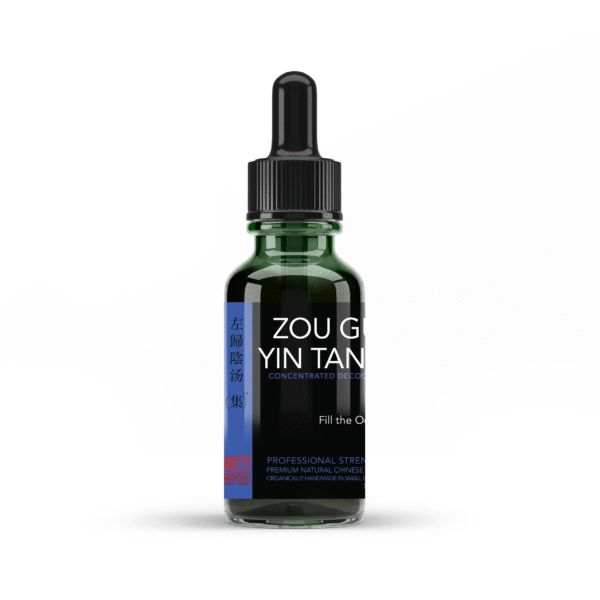
Zuo Gui Yin Tang 左歸飲湯
Login to view prices
- ACM/CCM/TCM Global Status: Safe & Effective
Fill the Ocean™
This is Si Jin Bao’s version of a classical formula that dates back to the 17th century. It is well known for addressing symptoms of Kidney Yin and Jing Deficiency as well as Wei Syndrome (Atrophy disorder) due to Liver and Kidney Deficiency.
Classical Formula · Ming Dynasty · c. 1624
左歸飲湯
Restore the Left Kidney Decoction
Fill the Ocean™
Over Four Centuries in Continuous Clinical Use
The Formula
Fill the Sea of Essence
Zuǒ Guī Yǐn Tāng — the Restore the Left Kidney Decoction — is Si Jin Bao’s rendering of Zhang Jing-yue’s classical formula for nourishing the true Yin of the Kidney: replenishing the Essence and marrow the Kidney stores, without draining what it works to fill.
In Zhang Jing-yue’s framework, the “left” Kidney holds Water and Yin. When that true Yin runs low, the Essence (Jīng) and marrow it stores thin — and the body shows it: a dry mouth and throat, night sweats, a sore and weak lower back, dizziness, tinnitus, and leakage the depleted Kidney can no longer hold. This decoction fills that sea directly. Si Jin Bao also notes it for the atrophy-type weakness (Wěi syndrome) of Liver and Kidney deficiency.
Classical Foundation
From Zhang Jing-yue’s Complete Works
The formula appears in the Jǐng-Yuè Quán Shū — the Collected Treatises of Zhang Jing-yue — the Ming physician’s 1624 compendium. Zhang set down two companion formulas: Zuǒ Guī to restore the Kidney’s Yin, and Yòu Guī to restore its Yang. Built on the Yin-nourishing core of the six-ingredient Rehmannia tradition, Zuǒ Guī Yǐn sets aside the draining members and adds Gǒu Qǐ Zǐ and honey-fried licorice — a purer tonic that fills without purging.
A Note on Left and Right
In Zhang Jing-yue’s teaching, the “left” Kidney governs Water and Yin, the “right” governs Fire and Yang. Zuǒ Guī — “restore the left” — fills the Yin and Essence; its companion Yòu Guī warms the Yang.
The Pattern
Kidney Yin & Essence Deficiency · 腎陰精虧
The pattern is a depleted Kidney Yin and Essence — the sea run low. It shows as dryness and heat from insufficiency, as weakness in the lower back and knees, and as leakage the Kidney can no longer contain. When Liver and Kidney no longer nourish the sinews and bones, atrophy and weakness may follow.
Clinical Indications
- Dry mouth and throat; desire to drink
- Night sweats; soreness of the lower back
- Spontaneous emissions; impotence
- Constipation; post-menopausal uterine bleeding
Classical tongue & pulse: a red tongue with a scanty coating; a fine (thready) pulse, sometimes rapid.
How It Works
Six Herbs: Fill, Secure, Harmonize
Shú Dì Huáng richly nourishes the Kidney Yin and supplements the Essence — the herb that fills the sea. Gǒu Qǐ Zǐ enriches Liver and Kidney Yin and the essence-blood and brightens the eyes, while Shān Zhū Yú astringes and secures the Essence, holding in what is being replenished — checking the night sweats, the emissions, and the bleeding.
Shān Yào tonifies the Spleen and Kidney and secures the Essence, anchoring the nourishment in the body’s foundations. Fú Líng gently strengthens the Spleen and drains a little Dampness, so the rich, enriching herbs are absorbed without cloying. And Zhì Gān Cǎo harmonizes the formula and supports the Spleen, so the whole is well received. Fill, and then hold what has been filled.
Clinical Recognition
When to Reach for It
Reach for Zuǒ Guī Yǐn Tāng for depleted Kidney Yin and Essence — dryness and night sweats, a weak and sore lower back, dizziness and tinnitus, emissions or bleeding the Kidney cannot hold, and the atrophy-type weakness of Liver-Kidney deficiency, with a red, scantily-coated tongue.
Western conditions and terminology that are commonly associated with these TCM patterns:
- Menopausal syndrome, amenorrhea, and post-menopausal bleeding
- Spermatorrhea, impotence, and diabetes (wasting-thirst)
- Osteoporosis, lumbago, vertigo, tinnitus, and alopecia
- Multiple sclerosis, acute myelitis, progressive muscular dystrophy, and facial paralysis (Wěi / atrophy); renal tuberculosis; lacrimation
填精
The Si Jin Bao Preparation
Si Jin Bao’s Zuǒ Guī Yǐn Tāng is a concentrated decoction prepared in small batches using traditional methods — vegan, alcohol-free, no fillers. A formula meant to fill the body’s deepest reserves is itself kept clean and whole, so nothing is added that the Kidney must work to clear.
Materia Medica · 本草
左歸飲湯
Zuǒ Guī Yǐn Tāng
Restore the Left Kidney Decoction
Fill the Ocean™
When the Kidney Yin runs low, the body loses its ballast: the low back and knees ache and weaken, the head feels light, sleep thins, and heat rises where there is no longer water to hold it down. Zhang Jing-yue’s answer was to fill rather than to force. A generous dose of prepared Rehmannia leads, with Goji and Cornus deepening the reserve, while the remaining herbs keep the rich tonic settled and moving. Below is each herb on its own terms: its nature, the channels it enters, its classical actions, and the part it plays here.
01
Herb 01
熟地黃
Radix Rehmanniae Praeparata
Prepared Rehmannia (Chinese Foxglove Root)
CategoryTonify Blood · Nourish Yin
Nature & FlavorSweet; Slightly Warm
ChannelsLiver · Kidney
Actions
Nourishes the Blood and enriches the Yin; tonifies the Kidney and supplements the Essence; fills the Marrow.
Indications
Kidney and Liver Yin and Blood deficiency; Essence depletion with soreness of the back and knees, dizziness, tinnitus, and night sweats.
Classical Reference
Recorded in the Shén Nóng Běn Cǎo Jīng (神農本草經); the prepared root is the principal herb to enrich Yin and supplement the Essence.
Role in this Formula
Richly nourishes the Kidney Yin and supplements the Essence — the herb that fills the sea, and the foundation on which the formula is built.
02
Herb 02
枸杞子
Fructus Lycii
Goji Berry (Lycium Fruit)
CategoryTonify Yin · Tonify Blood
Nature & FlavorSweet; Neutral
ChannelsLiver · Kidney · Lung
Actions
Nourishes and tonifies the Liver and Kidney; benefits the Essence and Blood; brightens the eyes.
Indications
Liver and Kidney Yin and Blood deficiency with sore back and knees, dizziness, blurred vision, and tinnitus; wasting and thirst.
Classical Reference
Recorded in the Shén Nóng Běn Cǎo Jīng (神農本草經), long valued to enrich the Liver and Kidney and brighten the eyes.
Role in this Formula
Enriches the Liver and Kidney Yin and the essence-blood and brightens the eyes — deepening the Yin nourishment at the formula’s heart.
03
Herb 03
山藥
Rhizoma Dioscoreae
Chinese Yam
CategoryTonify Qi · Secure Essence
Nature & FlavorSweet; Neutral
ChannelsSpleen · Lung · Kidney
Actions
Tonifies the Spleen and Stomach; augments the Lung and Kidney; benefits the Essence and binds what leaks.
Indications
Spleen, Lung, and Kidney deficiency with poor appetite and loose stool; spontaneous emissions and leukorrhea; wasting and thirst.
Classical Reference
Recorded in the Shén Nóng Běn Cǎo Jīng (神農本草經) as a gentle herb to tonify the Spleen and Kidney and secure the Essence.
Role in this Formula
Tonifies the Spleen and Kidney and secures the Essence, anchoring the Yin nourishment in the body’s foundations.
04
Herb 04
茯苓
Poria
Poria
CategoryDrain Dampness · Strengthen Spleen
Nature & FlavorSweet, Bland; Neutral
ChannelsHeart · Spleen · Kidney
Actions
Strengthens the Spleen and drains Dampness; promotes urination; quiets the Heart and calms the spirit.
Indications
Dampness and fluid accumulation; Spleen deficiency with poor appetite; palpitations and restlessness.
Classical Reference
Recorded in the Shén Nóng Běn Cǎo Jīng (神農本草經) as a principal herb to drain Dampness and strengthen the Spleen.
Role in this Formula
Gently strengthens the Spleen and drains a little Dampness, so the rich, enriching herbs are absorbed without becoming cloying.
05
Herb 05
炙甘草
Radix Glycyrrhizae Praeparata
Honey-Prepared Licorice Root
CategoryTonify Qi · Harmonize
Nature & FlavorSweet; Neutral (Warm when honey-prepared)
ChannelsHeart · Lung · Spleen · Stomach
Actions
Tonifies the Spleen and augments qi; harmonizes and moderates the other herbs in a formula.
Indications
Spleen qi deficiency; the need to harmonize a formula and temper its parts.
Classical Reference
Recorded in the Shén Nóng Běn Cǎo Jīng (神農本草經); honey-frying deepens its warming, Spleen-tonifying nature.
Role in this Formula
Harmonizes the formula and supports the Spleen and Stomach, so the Yin-filling herbs are well received.
06
Herb 06
山茱萸
Fructus Corni
Asiatic Cornelian Cherry Fruit
CategoryStabilize & Bind · Tonify Liver-Kidney
Nature & FlavorSour, Astringent; Slightly Warm
ChannelsLiver · Kidney
Actions
Tonifies the Liver and Kidney; stabilizes and binds the Essence; secures against leakage of sweat, emissions, urine, and blood.
Indications
Kidney and Liver deficiency with spontaneous emissions, night sweats, frequent urination, or uterine bleeding; sore back and knees, dizziness, and tinnitus.
Classical Reference
Recorded in the Shén Nóng Běn Cǎo Jīng (神農本草經) as a principal herb to secure the Essence and stop leakage.
Role in this Formula
Astringes and secures the Essence, holding in what is being replenished — checking the night sweats, the emissions, and the bleeding of a Kidney that can no longer contain.
07
Herb 07
蔬菜甘油
Glycerinum Vegetabile
Vegetable Glycerin
Nature (性)
Neutral · 平 Píng
Taste (味)
Sweet · 甘 Gān
Category
Excipient · Carrier
Traditional Actions (功效)
Harmonizes and guides the other medicinals to their target tissues. Analogous to synovial fluid — providing a medium for smooth movement and deep delivery throughout the decoction.
Role in this Formula
Excipient function: Dissolves and stabilizes the botanical constituents of the formula, ensuring consistent delivery in decoction form. Mucosal hydration: By attracting and retaining water, glycerin keeps the oral and digestive mucosa moist. Patient tolerance: Its naturally sweet, neutral profile makes the formula palatable for children and adults alike.
Modern Research
International Journal of Pharmaceutics · 2023
Glycerin serves as a co-solvent and humectant in oral liquid formulations, enhancing solubility of poorly water-soluble compounds, stabilizing active ingredients, and improving mucosal hydration.
Journal of Clinical Pharmacology · 2018
Oral glycerol has been widely used as an osmotic agent. Doses of 1–1.5 g/kg are safe and well-tolerated; its mechanism involves osmotic fluid redistribution between compartments.
Clinical Oral Investigations · 2022
Glycerin-containing oral moisturizers significantly improved xerostomia symptoms compared with water-based controls, enhancing mucosal hydration and prolonging moisture retention in the oral cavity.
Clinical Translation
Gān Yóu guides the physical delivery of the formula — ensuring the preparation reaches its target tissues and is tolerated long enough to do its work. A naturally sweet, neutral carrier that makes the decoction palatable for adults and children alike.
08
Herb 08
蒸餾水
Aqua Destillata
Distilled Water
Nature (性)
Neutral · 平 Píng
Taste (味)
Tasteless
Category
Vehicle · Neutral Carrier
Traditional Actions (功效)
Not a classical herb in its own right. Functions as a neutral carrier — a pharmaceutically pure vehicle that allows the active constituents of the classical herbs in the formula to extract, stabilize, and deliver without interference.
Role in this Formula
Biomedical role: A pharmaceutically pure solvent, ensuring consistent extraction and delivery of active compounds without introducing mineral ions, microbial contaminants, or chemical interference. Clinical relevance: Acts as a safe vehicle — analogous to saline in biomedicine — so that every dose of the formula performs identically, from the first bottle to the last.
Modern Research
Pharmacopeial Standard · Herbal Decoction Stability
Distilled water ensures stability, reproducibility, and safety in herbal decoction preparations by eliminating mineral ions and microbial contaminants that would otherwise compromise extraction consistency and shelf life.
Clinical Pharmacology · Oral Solution Vehicles
Distilled water is recognized in clinical pharmacology as the neutral carrier of choice for both intravenous and oral solutions, chosen specifically for its non-reactive profile with active ingredients.
Clinical Translation
Li Shi-zhen devoted an entire section of the Ben Cao Gang Mu (本草綱目) to the classification of waters — recognizing that the water in which a formula is prepared shapes the clinical outcome. SJB honors this principle by using pharmaceutically distilled water as the neutral vehicle for every decoction.
填精
Fill, and Hold
One herb fills the Kidney’s sea, two enrich and secure it, one anchors it in the Spleen, and two keep the rich tonic moving and harmonized. Setting aside the draining members of the older Rehmannia formula, Zhang Jing-yue built a purer tonic — one that fills the Essence, and then holds what has been filled.
Dosage & Preparation · 用法用量
How to Prepare & Dose
Si Jin Bao Concentrated Decoctions™ are activated in hot water, steeped briefly, and taken warm. Follow the four steps below, then refer to the age-appropriate dosing grid.
Preparation
The Four Steps
-
Step 01ShakeShake the bottle well before each use.
-
Step 02Add Hot WaterAdd the age-appropriate dosage into 1 oz of hot water, as you would for tea.
-
Step 03SteepCover and steep for 5 minutes, then allow to cool to a warm, drinkable temperature.
-
Step 04DrinkDrink warm, twice daily or as directed by your practitioner.
For best results: take on an empty stomach — approximately 30 minutes before or after food or drink.
Dosage
By Age Group
Newborn
3drops
Twice daily
1 Year
7drops
Twice daily
2–6 Years
10drops
Twice daily
7 Years to Adult
20drops
Twice daily
Treatment Protocols
Suggested Clinical Course
Acute
10 Days
Then Reevaluate
Subacute
30 Days
Then Reevaluate
Chronic
90 Days
Then Reevaluate
Bottle Longevity
11½ days
at standard adult dosage
Zuo Gui Yin Tang CD Product Guide by SJB Team
Research · 研究
左歸飲湯
Zuǒ Guī Yǐn Tāng
The Modern Evidence
Six Studies on the Herbs in Zuo Gui Yin Tang
Zuǒ Guī Yǐn is built to nourish the Kidney Yin and supplement the Essence, and each of its six herbs has drawn modern study in its own right. What follows is that research, taken herb by herb.
01
Study 01
熟地黃
Experimental Pharmacology Study
Chin. Med. · 2016
Design
Experimental study (catalpol; diabetic rats)
Active Compounds
Iridoid glycoside (catalpol)
Relevance
Direct — nourishes Yin, invigorates Kidney
Background
Rehmannia is described as nourishing the Yin, invigorating the Kidney, and treating xiāo kě (wasting-thirst). This study examined catalpol, a principal compound of the root.
Findings
Catalpol showed antidiabetic and antioxidant effects, lowering blood glucose and reducing oxidative stress in diabetic rats.
Relevance to Zuo Gui Yin Tang
Shú Dì Huáng fills the Kidney Yin and supplements the Essence; this study documents the antioxidant, antidiabetic pharmacology relevant to the wasting-thirst the formula addresses.
Citation
Antidiabetic and antioxidant effects of catalpol extracted from Rehmannia glutinosa (Di Huang) on rat diabetes induced by streptozotocin and high-fat, high-sugar feed. Chin. Med. 2016. PMCID: PMC4864906.
02
Study 02
枸杞子
Comprehensive Review
Front. Pharmacol. · 2025
Design
Comprehensive review
Active Compounds
Polysaccharides (LBP), betaine, carotenoids, flavonoids
Relevance
Direct — nourishes Liver-Kidney, Essence
Background
Gǒu Qǐ Zǐ tonifies the Kidney, nourishes the Essence, soothes the Liver, and improves vision. This review summarized its metabolites and their mechanisms.
Findings
Its metabolites — polysaccharides, betaine, carotenoids, and flavonoids — are documented for antioxidant, anti-apoptotic, and hormone-regulating effects, supporting reproductive and essence-related functions.
Relevance to Zuo Gui Yin Tang
Gǒu Qǐ Zǐ enriches Liver-Kidney Yin and the essence-blood; this review documents the antioxidant and essence-supporting pharmacology behind that role.
Citation
Therapeutic mechanisms of Lycii Fructus in male infertility: a comprehensive review. Front. Pharmacol. 2025;16:1613156. PMCID: PMC12497719.
03
Study 03
山藥
Comprehensive Review
Foods · 2024
Design
Comprehensive review
Active Compounds
Polysaccharides, diosgenin, allantoin
Relevance
Direct — tonifies Spleen-Kidney
Background
Shān Yào tonifies the Spleen, Lung, and Kidney and secures the Essence. This review surveyed the chemistry and pharmacology of Chinese yam.
Findings
Chinese yam is documented for anti-diabetic, antioxidant, anti-inflammatory, and immunomodulatory activity, with polysaccharides among its principal constituents.
Relevance to Zuo Gui Yin Tang
Shān Yào anchors the nourishment in the Spleen and Kidney and secures the Essence; this review documents the tonic, antioxidant pharmacology behind that role.
Citation
A Frontier Review of Nutraceutical Chinese Yam. Foods. 2024;13(10):1426. PMCID: PMC11119861.
04
Study 04
茯苓
Comprehensive Review
J. Ethnopharmacol. · 2025
Design
Comprehensive review
Active Compounds
Triterpenes (pachymic acid, poricoic acids), polysaccharides
Relevance
Supporting — drains Dampness, strengthens Spleen
Background
Fú Líng strengthens the Spleen and drains Dampness. This review compiled the phytochemistry and pharmacology of Poria cocos.
Findings
Poria is documented for diuretic, anti-inflammatory, antioxidant, and immunomodulatory activity, with triterpenes and polysaccharides as its principal constituents.
Relevance to Zuo Gui Yin Tang
Fú Líng gently strengthens the Spleen and drains a little Dampness, so the rich, Yin-filling herbs are absorbed without cloying; this review documents that pharmacology.
Citation
A multidimensional perspective on Poria cocos, an ancient fungal traditional Chinese medicine. J. Ethnopharmacol. 2025. PMID: 40280371.
05
Study 05
甘草
Phytochemical / Pharmacological Review
Phytother. Res. · 2018
Design
Phytochemical / pharmacological review
Active Compounds
Triterpenes (glycyrrhizin, glycyrrhetinic acid)
Relevance
Supporting — tonifies Spleen qi, harmonizes
Background
Gān Cǎo — here honey-fried — tonifies the Spleen qi and harmonizes a formula. This review summarized the chemistry and pharmacology of licorice.
Findings
Glycyrrhizin and glycyrrhetinic acid are documented for anti-inflammatory and antiallergic activity, with broad use across formulas to moderate and harmonize.
Relevance to Zuo Gui Yin Tang
Zhì Gān Cǎo supports the Spleen qi and harmonizes the formula, so the Yin-filling herbs are well received; the review documents the anti-inflammatory pharmacology behind that role.
Citation
Liquorice (Glycyrrhiza glabra): A phytochemical and pharmacological review. Phytother. Res. 2018. PMCID: PMC7167772.
06
Study 06
山茱萸
Comprehensive Review
Chin. Med. · 2018
Design
Comprehensive review
Active Compounds
Iridoid glycosides (loganin, morroniside)
Relevance
Direct — secures Essence, tonifies Liver-Kidney
Background
Shān Zhū Yú replenishes the Liver and Kidney and arrests seminal emission and sweat. This review summarized the chemistry and pharmacology of Corni Fructus.
Findings
Corni Fructus is documented for antioxidant, anti-inflammatory, neuroprotective, hepatoprotective, and nephroprotective activity, with loganin and morroniside among its iridoid glycosides.
Relevance to Zuo Gui Yin Tang
Shān Zhū Yú astringes and secures the Essence and tonifies the Liver and Kidney; this review documents the pharmacology behind that securing, tonifying role.
Citation
Corni Fructus: a review of chemical constituents and pharmacological activities. Chin. Med. 2018;13:34. PMCID: PMC6020197.
Mechanism Notes
How the formula’s herbs work at a biochemical level.
Shú Dì Huáng
Catalpol (iridoid glycoside) documented for antioxidant and antidiabetic activity, lowering oxidative stress and blood glucose (PMC4864906, 2016).
Gǒu Qǐ Zǐ
Polysaccharides (LBP), betaine, and carotenoids documented for antioxidant, anti-apoptotic, and hormone-regulating effects (PMC12497719, 2025).
Shān Yào
Polysaccharides and diosgenin documented for anti-diabetic, antioxidant, and immunomodulatory activity (PMC11119861, 2024).
Fú Líng
Triterpenes (pachymic acid, poricoic acids) and polysaccharides documented for diuretic, anti-inflammatory, and antioxidant activity (PMID 40280371, 2025).
Zhì Gān Cǎo
Glycyrrhizin and glycyrrhetinic acid documented for anti-inflammatory and antiallergic activity, harmonizing the formula (PMC7167772, 2018).
Shān Zhū Yú
Iridoid glycosides (loganin, morroniside) documented for antioxidant, neuroprotective, and nephroprotective activity (PMC6020197, 2018).
Western Terminology
Western conditions and terminology commonly associated with these TCM patterns:
Menopausal Syndrome · Amenorrhea · Spermatorrhea · Impotence · Diabetes · Osteoporosis · Lumbago · Vertigo · Tinnitus · Alopecia · Multiple Sclerosis · Acute Myelitis · Progressive Muscular Dystrophy · Facial Paralysis · Renal Tuberculosis · Lacrimation
填精
The Sea Replenished
Studied one by one, the six herbs of Zuǒ Guī Yǐn Tāng converge on the formula’s single purpose: Rehmannia and Goji to fill the Kidney Yin and Essence, Cornus and Chinese Yam to secure and anchor it, Poria to keep the rich tonic moving, and Licorice to harmonize. Four centuries after Zhang Jing-yue set it down, the antioxidant, essence-supporting, and Kidney-protective mechanisms now have names for what the formula has always done: fill the sea, and hold what fills it.
Related products
-

Ban Lan Gen Tang 板藍根湯
Login to view prices -
Dao Chi San Tang 導赤散湯
Login to view prices -
Chai Hu Shu Gan Tang 柴胡舒肝湯
Login to view prices -
Da Bu Yuan Jian Tang 大補元煎湯
Login to view prices

Reviews
There are no reviews yet.