Enjoy Free US Domestic Shipping on Orders Over $400+

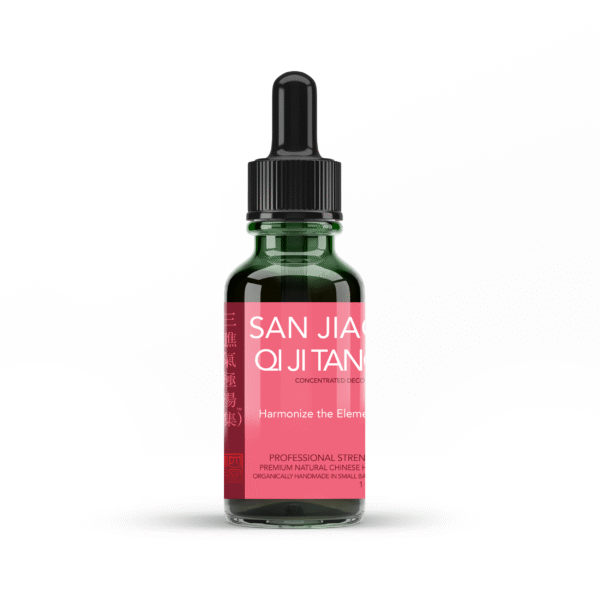
San Jiao Qi Ji Tang 三焦氣机湯(集)
Login to view prices
- ACM/CCM/TCM Global Status: Safe & Effective
Meeting at the Crossroads™
This is Si Jin Bao’s proprietary formula designed to harmonize the San Jiao (Triple Warmer) — the channel responsible for governing fluid transformation, temperature regulation, and Qi circulation throughout all three burning spaces. San Jiao Qi Ji Tang works by restoring communication between the Upper, Middle, and Lower Jiao, while simultaneously moving Blood, regulating the lymphatic and interstitial fluid systems, and tonifying the Kidney Yang that anchors the entire mechanism. It is indicated for patients presenting with systemic Qi stagnation, fluid dysregulation, chronic fatigue, and immune deficiency patterns where the root cause lies in a disrupted San Jiao axis.
Si Jin Bao Proprietary Formula · 2003
三焦氣机湯
Triple Burner Qi-Mechanism Decoction
Meeting at the Crossroads™
Over Two Decades in Service
The Formula
Where the Three Burners Meet
San Jiao Qi Ji Tang is Si Jin Bao’s proprietary formula for harmonizing the San Jiao — the Triple Burner that governs fluid transformation, temperature regulation, and the circulation of Qi across all three burning spaces.
When the San Jiao loses its coordination, the body’s systems stop speaking to one another: fluid pools where it should move, warmth gathers in one region and abandons another, and Qi stalls across the whole axis. This formula works to restore communication between the Upper, Middle, and Lower Jiao — moving Blood, regulating the lymphatic and interstitial fluid systems, and tonifying the Kidney Yang that anchors the entire mechanism.
The Principle
Restore the Axis, and the System Follows
The San Jiao is not an organ but a relationship — the passageway through which Qi and fluids travel between the body’s three regions. It is where respiration, digestion, and elimination are kept in conversation. When that conversation breaks down, the result is rarely one clean symptom; it is a systemic picture of stagnation, fluid dysregulation, fatigue, and weakened immunity whose root lies in a disrupted San Jiao axis.
This formula is built on a single principle: treat the axis, not the scattered complaints. Open what is blocked, move the Blood and the fluids, anchor the mechanism with Kidney Yang, and nourish the Yin so movement does not deplete — and the regions begin to coordinate again.
A Note on the San Jiao
The Triple Burner is the classics’ way of describing the body as one connected fluid-and-Qi system rather than a set of separate parts. The Upper Jiao disperses, the Middle Jiao transforms, the Lower Jiao drains — and the San Jiao is the channel that keeps all three working as a whole. When it is open, the body regulates itself; when it is closed, dysregulation spreads.
The Pattern
A Disrupted San Jiao Axis · 三焦不通
The pattern this formula answers is systemic rather than local: Qi stagnation spread across the burners, fluid that pools and lingers, a body that runs hot and cold by turns, and the deep fatigue and weakened immunity that follow when the whole axis falls out of coordination.
Clinical Indications
- Chronic fatigue; brain fog; burnout
- Lymphatic congestion; edema & water retention
- Heart palpitations; insomnia; anxiety & restlessness
- Temperature dysregulation; hormonal imbalance
- Immune deficiency; autoimmune patterns; systemic inflammation
- Fibromyalgia
How It Works
Eight Herbs: Open, Move, Drain, Anchor, Nourish
Xì Xīn opens. Acrid and warming, it disperses Cold and unblocks the channels and orifices, helping re-establish free passage through a closed San Jiao. Dān Shēn and Dāng Guī move and replenish the Blood — Dan Shen dispersing stasis and quieting the spirit, Dang Gui nourishing as it circulates, so flow is both freed and restored. Shān Zhā moves Blood and breaks accumulation, easing the congestion that gathers when fluids stop moving.
Fú Líng is the formula’s fluid regulator — draining Damp, transforming phlegm, strengthening the Spleen, and calming the Heart, the modern correlate of its work on lymphatic and interstitial fluid. Bǔ Gǔ Zhī anchors the whole mechanism, tonifying Kidney Yang and securing Essence to supply the warmth that powers the axis.
Bái Sháo and Běi Shā Shēn hold the balance: Bai Shao nourishes Blood and Yin and softens, while Bei Sha Shen nourishes Yin and generates fluids — so the opening, moving, and draining never dry or deplete the body. Open, move, drain, anchor, nourish: five actions kept in proportion.
Clinical Recognition
When to Reach for It
Reach for San Jiao Qi Ji Tang when the picture is systemic rather than local — the patient who is exhausted and foggy, who holds fluid, whose temperature regulation has gone unreliable, and whose many complaints trace back to a single disrupted axis rather than to any one organ.
Western conditions and terminology that are commonly associated with these TCM patterns:
- Chronic fatigue syndrome, post-viral syndrome, chronic Epstein-Barr
- Lymphedema, interstitial cystitis, fibromyalgia, complex regional pain
- Autonomic dysregulation, hypothyroidism, adrenal fatigue, PCOS
- Systemic lupus, multiple chemical sensitivity, anxiety disorders
三焦
The Si Jin Bao Preparation
Si Jin Bao’s San Jiao Qi Ji Tang is a concentrated decoction prepared in small batches using traditional methods — alcohol-free, no fillers. A formula built to coordinate the whole body is made with the same attention to the whole.
Materia Medica · 本草
三焦氣机湯
Sān Jiāo Qì Jī Tāng
Triple Burner Qi-Mechanism Decoction
Meeting at the Crossroads
Eight herbs assembled to open, move, drain, anchor, and nourish across the three burners. The cards below detail the nature, flavor, channels, and actions of each — drawn from the classical materia medica — along with how each functions within this specific formula.
01
Herb 01
細辛
Herba Asari
Wild Ginger (Asarum)
Category
Warms the Interior & Disperses Cold
Nature & Flavor
Acrid · Warm
Channels
Lung · Kidney · Heart
Actions
Disperses Cold and unblocks the channels and orifices; warms the Lungs and transforms thin mucus; opens obstruction and stops pain. A strongly opening, dispersing herb used in small, careful amounts.
Indications
Cold obstruction with blocked passages; congestion of the channels; cold-type pain; thin watery mucus from cold in the Lungs.
Classical Reference
Recorded in the Shén Nóng Běn Cǎo Jīng, Xì Xīn is the classical herb for opening what Cold has closed — unblocking the channels and orifices so Qi can move freely again.
Role in this Formula
The opener. It disperses Cold and unblocks the channels and orifices, helping re-establish free passage through a closed San Jiao.
02
Herb 02
丹蔘
Radix Salviae Miltiorrhizae
Red Sage Root (Salvia)
Category
Invigorates the Blood
Nature & Flavor
Bitter · Slightly cold
Channels
Heart · Pericardium · Liver
Actions
Invigorates the Blood and dispels stasis; cools the Blood; quiets the spirit and relieves irritability. A central blood-moving herb that also settles the Heart.
Indications
Blood stasis with pain or palpitations; restlessness and disturbed sleep; congested circulation needing both movement and calm.
Classical Reference
Recorded in the Shén Nóng Běn Cǎo Jīng, Dān Shēn is the classical single herb said to do the work of the “four substances” for the Blood — moving, cooling, and harmonizing at once.
Role in this Formula
Moves the Blood and resolves stasis while quieting the spirit — freeing congested circulation and calming the restlessness of a dysregulated system.
03
Herb 03
山楂
Fructus Crataegi
Hawthorn Fruit
Category
Relieves Food Stagnation
Nature & Flavor
Sour, sweet · Slightly warm
Channels
Spleen · Stomach · Liver
Actions
Reduces food stagnation and transforms accumulation; invigorates the Blood and dispels stasis. Especially noted for dissolving accumulation and moving stagnant Blood.
Indications
Accumulation and fullness; stagnation of food and Blood; congestion that resists movement.
Classical Reference
Documented in the classical materia medica and detailed in the Běn Cǎo Gāng Mù, Shān Zhā is the herb long relied upon to break down accumulation and set stagnant Blood moving.
Role in this Formula
Moves Blood and breaks accumulation — easing the congestion that gathers across the burners when fluids and Blood stop moving.
04
Herb 04
茯苓
Poria
Poria (Hoelen)
Category
Drains Dampness & Promotes Water Metabolism
Nature & Flavor
Sweet, bland · Neutral
Channels
Heart · Spleen · Kidney
Actions
Promotes urination and drains Damp; strengthens the Spleen; transforms Phlegm; calms the Heart and quiets the spirit. The materia medica’s foremost regulator of fluid metabolism.
Indications
Fluid accumulation and edema; Phlegm-Damp; Spleen deficiency with retained fluids; palpitations and restlessness with a Damp background.
Classical Reference
An upper-grade herb of the Shén Nóng Běn Cǎo Jīng, Fú Líng is the classical center of fluid-regulating formulas — draining without depleting and calming the Heart as it works.
Role in this Formula
The fluid regulator: drains Damp, transforms Phlegm, strengthens the Spleen, and calms the Heart — the modern correlate of the formula’s work on lymphatic and interstitial fluid.
05
Herb 05
白芍
Radix Paeoniae Alba
White Peony Root
Category
Tonifies the Blood
Nature & Flavor
Bitter, sour · Cool
Channels
Liver · Spleen
Actions
Nourishes the Blood and preserves Yin; softens the Liver and relieves pain; calms ascendant Liver Yang. The classical herb for nourishing and restraining at once.
Indications
Blood and Yin deficiency; cramping and tension; irritability and restlessness from an unsoftened Liver.
Classical Reference
Recorded in the Shén Nóng Běn Cǎo Jīng, Bái Sháo is the classical herb paired with moving and warming agents to nourish the Blood and keep their action from depleting the body.
Role in this Formula
Nourishes Blood and Yin and softens — tempering the opening, moving, and draining herbs and calming the system as it is restored.
06
Herb 06
補骨脂
Fructus Psoraleae
Psoralea Fruit
Category
Tonifies the Yang
Nature & Flavor
Acrid, bitter · Very warm
Channels
Kidney · Spleen
Actions
Tonifies the Kidney Yang and secures the Essence; warms the Spleen; assists the Kidney in grasping the Qi. A warming, consolidating tonic for the body’s foundational Yang.
Indications
Kidney Yang deficiency; cold and weakness in the lower body; loss of Essence; deficient warmth at the body’s root.
Classical Reference
Documented in the classical materia medica, Bǔ Gǔ Zhī is the herb relied upon to warm and secure the Kidney Yang — the deep source of the body’s metabolic fire.
Role in this Formula
The anchor. It tonifies Kidney Yang and secures Essence, supplying the warmth that powers the entire San Jiao mechanism.
07
Herb 07
北沙参
Radix Glehniae
Glehnia Root
Category
Tonifies the Yin
Nature & Flavor
Sweet, slightly bitter · Cool
Channels
Lung · Stomach
Actions
Nourishes the Lung and Stomach Yin; generates fluids; clears deficient Lung Heat. A gentle, moistening Yin tonic.
Indications
Yin deficiency with dryness; depleted fluids; dry throat and Lung dryness after heat or exhaustion.
Classical Reference
Documented in the classical materia medica, Běi Shā Shēn is the cooling, moistening counterpart to the warming tonics — replenishing the fluids that vigorous movement can consume.
Role in this Formula
Nourishes Yin and generates fluids, balancing the warming and draining actions so that opening and moving the system never dries or depletes it.
08
Herb 08
當歸
Radix Angelicae Sinensis
Chinese Angelica Root
Category
Tonifies the Blood
Nature & Flavor
Sweet, acrid · Warm
Channels
Liver · Heart · Spleen
Actions
Tonifies and invigorates the Blood; regulates the menses; moistens the Intestines. The materia medica’s foremost herb for nourishing Blood while keeping it moving.
Indications
Blood deficiency with stasis; weak, sluggish circulation; depletion that calls for both nourishment and movement.
Classical Reference
Recorded in the Shén Nóng Běn Cǎo Jīng, Dāng Guī is the classical chief of the Blood tonics — uniquely able to nourish and circulate the Blood in a single action.
Role in this Formula
Nourishes and moves the Blood, partnering Dān Shēn so that circulation is both replenished and freed.
09
Herb 09
蔬菜甘油
Glycerinum Vegetabile
Vegetable Glycerin
Nature (性)
Neutral · 平 Píng
Taste (味)
Sweet · 甘 Gān
Category
Excipient · Carrier
Traditional Actions (功效)
Harmonizes and guides the other medicinals to their target tissues. Analogous to synovial fluid — providing a medium for smooth movement and deep delivery throughout the decoction.
Role in this Formula
Excipient function: Dissolves and stabilizes the botanical constituents of the formula, ensuring consistent delivery in decoction form. Mucosal hydration: By attracting and retaining water, glycerin keeps the oral and digestive mucosa moist. Patient tolerance: Its naturally sweet, neutral profile makes the formula palatable for children and adults alike.
Modern Research
International Journal of Pharmaceutics · 2023
Glycerin serves as a co-solvent and humectant in oral liquid formulations, enhancing solubility of poorly water-soluble compounds, stabilizing active ingredients, and improving mucosal hydration.
Journal of Clinical Pharmacology · 2018
Oral glycerol has been widely used as an osmotic agent. Doses of 1–1.5 g/kg are safe and well-tolerated; its mechanism involves osmotic fluid redistribution between compartments.
Clinical Oral Investigations · 2022
Glycerin-containing oral moisturizers significantly improved xerostomia symptoms compared with water-based controls, enhancing mucosal hydration and prolonging moisture retention in the oral cavity.
Clinical Translation
Gān Yóu guides the physical delivery of the formula — ensuring the preparation reaches its target tissues and is tolerated long enough to do its work. A naturally sweet, neutral carrier that makes the decoction palatable for adults and children alike.
10
Herb 10
蒸餾水
Aqua Destillata
Distilled Water
Nature (性)
Neutral · 平 Píng
Taste (味)
Tasteless
Category
Vehicle · Neutral Carrier
Traditional Actions (功效)
Not a classical herb in its own right. Functions as a neutral carrier — a pharmaceutically pure vehicle that allows the active constituents of the classical herbs in the formula to extract, stabilize, and deliver without interference.
Role in this Formula
Biomedical role: A pharmaceutically pure solvent, ensuring consistent extraction and delivery of active compounds without introducing mineral ions, microbial contaminants, or chemical interference. Clinical relevance: Acts as a safe vehicle — analogous to saline in biomedicine — so that every dose of the formula performs identically, from the first bottle to the last.
Modern Research
Pharmacopeial Standard · Herbal Decoction Stability
Distilled water ensures stability, reproducibility, and safety in herbal decoction preparations by eliminating mineral ions and microbial contaminants that would otherwise compromise extraction consistency and shelf life.
Clinical Pharmacology · Oral Solution Vehicles
Distilled water is recognized in clinical pharmacology as the neutral carrier of choice for both intravenous and oral solutions, chosen specifically for its non-reactive profile with active ingredients.
Clinical Translation
Li Shi-zhen devoted an entire section of the Ben Cao Gang Mu (本草綱目) to the classification of waters — recognizing that the water in which a formula is prepared shapes the clinical outcome. SJB honors this principle by using pharmaceutically distilled water as the neutral vehicle for every decoction.
三焦
Open, Move, Anchor, Nourish
One herb opens the closed channels; three move and replenish the Blood; one regulates the fluids; one anchors the mechanism with Kidney Yang; and two nourish the Yin so movement never depletes. Assembled around the San Jiao axis, the eight work as a single instruction — restore communication between the burners, and let the body coordinate itself again.
Dosage & Preparation · 用法用量
How to Prepare & Dose
Si Jin Bao Concentrated Decoctions™ are activated in hot water, steeped briefly, and taken warm. Follow the four steps below, then refer to the age-appropriate dosing grid.
Preparation
The Four Steps
-
Step 01ShakeShake the bottle well before each use.
-
Step 02Add Hot WaterAdd the age-appropriate dosage into 1 oz of hot water, as you would for tea.
-
Step 03SteepCover and steep for 5 minutes, then allow to cool to a warm, drinkable temperature.
-
Step 04DrinkDrink warm, twice daily or as directed by your practitioner.
For best results: take on an empty stomach — approximately 30 minutes before or after food or drink.
Dosage
By Age Group
Newborn
3drops
Twice daily
1 Year
7drops
Twice daily
2–6 Years
10drops
Twice daily
7 Years to Adult
20drops
Twice daily
Treatment Protocols
Suggested Clinical Course
Acute
10 Days
Then Reevaluate
Subacute
30 Days
Then Reevaluate
Chronic
90 Days
Then Reevaluate
Bottle Longevity
11½ days
at standard adult dosage
SJQJT CD Product Guide by SJB Team
Research · 研究
三焦氣机湯
Sān Jiāo Qì Jī Tāng
Peer-Reviewed Evidence
Eight Studies on the Herbs in San Jiao Qi Ji Tang
What follows is the peer-reviewed evidence on the eight herbs that compose this formula — each selected for a documented role in opening the channels, moving the Blood, regulating fluids, anchoring the Yang, or nourishing the Yin.
01
Study 01
細辛
Constituent Isolation & In Vitro Activity
Molecules · 2017
Design
Constituent isolation & in vitro anti-inflammatory evaluation
Active Compounds
Lignans; volatile-oil constituents
Relevance
Direct — the channel-opening herb
Background
Xixin (Asari Radix et Rhizoma) is used for cold, pain, and inflammatory conditions and as a local anesthetic. This study isolated constituents from the roots and rhizomes of Asarum heterotropoides and evaluated their anti-inflammatory activity.
Findings
Multiple lignans and related constituents were isolated, several showing in vitro anti-inflammatory activity. The herb’s volatile oil and lignans are documented as its analgesic and anti-inflammatory principles.
Relevance to San Jiao Qi Ji Tang
Xì Xīn is the formula’s opener. This study supplies constituent-level support for the anti-inflammatory dimension of an herb classically used to disperse Cold, unblock the channels, and stop pain.
Citation
Jing Y, et al. Chemical Constituents from the Roots and Rhizomes of Asarum heterotropoides var. mandshuricum and the In Vitro Anti-Inflammatory Activity. Molecules. 2017. PMCID: PMC6155747.
02
Study 02
丹蔘
Review of Active Constituents & Actions
Acta Pharmacol. Sin. · 2018
Design
Review of pharmacologically active constituents
Active Compounds
Tanshinones; salvianolic acids
Relevance
Direct — moves Blood, resolves stasis
Background
Danshen has been used for centuries to promote blood circulation and relieve stasis. This review systematized its cardiovascular and vascular-protective actions and the constituents behind them.
Findings
Lipophilic tanshinones and hydrophilic salvianolic acids contribute anticoagulant, vasodilatory, microcirculation-improving, antioxidant, and anti-inflammatory effects, helping prevent vascular and cardiac pathology.
Relevance to San Jiao Qi Ji Tang
Dān Shēn moves the Blood and resolves stasis across the burners while calming the spirit. This review documents the circulation-improving, anti-stasis pharmacology behind that role.
Citation
Li ZM, Xu SW, Liu PQ. Salvia miltiorrhiza Burge (Danshen): a golden herbal medicine in cardiovascular therapeutics. Acta Pharmacologica Sinica. 2018. PMCID: PMC5943903.
03
Study 03
山楂
Mechanisms Review
Front. Pharmacol. · 2020
Design
Mechanistic review
Active Compounds
Flavonoids, polyphenols, triterpenic acids
Relevance
Direct — moves Blood, clears congestion
Background
Hawthorn (Shanzha) has long been used to aid digestion and move stagnant Blood. This review examined the mechanisms behind its cardiovascular and circulation-supporting effects.
Findings
Four principal mechanisms were summarized — blood lipid-lowering, anti-oxidative, anti-inflammatory, and vascular endothelial protection — providing a theoretical basis for hawthorn’s circulation-supporting and anti-atherosclerotic use.
Relevance to San Jiao Qi Ji Tang
Shān Zhā moves Blood and clears congestion. The review’s documented lipid-lowering, anti-inflammatory, and endothelial-protective actions support that role in a stagnant, congested system.
Citation
Hawthorn (Crataegus): a review of anti-atherosclerotic mechanisms — blood lipid-lowering, anti-oxidative, anti-inflammatory, and vascular endothelial protection. Frontiers in Pharmacology. 2020. PMCID: PMC7047282.
04
Study 04
茯苓
Structure & Pharmacology Review
RSC Adv. · 2024
Design
Review — extraction, structure, pharmacology, application
Active Compounds
Poria cocos polysaccharides (β-glucans)
Relevance
Direct — regulates fluid, supports immunity
Background
Poria cocos (Fuling) is a classical fluid-regulating and tonic medicine; its polysaccharides are a principal active fraction. This review surveyed their structure and pharmacological activity.
Findings
Poria cocos polysaccharides are documented for immunomodulatory, anti-inflammatory, antioxidant, antitumor, and hepatoprotective activities, and are applied as drugs, functional foods, and supplements.
Relevance to San Jiao Qi Ji Tang
Fú Líng regulates the body’s fluids and supports the immune defenses that falter when the San Jiao is disrupted. This review documents the immunomodulatory and anti-inflammatory pharmacology of its principal active fraction.
Citation
Deng L, Huang G. Preparation, structure and application of polysaccharides from Poria cocos. RSC Advances. 2024. PMCID: PMC11440477.
05
Study 05
白芍
A Focused Review
Open Life Sci. · 2024
Design
Focused mechanistic review
Active Compounds
Paeoniflorin
Relevance
Direct — softens, eases tension & pain
Background
White peony (Bai Shao) is a long-used analgesic and softening herb; paeoniflorin is its principal active glycoside. This review focused on paeoniflorin’s analgesic mechanisms.
Findings
Paeoniflorin shows antioxidant, anti-inflammatory, analgesic, and antispasmodic properties, acting through multiple pain-regulatory pathways including neural protection and inhibition of inflammatory signaling.
Relevance to San Jiao Qi Ji Tang
Bái Sháo nourishes and softens, easing the tension and pain that accompany a dysregulated system. Paeoniflorin’s documented analgesic and antispasmodic action is the constituent-level expression of that softening role.
Citation
Li M, et al. The analgesic effect of paeoniflorin: A focused review. Open Life Sciences. 2024. PMCID: PMC11365469.
06
Study 06
補骨脂
Comprehensive Pharmacological Review
Chinese Medicine · 2023
Design
Comprehensive review
Active Compounds
Coumarins, flavonoids, meroterpenes
Relevance
Direct — tonifies Kidney Yang, anchors
Background
Buguzhi is used for kidney-yang deficiency, cold and weakness of the lower body, and loss of Essence. This review consolidated its chemistry and pharmacology.
Findings
Psoralea and its constituents are documented for anti-inflammatory, antioxidant, antiosteoporosis, cardioprotective, neuroprotective, and immunomodulatory activities, consistent with its traditional Kidney-Yang-warming use.
Relevance to San Jiao Qi Ji Tang
Bǔ Gǔ Zhī anchors the formula by tonifying Kidney Yang and securing Essence. This review documents the warming, tonifying, and immunomodulatory pharmacology behind that anchoring role.
Citation
Psoralea corylifolia L.: a comprehensive review of its botany, traditional uses, phytochemistry, pharmacology, toxicology, quality control and pharmacokinetics. Chinese Medicine. 2023. PMCID: PMC9830135.
07
Study 07
北沙参
Systematic Review
Evid. Based Complement. Alternat. Med. · 2019
Design
Systematic review — phytochemistry & pharmacology
Active Compounds
Coumarins, polysaccharides, lignans
Relevance
Direct — nourishes Yin, generates fluids
Background
Glehnia (Bei Sha Shen) is used to nourish Yin, moisten the Lung, and clear heat. This review systematized its chemistry and pharmacology.
Findings
Glehnia and its constituents are documented for anti-inflammatory, antioxidant, analgesic, hepatoprotective, and immunoregulatory effects, consistent with its yin-nourishing, fluid-generating traditional use.
Relevance to San Jiao Qi Ji Tang
Běi Shā Shēn nourishes Yin and generates fluids, balancing the warming and draining of the formula. This review documents the anti-inflammatory and immunoregulatory pharmacology that supports that balancing role.
Citation
Yang M, et al. Ethnopharmacology, Phytochemistry, and Pharmacology of the Genus Glehnia: A Systematic Review. Evidence-Based Complementary and Alternative Medicine. 2019. PMCID: PMC6931029.
08
Study 08
當歸
Structure & Biological Potency
Front. Pharmacol. · 2024
Design
Controlled animal study (blood-deficiency model) + structural analysis
Active Compounds
Angelica polysaccharides; ferulic acid, ligustilide
Relevance
Direct — nourishes & moves the Blood
Background
Dang Gui is renowned for blood-tonic and blood-activating effects. This study isolated its polysaccharides and tested their blood-enriching activity in a blood-deficiency model.
Findings
Angelica sinensis polysaccharide raised serum erythropoietin, G-CSF, and IL-3, lowered TNF-α, and promoted hematopoiesis — biochemical support for the herb’s blood-tonic reputation; ferulic acid and ligustilide additionally activate circulation.
Relevance to San Jiao Qi Ji Tang
Dāng Guī nourishes and moves the Blood, partnering Dān Shēn so circulation is replenished as it is freed. This study documents the hematopoietic, blood-enriching action behind that role.
Citation
Structural analysis and blood-enriching effects comparison based on biological potency of Angelica sinensis polysaccharides. Frontiers in Pharmacology. 2024. PMCID: PMC11215113.
Mechanism Notes
How the herbs work at a biochemical level.
Xì Xīn
Lignans and volatile-oil constituents of Asarum documented for in vitro anti-inflammatory activity — a modern correlate of the herb’s channel-opening, pain-relieving use (PMC6155747, 2017).
Dān Shēn
Tanshinones and salvianolic acids documented for anticoagulant, vasodilatory, microcirculation-improving, and anti-inflammatory effects (PMC5943903, 2018).
Shān Zhā
Hawthorn flavonoids and polyphenols documented for lipid-lowering, anti-oxidative, anti-inflammatory, and vascular endothelial-protective effects (PMC7047282, 2020).
Fú Líng
Poria cocos polysaccharides documented for immunomodulatory, anti-inflammatory, and antioxidant activity (PMC11440477, 2024).
Bái Sháo
Paeoniflorin documented for analgesic, antispasmodic, and anti-inflammatory activity through multiple pain-regulatory pathways (PMC11365469, 2024).
Bǔ Gǔ Zhī
Psoralea coumarins and flavonoids documented for anti-inflammatory, immunomodulatory, and cardioprotective activity, with traditional Kidney-Yang-warming use (PMC9830135, 2023).
Běi Shā Shēn
Glehnia coumarins and polysaccharides documented for anti-inflammatory, antioxidant, and immunoregulatory activity (PMC6931029, 2019).
Dāng Guī
Angelica sinensis polysaccharides documented to promote hematopoiesis — raising EPO, G-CSF, and IL-3 and lowering TNF-α — while ferulic acid and ligustilide activate circulation (PMC11215113, 2024).
Western Terminology
Western conditions and terminology commonly associated with these TCM patterns:
Lymphedema · Chronic Fatigue Syndrome · Fibromyalgia · Autonomic Dysregulation · Hypothyroidism · Adrenal Fatigue · PCOS · Systemic Lupus · Multiple Chemical Sensitivity · Interstitial Cystitis · Chronic Epstein-Barr · Post-viral Syndrome · Complex Regional Pain · Anxiety Disorders
氣机
One Axis, Eight Herbs
No herb here was published under the name San Jiao Qi Ji Tang — it is a proprietary composition. But each of its eight members has been examined on its own terms, and the findings converge on the formula’s single idea: a body whose three burners have fallen out of coordination, restored by opening, moving, draining, anchoring, and nourishing. The studies name the mechanisms — anti-inflammatory opening, circulation-improving and anti-stasis, lipid- and congestion-clearing, immunomodulatory fluid regulation, analgesic softening, Yang-warming anchoring, yin-nourishing balance, and blood-enriching hematopoiesis. Restore the axis, and the body coordinates itself again.
Related products
-

Bu Zhong Yi Qi Tang 補中益氣湯
Login to view prices -
Ba Wei Di Huang Tang 八味地黃丸
Login to view prices -
Bao He Tang (保和湯)
Login to view prices -
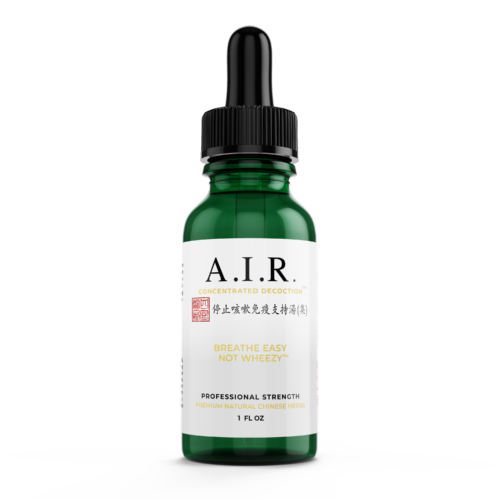
A.I.R. 停止咳嗽免疫支持湯(集)
Minimum Order Quantity: 5 Login to view prices

Reviews
There are no reviews yet.