Enjoy Free US Domestic Shipping on Orders Over $400+

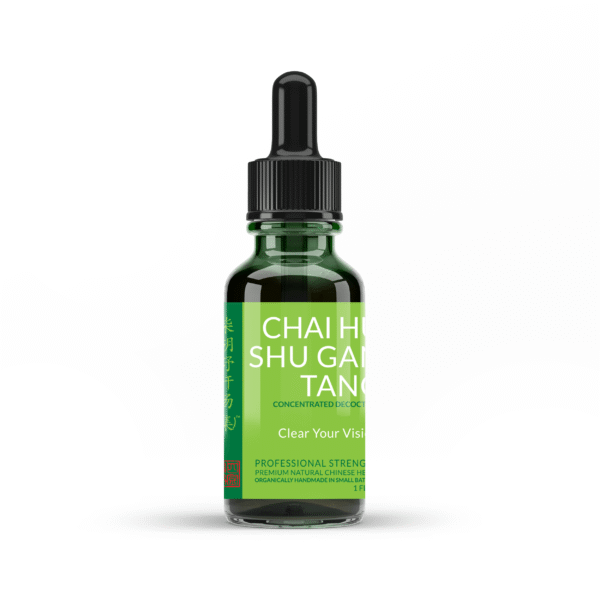
Chai Hu Shu Gan Tang 柴胡舒肝湯
Login to view prices
- ACM/CCM/TCM Global Status: Safe & Effective
Clear Your Vision™
This is Si Jin Bao’s version of a classical formula that dates back to the 17th century. It is well known for addressing symptoms of emotional imbalance as well as disturbances in the Liver Qi. Developed by Wang Ken-tang, Chai Hu Shu Gan Tang is the modification of a formula written over 1400 years earlier.
Classical Formula · Ming Dynasty · c. 1602
柴胡舒肝湯
Bupleurum Decoction to Spread the Liver
Clear Your Vision™
Over Four Centuries in Continuous Clinical Use
The Formula
Course the Liver, Move the Qi
Chái Hú Shū Gān Tāng, the Bupleurum Decoction to Spread the Liver, is Si Jin Bao’s version of Wang Ken-tang’s classical formula for constrained Liver Qi. It courses the Liver, regulates the Qi, and relieves the pain and emotional strain that follow when the Qi is no longer moving freely.
In Chinese medicine the Liver governs the free coursing of the Qi. When emotion or prolonged stress binds that movement, the Qi stagnates, and a familiar picture follows: distension and pain along the flanks and ribs, a tight chest, frequent sighing, irritability, and low mood. Because the Liver also governs the movement of Blood, the constraint often reaches the menstrual cycle. This formula was built to move what has become stuck.
Classical Foundation
From Sì Nì Sǎn to Wang Ken-tang
The formula was recorded by the Ming physician Wang Ken-tang in the Zhèng Zhì Zhǔn Shéng (Indispensable Tools for Pattern Treatment), completed in 1602. It is an expansion of a much older formula, Sì Nì Sǎn, set down by Zhang Zhongjing in the Shāng Hán Lùn nearly fourteen centuries earlier. To the four herbs of that base, Bupleurum, Bitter Orange, White Peony, and Licorice, Wang Ken-tang added Cyperus, Sichuan Lovage, and Tangerine Peel, strengthening its power to regulate the Qi and move the Blood.
A Note on the Name
The classical literature writes the formula 柴胡疏肝散 (Chái Hú Shū Gān Sǎn), with 疏, to disperse, as a powder. Si Jin Bao prepares it as 柴胡舒肝湯, with 舒, to soothe, as a decoction. The two characters are read alike and name the same action on the Liver Qi.
The Pattern
Liver Qi Constraint · 肝氣鬱結
The pattern is Liver Qi that has lost its free movement. It shows above all as distension and pain in the flanks and ribs, along with the emotional signs of constraint: irritability, frequent sighing, a tight chest, and low mood. When the constraint reaches the Blood, the menstrual cycle becomes irregular and painful.
Clinical Indications
- Hypochondriac pain, abdominal pain and cramps
- Chest oppression, frequent sighing, emotional imbalance
- Irritability, easily angered; alternating chills and fever
- Irregular, delayed, or painful menstruation
Classical tongue & pulse: a thin white coating; a wiry pulse.
How It Works
Seven Herbs: Course, Regulate, and Ease
Chái Hú courses the Liver and spreads the constrained Qi. Xiāng Fù regulates the Qi and relieves constraint, and with Chuān Xiōng reaches into the Blood to move what the stagnation has slowed. Zhǐ Ké directs the Qi downward and reduces distension, working opposite Chái Hú, which lifts.
Chén Pí regulates the Qi and harmonizes the middle, protecting the Spleen. Bái Sháo nourishes the Blood and softens the Liver, and with Zhì Gān Cǎo relaxes cramp and eases pain. Together they course the Liver, regulate the Qi, and settle the pain and emotion that constraint produces.
Clinical Recognition
When to Reach for It
Reach for Chái Hú Shū Gān Tāng for Liver Qi constraint: distension and pain in the flanks and ribs, chest oppression and frequent sighing, irritability and low mood, and irregular or painful menstruation, with a wiry pulse.
Western conditions and terminology that are commonly associated with these TCM patterns:
- Hepatitis, gastritis, cholecystitis, fatty liver, gallstones
- Peptic ulcers; tension headache
- Anxiety, postpartum depression, chronic fatigue syndrome
- Dysmenorrhea, amenorrhea, late menstruation, mastitis
舒肝
The Si Jin Bao Preparation
Si Jin Bao’s Chái Hú Shū Gān Tāng is a concentrated decoction prepared in small batches by traditional methods. It is vegan and alcohol-free, with no fillers, so the formula reaches the patient as the seven herbs and nothing else.
Materia Medica · 本草
柴胡舒肝湯
Chái Hú Shū Gān Tāng
Bupleurum Decoction to Spread the Liver
Clear Your Vision™
When the Liver Qi will not move, the body feels it: a tightness under the ribs, a short temper, a sigh that never quite finishes. Wang Ken-tang’s answer was not a single herb but a coordinated one. Bupleurum opens the door, and the others move through it, some regulating the Qi and reaching into the Blood, some settling the pain and the emotion that constraint leaves behind. Below is each herb on its own terms: its nature, the channels it enters, its classical actions, and the part it plays here.
01
Herb 01
柴胡
Radix Bupleuri
Bupleurum Root
CategoryCourse the Liver · Release the Exterior
Nature & FlavorBitter, Acrid; Cool
ChannelsLiver · Gallbladder
Actions
Courses and spreads the constrained Liver Qi; harmonizes and releases the exterior, reducing fever; raises the clear yang.
Indications
Liver Qi constraint with flank pain and irritability; alternating chills and fever.
Classical Reference
Recorded in the Shén Nóng Běn Cǎo Jīng (神農本草經), long used to course the Liver and free constrained Qi.
Role in this Formula
Courses the Liver and spreads the constrained Qi. It is the center of the formula, the herb the others are built around.
02
Herb 02
陳皮
Citri Reticulatae Pericarpium
Aged Tangerine Peel
CategoryRegulate Qi
Nature & FlavorAcrid, Bitter; Warm
ChannelsSpleen · Lung
Actions
Regulates the Qi and harmonizes the middle; dries Dampness and transforms Phlegm.
Indications
Qi stagnation of the Spleen and Stomach with distension, poor appetite, and nausea.
Classical Reference
Documented in the classical materia medica as a principal herb to regulate the Qi and harmonize the middle.
Role in this Formula
Regulates the Qi and harmonizes the middle, protecting the Spleen from the effects of Liver constraint.
03
Herb 03
枳殼
Fructus Aurantii
Bitter Orange (Mature Fruit)
CategoryRegulate Qi
Nature & FlavorBitter, Acrid, Sour; Cool
ChannelsSpleen · Stomach · Large Intestine
Actions
Directs the Qi downward, breaks up Qi stagnation, and reduces distension and fullness.
Indications
Qi stagnation with distension and fullness of the chest and abdomen.
Classical Reference
Long paired in the classical formulas with Chái Hú, one herb lifting the Qi while the other directs it down.
Role in this Formula
Directs the Qi downward and relieves distension, balancing the lifting action of Chái Hú.
04
Herb 04
香附
Rhizoma Cyperi
Cyperus Rhizome (Nut-grass)
CategoryRegulate Qi
Nature & FlavorAcrid, Slightly Bitter, Slightly Sweet; Neutral
ChannelsLiver · Spleen · San Jiao
Actions
Courses the Liver and regulates the Qi; relieves constraint, regulates menstruation, and eases pain.
Indications
Liver Qi constraint with flank and epigastric pain; irregular or painful menstruation.
Classical Reference
Called in the classical texts the commander of the Qi within the Blood and the chief herb of gynecology.
Role in this Formula
The principal Qi-regulator of the Liver, relieving constraint and, where the pattern reaches the cycle, regulating menstruation.
05
Herb 05
川芎
Rhizoma Chuanxiong
Sichuan Lovage Root
CategoryInvigorate Blood
Nature & FlavorAcrid; Warm
ChannelsLiver · Gallbladder · Pericardium
Actions
Invigorates the Blood and moves the Qi; expels Wind and relieves pain.
Indications
Blood stasis and Qi stagnation with pain; headache; menstrual pain.
Classical Reference
Known in the classical materia medica as the Qi-herb within the Blood, moving both together.
Role in this Formula
With Xiāng Fù, reaches into the Blood to move what the Qi stagnation has slowed, relieving pain.
06
Herb 06
白芍
Radix Paeoniae Alba
White Peony Root
CategoryTonify Blood
Nature & FlavorBitter, Sour; Cool
ChannelsLiver · Spleen
Actions
Nourishes the Blood and preserves the Yin; softens the Liver and relieves pain; calms ascendant Liver yang.
Indications
Blood deficiency with a stiff, constrained Liver; cramping pain of the abdomen and flanks.
Classical Reference
Paired in the classical formulas with Gān Cǎo to relax cramp and ease pain.
Role in this Formula
Nourishes the Blood and softens the Liver, and with Zhì Gān Cǎo relaxes cramp and eases pain.
07
Herb 07
炙甘草
Radix Glycyrrhizae Praeparata
Honey-Prepared Licorice Root
CategoryTonify Qi · Harmonize
Nature & FlavorSweet; Neutral (Warm when honey-prepared)
ChannelsHeart · Lung · Spleen · Stomach
Actions
Tonifies the Spleen qi; harmonizes and moderates the other herbs in a formula; with sour herbs, relaxes spasm.
Indications
The need to harmonize a formula and to temper cramping and pain.
Classical Reference
Recorded in the Shén Nóng Běn Cǎo Jīng (神農本草經); honey-frying deepens its warming, harmonizing nature.
Role in this Formula
Harmonizes the whole, and with Bái Sháo relaxes cramp and eases pain.
08
Herb 08
蔬菜甘油
Glycerinum Vegetabile
Vegetable Glycerin
Nature (性)
Neutral · 平 Píng
Taste (味)
Sweet · 甘 Gān
Category
Excipient · Carrier
Traditional Actions (功效)
Harmonizes and guides the other medicinals to their target tissues. It is analogous to synovial fluid, providing a medium for smooth movement and deep delivery throughout the decoction.
Role in this Formula
Excipient function: Dissolves and stabilizes the botanical constituents of the formula, ensuring consistent delivery in decoction form. Mucosal hydration: By attracting and retaining water, glycerin keeps the oral and digestive mucosa moist. Patient tolerance: Its naturally sweet, neutral profile makes the formula palatable for children and adults alike.
Modern Research
International Journal of Pharmaceutics · 2023
Glycerin serves as a co-solvent and humectant in oral liquid formulations, enhancing solubility of poorly water-soluble compounds, stabilizing active ingredients, and improving mucosal hydration.
Journal of Clinical Pharmacology · 2018
Oral glycerol has been widely used as an osmotic agent. Doses of 1–1.5 g/kg are safe and well-tolerated; its mechanism involves osmotic fluid redistribution between compartments.
Clinical Oral Investigations · 2022
Glycerin-containing oral moisturizers significantly improved xerostomia symptoms compared with water-based controls, enhancing mucosal hydration and prolonging moisture retention in the oral cavity.
Clinical Translation
Gān Yóu guides the physical delivery of the formula, ensuring the preparation reaches its target tissues and is tolerated long enough to do its work. It is a naturally sweet, neutral carrier that makes the decoction palatable for adults and children alike.
09
Herb 09
蒸餾水
Aqua Destillata
Distilled Water
Nature (性)
Neutral · 平 Píng
Taste (味)
Tasteless
Category
Vehicle · Neutral Carrier
Traditional Actions (功效)
Not a classical herb in its own right. It functions as a neutral carrier, a pharmaceutically pure vehicle that allows the active constituents of the classical herbs in the formula to extract, stabilize, and deliver without interference.
Role in this Formula
Biomedical role: A pharmaceutically pure solvent, ensuring consistent extraction and delivery of active compounds without introducing mineral ions, microbial contaminants, or chemical interference. Clinical relevance: Acts as a safe vehicle, analogous to saline in biomedicine, so that every dose of the formula performs identically, from the first bottle to the last.
Modern Research
Pharmacopeial Standard · Herbal Decoction Stability
Distilled water ensures stability, reproducibility, and safety in herbal decoction preparations by eliminating mineral ions and microbial contaminants that would otherwise compromise extraction consistency and shelf life.
Clinical Pharmacology · Oral Solution Vehicles
Distilled water is recognized in clinical pharmacology as the neutral carrier of choice for both intravenous and oral solutions, chosen specifically for its non-reactive profile with active ingredients.
Clinical Translation
Li Shi-zhen devoted an entire section of the Ben Cao Gang Mu (本草綱目) to the classification of waters, recognizing that the water in which a formula is prepared shapes the clinical outcome. SJB honors this principle by using pharmaceutically distilled water as the neutral vehicle for every decoction.
舒肝
Course, and Ease
Four centuries ago Wang Ken-tang took the four herbs of Zhang Zhongjing’s Sì Nì Sǎn and added three more to move the Qi and the Blood. The result has been used ever since for a single problem: a Liver Qi that will not flow, and the pain and unrest that come with it.
Dosage & Preparation · 用法用量
How to Prepare & Dose
Si Jin Bao Concentrated Decoctions™ are activated in hot water, steeped briefly, and taken warm. Follow the four steps below, then refer to the age-appropriate dosing grid.
Preparation
The Four Steps
-
Step 01ShakeShake the bottle well before each use.
-
Step 02Add Hot WaterAdd the age-appropriate dosage into 1 oz of hot water, as you would for tea.
-
Step 03SteepCover and steep for 5 minutes, then allow to cool to a warm, drinkable temperature.
-
Step 04DrinkDrink warm, twice daily or as directed by your practitioner.
For best results: take on an empty stomach — approximately 30 minutes before or after food or drink.
Dosage
By Age Group
Newborn
3drops
Twice daily
1 Year
7drops
Twice daily
2–6 Years
10drops
Twice daily
7 Years to Adult
20drops
Twice daily
Treatment Protocols
Suggested Clinical Course
Acute
10 Days
Then Reevaluate
Subacute
30 Days
Then Reevaluate
Chronic
90 Days
Then Reevaluate
Bottle Longevity
11½ days
at standard adult dosage
Research · 研究
柴胡舒肝湯
Chái Hú Shū Gān Tāng
The Modern Evidence
Nine Studies on Chai Hu Shu Gan Tang and Its Herbs
Few formulas of this age have been studied as closely, and the research falls about where the pattern would predict. Two trials look at the formula whole, one in depression and one in chronic gastritis, the emotional and the digestive faces of a constrained Liver Qi. The rest take up its seven herbs one at a time.
01
Study 01
柴胡舒肝湯
Systematic Review & Meta-Analysis (42 RCTs)
BMC Complement. Altern. Med. · 2018
Design
Meta-analysis of 42 RCTs, 3,234 patients
Intervention
Formula, alone or with standard care
Relevance
Direct, the emotional side of Liver constraint
Background
Constraint of the Liver Qi produces low mood and irritability. This review pooled randomized trials of the formula for depression across fifteen associated conditions.
Findings
The pooled analysis reported an advantage for the formula in treating depression, with the clearest signal in post-stroke and post-partum depression. The authors call for further rigorous trials.
Relevance to Chai Hu Shu Gan Tang
The formula, in its classical composition, was studied for the emotional constraint it was built to relieve.
Citation
Treatment of depression with Chai Hu Shu Gan San: a systematic review and meta-analysis of 42 randomized controlled trials. BMC Complement. Altern. Med. 2018;18:66. PMID: 29454341.
02
Study 02
柴胡舒肝湯
Meta-Analysis (21 RCTs)
J. Ethnopharmacol. · 2013
Design
Meta-analysis of 21 RCTs, 2,572 patients
Intervention
Formula vs conventional treatment
Relevance
Direct, the digestive side of Liver-Spleen disharmony
Background
When constrained Liver Qi invades the Stomach, digestion suffers. This review pooled randomized trials of the formula across several types of chronic gastritis.
Findings
Across bile reflux, superficial, atrophic, and erosive gastritis, the pooled risk ratios favored the formula over conventional treatment alone.
Relevance to Chai Hu Shu Gan Tang
A second reading of the same formula, this time on the Liver-Stomach disharmony that constraint produces in the digestive tract.
Citation
Chaihu-Shugan-San, an oriental herbal preparation, for the treatment of chronic gastritis: a meta-analysis of randomized controlled trials. J. Ethnopharmacol. 2013;146(2):433-439. PMID: 23376045.
03
Study 03
柴胡
Systematic Review
Pharm. Biol. · 2017
Design
Systematic review
Active Compounds
Saikosaponins (a, c, d, b₂)
Relevance
Direct, courses the Liver
Background
Chái Hú is used to relieve the exterior, clear heat, regulate the Liver-qi, and lift the yang-qi. This review compiled its saikosaponins and their activities.
Findings
Radix Bupleuri and its saikosaponins are documented for anti-inflammatory, immunoregulatory, and antiviral activity, acting largely through the NF-κB and MAPK pathways.
Relevance to Chai Hu Shu Gan Tang
Chái Hú courses the Liver and spreads the constrained Qi. It is the center of the formula, and the review documents its Liver-regulating pharmacology.
Citation
A systematic review of the active saikosaponins and extracts isolated from Radix Bupleuri and their applications. Pharm. Biol. 2017. PMCID: PMC6130612.
04
Study 04
陳皮
Systematic Review
J. Ethnopharmacol. · 2024
Design
Systematic review
Active Compounds
Flavonoids (hesperidin, nobiletin)
Relevance
Direct, regulates the Qi
Background
Chén Pí is among the most-used qi-regulating herbs. This review summarized its chemistry and pharmacology.
Findings
Its principal flavonoids, hesperidin and nobiletin, are documented for anti-inflammatory, antioxidant, and digestive-regulating activity.
Relevance to Chai Hu Shu Gan Tang
Chén Pí regulates the Qi and harmonizes the middle, protecting the Spleen from the effects of Liver constraint.
Citation
Phytochemistry, pharmacological properties and pharmacokinetics of Citri Reticulatae Pericarpium: A systematic review. J. Ethnopharmacol. 2024. PMID: 38942157.
05
Study 05
枳殼
Network Pharmacology Study
Evid. Based Complement. Alternat. Med. · 2021
Design
Network pharmacology and molecular docking
Active Compounds
Flavonoids (naringin, neohesperidin), synephrine
Relevance
Direct, directs the Qi downward
Background
Zhǐ Ké, the mature fruit of bitter orange, is a Qi-regulating herb long used to move the Qi and relieve fullness of the chest and abdomen. This study mapped its active compounds and targets.
Findings
Fructus Aurantii is documented for regulating the Qi and enhancing gastrointestinal motility, alongside antidepressant and cardiovascular-protective activity.
Relevance to Chai Hu Shu Gan Tang
Zhǐ Ké directs the Qi downward and relieves distension, balancing the lifting action of Chái Hú.
Citation
Systematically Deciphering the Pharmacological Mechanism of Fructus Aurantii via Network Pharmacology. Evid. Based Complement. Alternat. Med. 2021;2021:6236135. PMCID: PMC7843179.
06
Study 06
香附
Systematic Review
Front. Pharmacol. · 2022
Design
Systematic review
Active Compounds
Volatile oil, flavonoids, terpenes
Relevance
Direct, regulates the Liver Qi and menses
Background
Xiāng Fù soothes the Liver and relieves constraint, regulates the Qi, regulates menstruation, and relieves pain. This review compiled its chemistry and pharmacology.
Findings
Cyperi Rhizoma is documented for antidepressant, analgesic, anti-inflammatory, and antioxidant activity, with volatile oil, flavonoids, and terpenes as its main constituents.
Relevance to Chai Hu Shu Gan Tang
Xiāng Fù is the principal Qi-regulator of the Liver, relieving constraint and, where the pattern reaches the cycle, regulating menstruation.
Citation
Systematic review of ethnomedicine, phytochemistry, and pharmacology of Cyperi Rhizoma. Front. Pharmacol. 2022;13:965902. PMCID: PMC9585201.
07
Study 07
川芎
Chemical, Pharmacological & Clinical Review
Front. Pharmacol. · 2025
Design
Comprehensive review
Active Compounds
Ligustilide, senkyunolide A, tetramethylpyrazine
Relevance
Direct, moves the Blood and the Qi
Background
Chuān Xiōng invigorates the Blood and moves the Qi, relieving pain. This review compiled its phthalides, alkaloids, and their pharmacology.
Findings
Its phthalides and tetramethylpyrazine are documented for improving blood circulation, reducing blood stasis, and relieving pain, including in dysmenorrhea.
Relevance to Chai Hu Shu Gan Tang
With Xiāng Fù, Chuān Xiōng reaches into the Blood to move what the Qi stagnation has slowed, relieving pain.
Citation
Ligusticum chuanxiong: a chemical, pharmacological and clinical review. Front. Pharmacol. 2025;16:1523176. PMCID: PMC11996930.
08
Study 08
白芍
Comprehensive Review
Front. Pharmacol. · 2020
Design
Comprehensive review
Active Compounds
Paeoniflorin, albiflorin
Relevance
Direct, softens the Liver and relieves pain
Background
Bái Sháo nourishes the Blood, softens the Liver, and relieves pain. This review compiled the pharmacology of Radix Paeoniae Alba.
Findings
Its principal compound, paeoniflorin, is documented for analgesic, antispasmodic, and anti-inflammatory activity.
Relevance to Chai Hu Shu Gan Tang
Bái Sháo nourishes the Blood and softens the Liver, and with Zhì Gān Cǎo relaxes cramp and eases pain.
Citation
Efficacy, Chemical Constituents, and Pharmacological Actions of Radix Paeoniae Rubra and Radix Paeoniae Alba. Front. Pharmacol. 2020;11:1054.
09
Study 09
甘草
Phytochemical / Pharmacological Review
Phytother. Res. · 2018
Design
Phytochemical / pharmacological review
Active Compounds
Triterpenes (glycyrrhizin, glycyrrhetinic acid)
Relevance
Supporting, harmonizes and relaxes spasm
Background
Gān Cǎo, here honey-fried, harmonizes a formula, and paired with a sour herb it relaxes spasm. This review summarized the chemistry and pharmacology of licorice.
Findings
Glycyrrhizin and glycyrrhetinic acid are documented for anti-inflammatory and antiallergic activity, with wide use across formulas to moderate and harmonize.
Relevance to Chai Hu Shu Gan Tang
Zhì Gān Cǎo harmonizes the whole, and with Bái Sháo relaxes cramp and eases pain.
Citation
Liquorice (Glycyrrhiza glabra): A phytochemical and pharmacological review. Phytother. Res. 2018. PMCID: PMC7167772.
Mechanism Notes
How the formula’s herbs work at a biochemical level.
Chái Hú
Saikosaponins documented for anti-inflammatory, immunoregulatory, and antiviral activity, with a classical action of coursing the Liver and lifting the yang-qi (PMC6130612, 2017).
Chén Pí
Flavonoids (hesperidin, nobiletin) documented for anti-inflammatory, antioxidant, and digestive-regulating activity (PMID 38942157, 2024).
Zhǐ Ké
Flavonoids (naringin, neohesperidin) and synephrine documented for regulating gastrointestinal motility and relieving distension (PMC7843179, 2021).
Xiāng Fù
Volatile oil, flavonoids, and terpenes documented for antidepressant, analgesic, and menstruation-regulating activity (PMC9585201, 2022).
Chuān Xiōng
Ligustilide, senkyunolide A, and tetramethylpyrazine documented for blood-activating and analgesic activity (PMC11996930, 2025).
Bái Sháo
Paeoniflorin and albiflorin documented for analgesic, antispasmodic, and anti-inflammatory activity (Front Pharmacol 2020;11:1054).
Zhì Gān Cǎo
Glycyrrhizin and glycyrrhetinic acid documented for anti-inflammatory activity, harmonizing the formula and, with Bái Sháo, relaxing spasm (PMC7167772, 2018).
Western Terminology
Western conditions and terminology commonly associated with these TCM patterns:
Dysmenorrhea · Amenorrhea · Late Menstruation · Hepatitis · Gastritis · Cholecystitis · Peptic Ulcers · Tension Headache · Anxiety · Chronic Fatigue Syndrome · Fatty Liver · Gallstones · Mastitis · Postpartum Depression
舒肝
Move What Is Stuck
Studied as a whole, the formula has been read into the modern clinic along the two lines its pattern predicts: the emotional constraint of a bound Liver Qi, and the digestive disharmony that follows when that Qi invades the Stomach. Beneath it, each of the seven herbs has been examined on its own, from Bupleurum coursing the Liver to Peony and Licorice easing the cramp and pain. Four centuries on, the mechanisms now carry names for the single instruction Wang Ken-tang set down: course the Liver, and move what is stuck.
Related products
-

Bao Ji Tang 保济湯
Login to view prices -
A.I.R. 停止咳嗽免疫支持湯(集)
Minimum Order Quantity: 5 Login to view prices -
Dang Gui Si Ni Tang 當歸四逆湯(集)
Login to view prices -
Chuan Xiong Cha Tiao Tang 川芎茶調湯
Login to view prices

Reviews
There are no reviews yet.