Enjoy Free US Domestic Shipping on Orders Over $400+

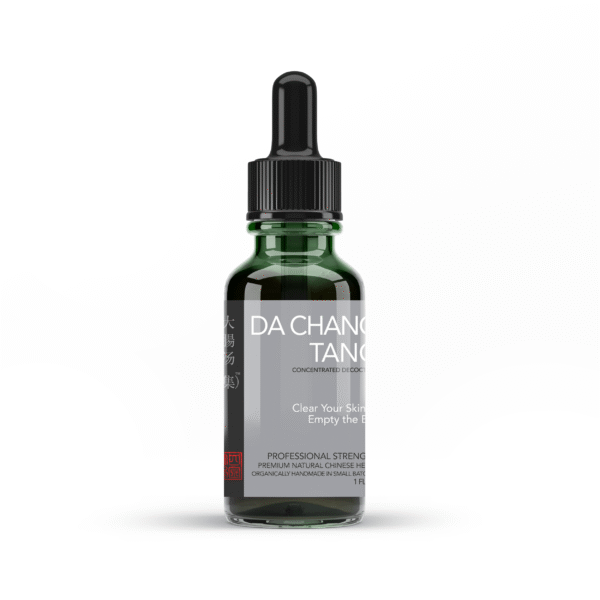
Da Chang Tang 大腸湯
Login to view prices
- ACM/CCM/TCM Global Status: Safe & Effective
Clear Your Skin & Empty the Bin
Da Chang Tang Concentrated Decoction™ is Si Jin Bao’s proprietary formula designed to purge Heat accumulation from the Large Intestine, break Qi stagnation, and restore the bowel’s descending function. Combining the purgative power of Da Huang with Zhi Shi and Hou Po to move Qi and dissolve accumulation, alongside Mu Xiang to rectify Qi at the center and Yu Li Ren to moisten and unblock the intestines, this formula addresses both the root and branch of interior Heat patterns. It also supports the skin via the Lung-Large Intestine axis, making it relevant for presentations where toxic Heat manifests both internally and on the surface.
Si Jin Bao Proprietary Formula · 2000
大腸湯
Large Intestine Decoction
Clear Your Skin & Empty the Bin™
Over a Quarter-Century in Service
The Formula
When Heat Won’t Move Down
Da Chang Tang is Si Jin Bao’s proprietary formula for purging Heat accumulation from the Large Intestine, breaking Qi stagnation, and restoring the bowel’s descending function.
When Heat builds in the Large Intestine and Qi stops moving, the bowel loses its downward direction — and the consequences are felt in two places at once. Inside: constipation, distension, fever, irritability. On the surface: Heat that should have descended rises instead to the skin. This formula drives the Heat and the accumulation downward, moves the stalled Qi, and reopens the bowel’s natural descent.
The Principle
Restore the Descent
The Large Intestine’s work is to descend and to empty. When interior Heat and Qi stagnation block that descent, the whole axis backs up. Da Chang Tang restores the descending function with strong downward purgation, moves the Qi that has stalled, and moistens the route so that clearing does not leave dryness behind.
It also reaches the surface. In classical theory the Lung and Large Intestine are an interior-exterior pair — the Lung opens to the skin, the Large Intestine governs elimination. When Heat cannot exit below, it re-emerges above as acne and eruptions. By opening the bowel and lifting the Lung Qi together, the formula works on both the bin and the skin.
A Note on the Lung–Large Intestine Axis
The Lung and Large Intestine are paired as interior and exterior: the Lung governs the skin, the Large Intestine governs descent and elimination. Heat that cannot find its way out through the bowel often surfaces on the skin instead. Clear the route below, and the surface above frequently settles — the principle behind clearing the skin by emptying the bin.
The Pattern
Interior Heat in the Large Intestine · 大腸實熱
The pattern this formula answers is interior Heat accumulation in the Large Intestine with Qi stagnation — a hot, blocked, backed-up middle whose Heat shows both internally and on the surface. The bowel cannot descend, the abdomen fills and tightens, and the trapped Heat drives fever, irritability, and skin eruptions.
Clinical Indications
- Constipation; tight abdomen; abdominal distension & pain; gas
- Tidal fevers; profuse perspiration from palms & soles
- Dry mouth; bad breath; irritability; delirium
- Dysuria; heavy body; hemorrhoids
- Acne & skin eruptions
How It Works
Eight Herbs: Purge, Move, Moisten, Protect
Dà Huáng is the purgative chief — it strongly drains Heat accumulation downward, clearing the interior Heat and forcing the descent the bowel has lost. Zhǐ Shí and Hòu Pò work alongside it, breaking Qi stagnation and dissolving accumulation so the obstruction clears, while Hou Po also dries Damp and descends rebellious Qi.
Yù Lǐ Rén moistens and unblocks the intestines, so strong purging clears without leaving dryness behind. Mù Xiāng rectifies Qi at the center, easing pain and coordinating the movement of the middle, and Shān Zhā reduces food accumulation and moves Blood, clearing what has stagnated alongside the Heat.
Jié Gěng opens and lifts the Lung Qi — through the Lung–Large Intestine axis, it engages the surface while the formula clears below. And Shēng Jiāng harmonizes the Stomach and guards against the cold, bitter purgatives, preventing nausea and protecting the middle. Purge, move, moisten, protect.
Clinical Recognition
When to Reach for It
Reach for Da Chang Tang when the picture is hot, blocked, and backed up — constipation and abdominal fullness with signs of interior Heat, and especially when that Heat also shows on the skin. The dual presentation, bowel below and eruptions above, is the formula’s signature.
Western conditions and terminology that are commonly associated with these TCM patterns:
- Appendicitis, cholecystitis, pancreatitis, bacterial dysentery, chronic gastritis
- Icteric hepatitis, urinary stones, hemorrhoids, enuresis
- Influenza, lobar pneumonia, purulent tonsillitis, asthma, cardiopulmonary disease
- Encephalitis, stroke, hypertension, schizophrenia
大腸
The Si Jin Bao Preparation
Si Jin Bao’s Da Chang Tang is a concentrated decoction prepared in small batches using traditional methods — alcohol-free, no fillers. A formula whose work is to clear and to empty is itself made clean, with nothing extra left in.
Materia Medica · 本草
大腸湯
Dà Cháng Tāng
Large Intestine Decoction
Clear Your Skin & Empty the Bin
Eight herbs assembled to purge Heat downward, move stalled Qi, moisten the route, and protect the middle. The cards below detail the nature, flavor, channels, and actions of each — drawn from the classical materia medica — along with how each functions within this specific formula.
01
Herb 01
大黄
Radix et Rhizoma Rhei
Rhubarb Root & Rhizome
Category
Purgatives that Drain Downward
Nature & Flavor
Bitter · Cold
Channels
Spleen · Stomach · Large Intestine · Liver · Pericardium
Actions
Drains Heat and purges accumulation downward; clears Heat and resolves toxicity; invigorates the Blood and dispels stasis; cools the Blood. The principal purgative of the materia medica.
Indications
Constipation from interior Heat accumulation; abdominal fullness and pain; high fever and delirium from excess Heat; Heat surfacing as skin eruptions.
Classical Reference
Recorded in the Shén Nóng Běn Cǎo Jīng, Dà Huáng is the classical chief of the downward-draining purgatives — the herb reached for to force accumulation and Heat out through the bowel.
Role in this Formula
The purgative chief: strongly drains Heat accumulation downward, clearing the interior Heat and forcing the descent the bowel has lost.
02
Herb 02
枳實
Fructus Aurantii Immaturus
Immature Bitter Orange
Category
Regulates the Qi
Nature & Flavor
Bitter, acrid · Slightly cold
Channels
Spleen · Stomach · Large Intestine
Actions
Breaks up Qi stagnation and reduces accumulation; descends rebellious Qi and relieves distension; transforms Phlegm. The strongest Qi-breaking herb of the abdomen.
Indications
Abdominal and epigastric fullness and distension; accumulation with constipation; sluggish bowels from Qi stagnation.
Classical Reference
Recorded in the Shén Nóng Běn Cǎo Jīng, Zhǐ Shí is the classical partner to purgatives — breaking the stagnation that accumulation leaves behind.
Role in this Formula
Breaks Qi stagnation and reduces accumulation, partnering Dà Huáng to clear the obstruction — the classical purgative pairing.
03
Herb 03
郁李仁
Semen Pruni
Bush Cherry Seed
Category
Moist Laxatives that Drain Downward
Nature & Flavor
Acrid, bitter, sweet · Neutral
Channels
Large Intestine · Small Intestine · Spleen
Actions
Moistens the Intestines and unblocks the bowels; promotes urination and reduces edema. A gentle, moistening laxative seed.
Indications
Constipation from dryness or accumulation; difficult, dry stools; fluid retention with edema.
Classical Reference
Recorded in the Shén Nóng Běn Cǎo Jīng, Yù Lǐ Rén is the classical moistening laxative — unblocking the bowel by lubricating rather than forcing.
Role in this Formula
Moistens and unblocks the intestines, so the strong purging clears the bowel without leaving dryness behind.
04
Herb 04
厚朴
Cortex Magnoliae Officinalis
Magnolia Bark
Category
Aromatics that Transform Dampness
Nature & Flavor
Bitter, acrid · Warm
Channels
Spleen · Stomach · Lung · Large Intestine
Actions
Promotes the movement of Qi and dries Dampness; resolves distension and stagnation; descends rebellious Qi and calms wheezing. The classical herb for a full, distended, stagnant middle.
Indications
Abdominal fullness and distension; Damp obstruction of the middle; Qi stagnation with bloating; rebellious Qi.
Classical Reference
Recorded in the Shén Nóng Běn Cǎo Jīng, Hòu Pò is the classical herb paired with purgatives to relieve the fullness and distension of accumulation.
Role in this Formula
Moves Qi and dries Damp, resolving the distension and fullness and descending rebellious Qi — clearing the way for the purgation to work.
05
Herb 05
桔梗
Radix Platycodonis
Platycodon Root
Category
Transforms Phlegm & Opens the Lung
Nature & Flavor
Bitter, acrid · Neutral
Channels
Lung
Actions
Opens and disperses the Lung Qi; expels Phlegm and benefits the throat; directs the actions of other herbs upward. Classically described as the “boat” that carries a formula to the upper body.
Indications
Lung Qi constraint; cough with phlegm; sore, blocked throat; conditions of the upper body and surface requiring an opening, lifting action.
Classical Reference
Recorded in the Shén Nóng Běn Cǎo Jīng, Jié Gěng is the classical opener of the Lung — the herb that lifts and disperses where others descend.
Role in this Formula
Opens and lifts the Lung Qi; through the Lung–Large Intestine axis, it engages the surface and the skin while the rest of the formula clears below.
06
Herb 06
木香
Radix Aucklandiae
Costus Root (Aucklandia)
Category
Regulates the Qi
Nature & Flavor
Acrid, bitter · Warm
Channels
Spleen · Stomach · Large Intestine · Gallbladder
Actions
Promotes the movement of Qi and relieves pain; regulates the Stomach and Spleen; rectifies Qi stagnation of the middle and lower abdomen. A central Qi-rectifying herb of the digestive tract.
Indications
Qi stagnation with abdominal pain and distension; cramping; sluggish, painful digestion.
Classical Reference
Documented in the classical materia medica, Mù Xiāng is the herb relied upon to move and rectify the Qi of the middle and to relieve the pain of stagnation.
Role in this Formula
Rectifies Qi at the center, easing pain and coordinating the movement of the middle as the obstruction clears.
07
Herb 07
山楂
Fructus Crataegi
Hawthorn Fruit
Category
Relieves Food Stagnation
Nature & Flavor
Sour, sweet · Slightly warm
Channels
Spleen · Stomach · Liver
Actions
Reduces food stagnation and transforms accumulation; invigorates the Blood and dispels stasis. Especially noted for dissolving accumulation and moving stagnant Blood.
Indications
Food accumulation and fullness; stagnation of food and Blood; congestion that resists movement.
Classical Reference
Documented in the classical materia medica and detailed in the Běn Cǎo Gāng Mù, Shān Zhā is long relied upon to break down accumulation.
Role in this Formula
Reduces food accumulation and moves Blood, clearing what has stagnated alongside the Heat in the middle.
08
Herb 08
生薑
Rhizoma Zingiberis Recens
Fresh Ginger
Category
Warm, Acrid Herbs that Release the Exterior
Nature & Flavor
Acrid · Slightly warm
Channels
Lung · Spleen · Stomach
Actions
Warms the Middle and stops vomiting; harmonizes the Stomach; releases the exterior and disperses Cold; resolves the toxicity of other herbs. Classically called the “holy remedy for vomiting.”
Indications
Nausea and vomiting; Stomach disharmony; protecting the middle against cold or harsh medicinals.
Classical Reference
Recorded in the Shén Nóng Běn Cǎo Jīng, Shēng Jiāng is the classical harmonizer of the Stomach — added to temper strong formulas and settle the middle.
Role in this Formula
Harmonizes the Stomach and guards against the cold, bitter purgatives — preventing nausea and protecting the middle while the formula clears.
09
Herb 09
蔬菜甘油
Glycerinum Vegetabile
Vegetable Glycerin
Nature (性)
Neutral · 平 Píng
Taste (味)
Sweet · 甘 Gān
Category
Excipient · Carrier
Traditional Actions (功效)
Harmonizes and guides the other medicinals to their target tissues. Analogous to synovial fluid — providing a medium for smooth movement and deep delivery throughout the decoction.
Role in this Formula
Excipient function: Dissolves and stabilizes the botanical constituents of the formula, ensuring consistent delivery in decoction form. Mucosal hydration: By attracting and retaining water, glycerin keeps the oral and digestive mucosa moist. Patient tolerance: Its naturally sweet, neutral profile makes the formula palatable for children and adults alike.
Modern Research
International Journal of Pharmaceutics · 2023
Glycerin serves as a co-solvent and humectant in oral liquid formulations, enhancing solubility of poorly water-soluble compounds, stabilizing active ingredients, and improving mucosal hydration.
Journal of Clinical Pharmacology · 2018
Oral glycerol has been widely used as an osmotic agent. Doses of 1–1.5 g/kg are safe and well-tolerated; its mechanism involves osmotic fluid redistribution between compartments.
Clinical Oral Investigations · 2022
Glycerin-containing oral moisturizers significantly improved xerostomia symptoms compared with water-based controls, enhancing mucosal hydration and prolonging moisture retention in the oral cavity.
Clinical Translation
Gān Yóu guides the physical delivery of the formula — ensuring the preparation reaches its target tissues and is tolerated long enough to do its work. A naturally sweet, neutral carrier that makes the decoction palatable for adults and children alike.
10
Herb 10
蒸餾水
Aqua Destillata
Distilled Water
Nature (性)
Neutral · 平 Píng
Taste (味)
Tasteless
Category
Vehicle · Neutral Carrier
Traditional Actions (功效)
Not a classical herb in its own right. Functions as a neutral carrier — a pharmaceutically pure vehicle that allows the active constituents of the classical herbs in the formula to extract, stabilize, and deliver without interference.
Role in this Formula
Biomedical role: A pharmaceutically pure solvent, ensuring consistent extraction and delivery of active compounds without introducing mineral ions, microbial contaminants, or chemical interference. Clinical relevance: Acts as a safe vehicle — analogous to saline in biomedicine — so that every dose of the formula performs identically, from the first bottle to the last.
Modern Research
Pharmacopeial Standard · Herbal Decoction Stability
Distilled water ensures stability, reproducibility, and safety in herbal decoction preparations by eliminating mineral ions and microbial contaminants that would otherwise compromise extraction consistency and shelf life.
Clinical Pharmacology · Oral Solution Vehicles
Distilled water is recognized in clinical pharmacology as the neutral carrier of choice for both intravenous and oral solutions, chosen specifically for its non-reactive profile with active ingredients.
Clinical Translation
Li Shi-zhen devoted an entire section of the Ben Cao Gang Mu (本草綱目) to the classification of waters — recognizing that the water in which a formula is prepared shapes the clinical outcome. SJB honors this principle by using pharmaceutically distilled water as the neutral vehicle for every decoction.
大腸
Purge, Move, Moisten, Protect
One herb purges the Heat downward; two break the Qi stagnation and dissolve accumulation; one moistens so the clearing does not dry; one rectifies the center and one reduces what has stagnated; one lifts the Lung Qi to reach the surface; and one harmonizes the Stomach to protect the middle. The eight work as a single instruction — force the descent the bowel has lost, and let the Heat leave below before it can rise above.
Dosage & Preparation · 用法用量
How to Prepare & Dose
Si Jin Bao Concentrated Decoctions™ are activated in hot water, steeped briefly, and taken warm. Follow the four steps below, then refer to the age-appropriate dosing grid.
Preparation
The Four Steps
-
Step 01ShakeShake the bottle well before each use.
-
Step 02Add Hot WaterAdd the age-appropriate dosage into 1 oz of hot water, as you would for tea.
-
Step 03SteepCover and steep for 5 minutes, then allow to cool to a warm, drinkable temperature.
-
Step 04DrinkDrink warm, twice daily or as directed by your practitioner.
For best results: take on an empty stomach — approximately 30 minutes before or after food or drink.
Dosage
By Age Group
Newborn
3drops
Twice daily
1 Year
7drops
Twice daily
2–6 Years
10drops
Twice daily
7 Years to Adult
20drops
Twice daily
Treatment Protocols
Suggested Clinical Course
Acute
10 Days
Then Reevaluate
Subacute
30 Days
Then Reevaluate
Chronic
90 Days
Then Reevaluate
Bottle Longevity
11½ days
at standard adult dosage
Materia Medica · 本草
大腸湯
Dà Cháng Tāng
Large Intestine Decoction
Clear Your Skin & Empty the Bin
Eight herbs assembled to purge Heat downward, move stalled Qi, moisten the route, and protect the middle. The cards below detail the nature, flavor, channels, and actions of each — drawn from the classical materia medica — along with how each functions within this specific formula.
01
Herb 01
大黄
Radix et Rhizoma Rhei
Rhubarb Root & Rhizome
Category
Purgatives that Drain Downward
Nature & Flavor
Bitter · Cold
Channels
Spleen · Stomach · Large Intestine · Liver · Pericardium
Actions
Drains Heat and purges accumulation downward; clears Heat and resolves toxicity; invigorates the Blood and dispels stasis; cools the Blood. The principal purgative of the materia medica.
Indications
Constipation from interior Heat accumulation; abdominal fullness and pain; high fever and delirium from excess Heat; Heat surfacing as skin eruptions.
Classical Reference
Recorded in the Shén Nóng Běn Cǎo Jīng, Dà Huáng is the classical chief of the downward-draining purgatives — the herb reached for to force accumulation and Heat out through the bowel.
Role in this Formula
The purgative chief: strongly drains Heat accumulation downward, clearing the interior Heat and forcing the descent the bowel has lost.
02
Herb 02
枳實
Fructus Aurantii Immaturus
Immature Bitter Orange
Category
Regulates the Qi
Nature & Flavor
Bitter, acrid · Slightly cold
Channels
Spleen · Stomach · Large Intestine
Actions
Breaks up Qi stagnation and reduces accumulation; descends rebellious Qi and relieves distension; transforms Phlegm. The strongest Qi-breaking herb of the abdomen.
Indications
Abdominal and epigastric fullness and distension; accumulation with constipation; sluggish bowels from Qi stagnation.
Classical Reference
Recorded in the Shén Nóng Běn Cǎo Jīng, Zhǐ Shí is the classical partner to purgatives — breaking the stagnation that accumulation leaves behind.
Role in this Formula
Breaks Qi stagnation and reduces accumulation, partnering Dà Huáng to clear the obstruction — the classical purgative pairing.
03
Herb 03
郁李仁
Semen Pruni
Bush Cherry Seed
Category
Moist Laxatives that Drain Downward
Nature & Flavor
Acrid, bitter, sweet · Neutral
Channels
Large Intestine · Small Intestine · Spleen
Actions
Moistens the Intestines and unblocks the bowels; promotes urination and reduces edema. A gentle, moistening laxative seed.
Indications
Constipation from dryness or accumulation; difficult, dry stools; fluid retention with edema.
Classical Reference
Recorded in the Shén Nóng Běn Cǎo Jīng, Yù Lǐ Rén is the classical moistening laxative — unblocking the bowel by lubricating rather than forcing.
Role in this Formula
Moistens and unblocks the intestines, so the strong purging clears the bowel without leaving dryness behind.
04
Herb 04
厚朴
Cortex Magnoliae Officinalis
Magnolia Bark
Category
Aromatics that Transform Dampness
Nature & Flavor
Bitter, acrid · Warm
Channels
Spleen · Stomach · Lung · Large Intestine
Actions
Promotes the movement of Qi and dries Dampness; resolves distension and stagnation; descends rebellious Qi and calms wheezing. The classical herb for a full, distended, stagnant middle.
Indications
Abdominal fullness and distension; Damp obstruction of the middle; Qi stagnation with bloating; rebellious Qi.
Classical Reference
Recorded in the Shén Nóng Běn Cǎo Jīng, Hòu Pò is the classical herb paired with purgatives to relieve the fullness and distension of accumulation.
Role in this Formula
Moves Qi and dries Damp, resolving the distension and fullness and descending rebellious Qi — clearing the way for the purgation to work.
05
Herb 05
桔梗
Radix Platycodonis
Platycodon Root
Category
Transforms Phlegm & Opens the Lung
Nature & Flavor
Bitter, acrid · Neutral
Channels
Lung
Actions
Opens and disperses the Lung Qi; expels Phlegm and benefits the throat; directs the actions of other herbs upward. Classically described as the “boat” that carries a formula to the upper body.
Indications
Lung Qi constraint; cough with phlegm; sore, blocked throat; conditions of the upper body and surface requiring an opening, lifting action.
Classical Reference
Recorded in the Shén Nóng Běn Cǎo Jīng, Jié Gěng is the classical opener of the Lung — the herb that lifts and disperses where others descend.
Role in this Formula
Opens and lifts the Lung Qi; through the Lung–Large Intestine axis, it engages the surface and the skin while the rest of the formula clears below.
06
Herb 06
木香
Radix Aucklandiae
Costus Root (Aucklandia)
Category
Regulates the Qi
Nature & Flavor
Acrid, bitter · Warm
Channels
Spleen · Stomach · Large Intestine · Gallbladder
Actions
Promotes the movement of Qi and relieves pain; regulates the Stomach and Spleen; rectifies Qi stagnation of the middle and lower abdomen. A central Qi-rectifying herb of the digestive tract.
Indications
Qi stagnation with abdominal pain and distension; cramping; sluggish, painful digestion.
Classical Reference
Documented in the classical materia medica, Mù Xiāng is the herb relied upon to move and rectify the Qi of the middle and to relieve the pain of stagnation.
Role in this Formula
Rectifies Qi at the center, easing pain and coordinating the movement of the middle as the obstruction clears.
07
Herb 07
山楂
Fructus Crataegi
Hawthorn Fruit
Category
Relieves Food Stagnation
Nature & Flavor
Sour, sweet · Slightly warm
Channels
Spleen · Stomach · Liver
Actions
Reduces food stagnation and transforms accumulation; invigorates the Blood and dispels stasis. Especially noted for dissolving accumulation and moving stagnant Blood.
Indications
Food accumulation and fullness; stagnation of food and Blood; congestion that resists movement.
Classical Reference
Documented in the classical materia medica and detailed in the Běn Cǎo Gāng Mù, Shān Zhā is long relied upon to break down accumulation.
Role in this Formula
Reduces food accumulation and moves Blood, clearing what has stagnated alongside the Heat in the middle.
08
Herb 08
生薑
Rhizoma Zingiberis Recens
Fresh Ginger
Category
Warm, Acrid Herbs that Release the Exterior
Nature & Flavor
Acrid · Slightly warm
Channels
Lung · Spleen · Stomach
Actions
Warms the Middle and stops vomiting; harmonizes the Stomach; releases the exterior and disperses Cold; resolves the toxicity of other herbs. Classically called the “holy remedy for vomiting.”
Indications
Nausea and vomiting; Stomach disharmony; protecting the middle against cold or harsh medicinals.
Classical Reference
Recorded in the Shén Nóng Běn Cǎo Jīng, Shēng Jiāng is the classical harmonizer of the Stomach — added to temper strong formulas and settle the middle.
Role in this Formula
Harmonizes the Stomach and guards against the cold, bitter purgatives — preventing nausea and protecting the middle while the formula clears.
P1
Preparation Ingredient
蔬菜甘油
Glycerinum Vegetabile
Vegetable Glycerin
Purpose
Carrier
Source
Plant-derived, food-grade
Properties
Sweet · Neutral · Naturally palatable
Function in Preparation
Why Glycerin, Not Alcohol
Da Chang Tang is alcohol-free by design. Vegetable glycerin serves as the carrier and natural sweetener, producing the smooth, palatable profile that supports use across a full course of treatment. The glycerin extracts and stabilizes a meaningful range of the herbal actives while remaining safe for patients who cannot or should not consume ethanol.
P2
Preparation Ingredient
蒸馏水
Aqua Destillata
Distilled Water
Purpose
Extraction Medium
Source
Purified, pharmaceutical-grade
Properties
Neutral · Free of contaminants
Function in Preparation
Extraction & Concentration
Distilled water serves as the primary extraction medium for the water-soluble actives across the eight herbs. The concentrated decoction is then stabilized in vegetable glycerin for shelf-stable delivery. The pharmaceutical-grade water ensures the formula’s action comes from the herbs alone, with no contaminants or mineral interference.
大腸
Purge, Move, Moisten, Protect
One herb purges the Heat downward; two break the Qi stagnation and dissolve accumulation; one moistens so the clearing does not dry; one rectifies the center and one reduces what has stagnated; one lifts the Lung Qi to reach the surface; and one harmonizes the Stomach to protect the middle. The eight work as a single instruction — force the descent the bowel has lost, and let the Heat leave below before it can rise above.
Related products
-

Da Cheng Qi Tang 大承氣湯
Login to view prices -
Ban Lan Gen Tang 板藍根湯
Login to view prices -
Ban Xia Xie Xin Tang 半夏瀉心湯
Login to view prices -
Ba Wei Di Huang Tang 八味地黃丸
Login to view prices

Reviews
There are no reviews yet.