Enjoy Free US Domestic Shipping on Orders Over $400+

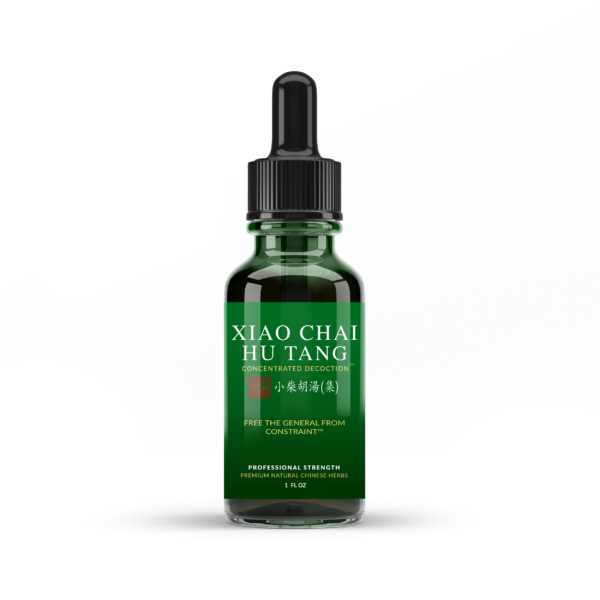
Xiao Chai Hu Tang 小柴胡湯
Login to view prices
- ACM/CCM/TCM Global Status: Safe & Effective
Free the General From Constraint™
Classical Formula · Han Dynasty · c. 200 CE
小柴胡湯
Minor Bupleurum Decoction
Free the General From Constraint™
Over Eighteen Centuries in Continuous Clinical Use
The Formula
The Representative Harmonizing Formula
Zhang Zhongjing wrote this formula down during the collapse of the Eastern Han. Plague had killed most of his clan. He set out to organize what he had learned about cold damage into a working system — and at the center of that system, he placed a remedy for illness that sits between places.
Not quite on the surface. Not yet in the interior. In a pivot, a threshold, a seam. Chai Hu opens it. Huang Qin clears what has begun to smolder there. Ren Shen, Da Zao, and Gan Cao hold the middle so nothing slips deeper. Ban Xia and Sheng Jiang settle what has risen. Seven herbs. One of the most frequently prescribed formulas in the history of Chinese medicine.
Classical Foundation
From the Shāng Hán Lùn
Xiao Chai Hu Tang first appears in the Shāng Hán Lùn (Treatise on Cold Damage), Zhang Zhongjing’s foundational manual on febrile illness. Line 96 introduces it as the definitive response to Shao Yang syndrome — the stage where a pathogen has slipped past the body’s first defenses but has not yet established itself in the interior.
Zhang returns to this formula throughout the text. It appears again in discussions of Tai Yang and Yang Ming disease. It reappears in his second book, the Jīn Guì Yào Lüè, this time for a pattern of constrained heat. By the end of the classical canon, Xiao Chai Hu Tang had been named as base for more modifications than any other formula — Chai Hu Shu Gan Tang, Da Chai Hu Tang, Chai Hu Gui Zhi Tang, Chai Hu Jia Long Gu Mu Li Tang, and Xiao Yao San all trace their lineage here.
A Note on Shao Yang
The Shao Yang is not a place. It is a relation. Classical authors describe it as the pivot — the doorway between surface and interior, between Tai Yang and Yang Ming, between what the body can still push out and what has already lodged. Modern practitioners have compared this space to the lymphatic system, to the serous membranes, to the autonomic threshold. No analogy is complete. The clinical signs are what matter: alternating fever and chills, bitter taste, hypochondriac fullness, dry throat, irritability, nausea, a wiry pulse.
The Pattern
Shao Yang Syndrome · 少陽證
The pathogen is no longer purely external. It cannot be sweated out. It is not yet firmly internal. It cannot be purged. It sits at the pivot, and the body’s energy fluctuates as it struggles to resolve the intrusion — heat rising when the body fights, cold returning when the body withdraws. The Gallbladder channel flares. Qi stagnates along the sides of the body. Stomach Qi rebels upward.
Clinical Presentation
- Alternating chills and fever (寒熱往來) — the cardinal sign
- Fullness, distention, or discomfort in the chest and hypochondrium
- Bitter taste in the mouth (口苦), especially on waking
- Dry throat; reduced appetite; aversion to food
- Nausea and/or vomiting — Stomach Qi rebelling upward
- Irritability, restlessness, emotional volatility
- Dizziness or visual disturbance; sensitive to sound
- Symptoms may occur on a cyclic or tidal pattern
Tongue:
Thin white coating, sometimes with slight yellow on the sides or root
Pulse:
Wiry (弦) — the signature pulse of Shao Yang and Liver/Gallbladder disharmony
The Shao Yang pattern is notoriously unstable. Symptoms appear and recede within the same day. Classical authors noted that the presence of even one Shao Yang sign, in the right clinical context, is enough. Xiao Chai Hu Tang does not wait for the full pattern to declare itself — it treats the pivot, and the associated signs resolve as the pivot opens.
How It Works
Seven Herbs, One Pivot
Chai Hu does what no other herb can do — it enters the Shao Yang layer and disperses pathogens lodged there, lifting clear Yang and freeing the movement of Liver Qi. Huang Qin meets it from the opposite direction, clearing the heat that has already begun to smolder in the Gallbladder and upper Jiao. The two work as a pair. Without Huang Qin, Chai Hu can scatter heat upward. Without Chai Hu, Huang Qin cannot reach the pivot where the heat has settled.
Ban Xia and Sheng Jiang address the consequence of stuck Shao Yang — turbid phlegm accumulating in the middle Jiao, Stomach Qi rising when it should descend. They transform, warm, and settle. Their presence is what separates Xiao Chai Hu Tang from the purely cooling formulas of the later febrile-disease schools.
Ren Shen, Da Zao, and Gan Cao hold the middle. When a pathogen sits at the pivot, the risk is always that it will slip deeper. These three tonify Spleen and Stomach Qi, strengthening the ground so the body can finish the work Chai Hu and Huang Qin have started. This is Zhang Zhongjing’s signature — he almost never disperses without also consolidating. The formula opens the pivot without abandoning the interior.
Clinical Recognition
When to Reach for It
A patient presents with an illness that won’t resolve. They were sick, they got better, they got sick again. Nothing sweats out. Nothing purges. They feel hot in the afternoon, cold in the evening. Their appetite is off. Their mood is short. The sides of their body feel tight. They wake with a bitter mouth. The pulse is wiry.
Or: a patient with a chronic condition that follows the same logic — symptoms that alternate, that flare and recede, that sit between presentations. Xiao Chai Hu Tang has been applied to:
- Post-viral syndromes where the acute illness has cleared but symptoms persist
- Chronic hepatitis and other Liver/Gallbladder conditions with heat features
- Pre-menstrual syndrome with irritability, breast distention, bitter taste
- Functional dyspepsia with costal discomfort
- Recurrent upper respiratory infections in children
- Cyclic fevers of unclear etiology
- Nervousness, insomnia, and mood disorders with the characteristic wiry pulse
The formula does not treat a disease. It opens a pivot. When the presentation fits — when the pattern is Shao Yang — the range of what resolves is remarkably wide. That is why, eighteen centuries after Zhang Zhongjing wrote it down, it remains one of the most-prescribed formulas in Chinese medicine.
少陽
The Si Jin Bao Preparation
Si Jin Bao’s Xiao Chai Hu Tang is a concentrated decoction prepared in small batches using traditional methods — carrying forward the formula Zhang Zhongjing set down nearly two thousand years ago. Alcohol-free. No fillers. A formula this widely prescribed deserves to be prepared with this much care.
Materia Medica · 本草
小柴胡湯
Xiǎo Chái Hú Tāng
Minor Bupleurum Decoction
Free the General From Constraint™
Seven herbs written down by Zhang Zhongjing during the Eastern Han collapse. Two herbs that open the Shao Yang pivot. Two that transform phlegm and settle rebellious Qi. Three that hold the middle so nothing slips deeper. What follows is the Materia Medica for each.
01
Herb 01
柴胡
Bupleuri Radix
Bupleurum Root · Thorowax Root
Category
Cool Acrid · Release Exterior
Nature
Bitter, Acrid · Slightly Cold
Channels
Liver · Gallbladder · Pericardium · San Jiao
Actions
Resolves Shao Yang disorders by harmonizing the pivot between exterior and interior. Disperses pathogens lodged in the half-exterior, half-interior layer. Courses stagnant Liver Qi and relieves the constraint that produces costal fullness, irritability, and menstrual irregularity. Raises clear Yang in cases of middle Jiao sinking — prolapse, fatigue, chronic loose stools.
Indications
Alternating chills and fever; bitter taste; hypochondriac fullness; irritability; wiry pulse. Also: PMS, menstrual pain with emotional component, breast distention, costal pain from Liver Qi stagnation, prolapse of organs with Spleen Qi sinking.
Classical Reference
The Shen Nong Ben Cao Jing places Chai Hu among the upper-grade herbs — those that extend life and harm nothing. It is described as clearing the original Qi, dispersing accumulations in the stomach and intestines, and driving out old pathogens so that new Qi can arise. Zhang Zhongjing made it the pivot of his Shao Yang system, and no physician since has questioned that placement.
Role in This Formula
Chai Hu enters the Shao Yang and disperses the pathogen lodged there. No other herb reaches this layer in the same way. Its acrid, ascending nature lifts the pathogen outward while its bitter quality prevents it from scattering heat upward — an action made complete by its pairing with Huang Qin.
02
Herb 02
黃芩
Scutellariae Radix
Chinese Skullcap Root · Baical Skullcap
Category
Clear Heat · Drain Fire
Nature
Bitter · Cold
Channels
Lung · Gallbladder · Stomach · Large Intestine
Actions
Clears heat and dries dampness, particularly heat lodged in the upper and middle Jiao. Clears damp-heat from the Gallbladder and intestines. Drains Liver Fire rising to disturb the head — red eyes, headache, irritability. Stops bleeding caused by heat forcing blood out of the vessels. Classically considered calming to the fetus when heat is the cause of restlessness in pregnancy.
Indications
Heat in the Shao Yang with bitter taste and wiry pulse; damp-heat diarrhea or dysentery; cough with yellow phlegm from Lung heat; hematemesis, epistaxis, or other bleeding from heat; restless fetus from heat pattern.
Classical Reference
Li Shizhen writes in the Ben Cao Gang Mu that Huang Qin specifically clears heat from the Gallbladder and the Lesser Yang channels — a pairing Zhang Zhongjing had established a millennium earlier. Modern research has identified its principal active compound as baicalin, noted for anti-inflammatory and hepatoprotective activity that correlates closely with the herb’s traditional uses.
Role in This Formula
Huang Qin meets Chai Hu from the opposite direction. Where Chai Hu lifts the pathogen outward, Huang Qin clears the heat that has already begun to smolder at the pivot. The two herbs together — acrid-cool dispersing above, bitter-cold clearing below — define the harmonizing method.
03
Herb 03
半夏
Pinelliae Rhizoma Praeparatum
Pinellia Rhizome (Processed)
Category
Warm · Transform Phlegm
Nature
Acrid · Warm · Toxic (when raw)
Channels
Spleen · Stomach · Lung
Actions
Dries dampness and transforms cold-phlegm in the middle Jiao. Directs rebellious Stomach Qi downward — the principal herb for nausea and vomiting in Chinese medicine. Dissolves phlegm-nodules. Disperses focal distention and lumps in the chest. Always used in processed form (Fa Ban Xia or Jiang Ban Xia) due to the raw rhizome’s toxicity.
Indications
Nausea, vomiting, morning sickness; cough with copious white or clear phlegm; plum-pit sensation in the throat; chest distention from phlegm; dizziness from phlegm-damp.
Classical Reference
The Shen Nong Ben Cao Jing lists Ban Xia among herbs that descend rebellious Qi and dispel phlegm. Zhang Zhongjing uses it across the Shang Han Lun and Jin Gui Yao Lue whenever phlegm-damp obstructs the middle Jiao — nowhere more characteristically than in Xiao Chai Hu Tang, where it addresses the nausea that follows when Shao Yang Qi stalls at the pivot.
Role in This Formula
When Shao Yang Qi stagnates, phlegm accumulates in the middle and Stomach Qi rebels upward. Ban Xia transforms that phlegm and redirects the Qi — resolving the nausea that accompanies Shao Yang disease without weakening the formula’s harmonizing action.
04
Herb 04
生薑
Zingiberis Rhizoma Recens
Fresh Ginger Rhizome
Category
Warm Acrid · Release Exterior
Nature
Acrid · Slightly Warm
Channels
Lung · Spleen · Stomach
Actions
Releases the exterior and disperses cold. Warms the middle Jiao and stops vomiting — classically paired with Ban Xia in nearly every formula for nausea. Warms the Lung and stops cough from cold. Reduces the toxicity of Ban Xia and other acrid, drying herbs. Harmonizes the Ying and Wei layers.
Indications
Nausea and vomiting (the “holy medicine” for Stomach); wind-cold at the surface; cough with clear or thin phlegm; poor appetite from Spleen cold; seafood or herbal toxicity.
Classical Reference
Called ǒu jiā zhī shèng yào — “the holy medicine for nausea” — in the classical literature. Zhang Zhongjing pairs Sheng Jiang with Da Zao in the majority of his formulas, using the combination to regulate the Ying and Wei, protect the Stomach, and ensure that stronger herbs do not damage the middle.
Role in This Formula
Sheng Jiang works with Ban Xia to settle Stomach Qi and stop nausea. It works with Chai Hu to assist in releasing any remaining exterior component. And it works with Da Zao to protect the middle Jiao throughout the dispersing action of the formula.
05
Herb 05
人參
Ginseng Radix et Rhizoma
Asian Ginseng · Panax Ginseng Root
Category
Tonify · Tonify Qi
Nature
Sweet, Slightly Bitter · Slightly Warm
Channels
Lung · Spleen · Heart
Actions
Powerfully tonifies Yuan Qi — the original Qi — in cases of collapse. Tonifies Lung Qi, Spleen Qi, and Heart Qi. Generates fluids and stops thirst. Calms the Spirit and benefits intelligence. Restores the pulse in critical conditions of Qi collapse. The defining herb of the Qi-tonifying category.
Indications
Severe fatigue; shortness of breath; chronic loose stools from Spleen deficiency; thirst and fluid deficiency; palpitations and insomnia from Heart Qi deficiency; critical Qi collapse with faint pulse and cold extremities.
Classical Reference
The Shen Nong Ben Cao Jing places Ren Shen at the head of the upper-grade herbs — those that nourish life itself. It is described as supplementing the five organs, settling the Spirit, stabilizing the Hun and Po, stopping palpitations, removing evil Qi, brightening the eyes, and — with long use — lightening the body and extending the years.
Role in This Formula
When a pathogen lodges at the Shao Yang, the danger is always that it will slip deeper. Ren Shen tonifies the Qi of the middle Jiao so the body has the strength to finish what Chai Hu and Huang Qin have started — preventing the pathogen from penetrating to the interior while the pivot is being opened.
06
Herb 06
大棗
Jujubae Fructus
Chinese Date · Jujube Fruit
Category
Tonify · Tonify Qi
Nature
Sweet · Warm
Channels
Spleen · Stomach
Actions
Tonifies the middle Jiao and augments Qi. Nourishes the Blood and calms the Spirit — particularly useful in cases of emotional lability with Blood deficiency. Harmonizes and moderates the action of other herbs, softening the impact of strong or drying herbs on the middle.
Indications
Middle Jiao weakness with fatigue and loose stools; Blood deficiency with pale complexion; Restless Organ Disorder (Zang Zao) — the classical name for emotional lability with crying, yawning, and disturbed sleep; used in many formulas to protect the Stomach from harsh herbs.
Classical Reference
The Shen Nong Ben Cao Jing praises Da Zao as harmonizing the hundred herbs. Zhang Zhongjing pairs it with Sheng Jiang throughout his formulas — this Jiang-Zao pairing is one of the most recognizable signatures of classical prescription, marking a formula as explicitly protective of the middle Jiao even as it acts elsewhere.
Role in This Formula
Da Zao works with Sheng Jiang to regulate the Ying and Wei, and with Ren Shen and Gan Cao to hold the middle while the dispersing herbs do their work. Its sweet, moderating nature also softens the bitter cold of Huang Qin so it does not damage Stomach Qi.
07
Herb 07
甘草
Glycyrrhizae Radix
Licorice Root
Category
Tonify · Tonify Qi
Nature
Sweet · Neutral
Channels
All Twelve Channels
Actions
Tonifies Spleen Qi and augments the Heart. Clears heat and resolves toxicity. Moistens the Lung and stops cough. Stops spasms and pain. Harmonizes the characteristics of other herbs — the most commonly used herb in the entire Chinese Materia Medica, appearing in more formulas than any other single substance.
Indications
Spleen and Heart Qi deficiency; cough from multiple etiologies; muscle cramping and abdominal pain; toxic sores and food poisoning; moderates the harsh qualities of dispersing or purging herbs; helps reconcile herbs of opposing nature within a formula.
Classical Reference
Classically called guó lǎo — “the old statesman” — because of its role in reconciling opposing forces within a formula. The Shen Nong Ben Cao Jing lists it among the upper-grade herbs. Li Shizhen writes that Gan Cao tonifies the three Jiao, moderates urgency, and harmonizes all herbs — praise echoed by every subsequent Materia Medica.
Role in This Formula
Gan Cao coordinates the formula. It supports Ren Shen and Da Zao in holding the middle Jiao, and its moderating sweetness bridges the opposing natures of cool-dispersing Chai Hu and cold-clearing Huang Qin — allowing them to work together without canceling each other out or damaging the middle.
菜
Preparation Base
蔬菜甘油
Glycerinum Vegetabile
Vegetable Glycerin · Kosher, Non-GMO
Function in Preparation
Si Jin Bao concentrated decoctions are alcohol-free. Vegetable glycerin serves as the preservation medium in place of alcohol — a choice that matters clinically: the formula can be given to children, pregnant patients, post-surgical patients, and patients in recovery from alcohol dependence without concern. Glycerin is naturally sweet, pairs well with herbal bitters, and does not alter the energetic properties of the decoction.
水
Preparation Medium
蒸餾水
Aqua Destillata
Distilled Water
Function in Preparation
Distilled water is the medium through which the herbs are decocted. Its purity matters. Trace minerals in tap or spring water can interact unpredictably with herbal constituents, particularly in concentrated preparation. Every Si Jin Bao concentrated decoction is prepared using distilled water only — a small detail that represents a meaningful commitment to consistency from batch to batch.
少陽
Seven Herbs, One Pivot
Zhang Zhongjing wrote this formula down eighteen centuries ago during the Eastern Han collapse. The patients have changed. The pivot has not. A formula survives that long because practitioners keep reaching for it — and Xiao Chai Hu Tang has earned that longevity. That is why it has outlasted empires.
Dosage & Preparation · 用法用量
How to Prepare & Dose
Si Jin Bao Concentrated Decoctions™ are activated in hot water, steeped briefly, and taken warm. Follow the four steps below, then refer to the age-appropriate dosing grid.
Preparation
The Four Steps
-
Step 01ShakeShake the bottle well before each use.
-
Step 02Add Hot WaterAdd the age-appropriate dosage into 1 oz of hot water, as you would for tea.
-
Step 03SteepCover and steep for 5 minutes, then allow to cool to a warm, drinkable temperature.
-
Step 04DrinkDrink warm, twice daily or as directed by your practitioner.
For best results: take on an empty stomach — approximately 30 minutes before or after food or drink.
Dosage
By Age Group
Newborn
3drops
Twice daily
1 Year
7drops
Twice daily
2–6 Years
10drops
Twice daily
7 Years to Adult
20drops
Twice daily
Treatment Protocols
Suggested Clinical Course
Acute
10 Days
Then Reevaluate
Subacute
30 Days
Then Reevaluate
Chronic
90 Days
Then Reevaluate
Bottle Longevity
11½ days
at standard adult dosage
Xiao Chai Hu CD Product Guide by SJB Team
Research · Clinical Evidence
小柴胡湯
Minor Bupleurum Decoction
Free the General From Constraint™
Most Peer-Reviewed Classical Formula in Chinese Medicine
Modern Clinical Evidence
Eighteen Centuries, Forty Years of Study
Xiao Chai Hu Tang is the most-researched classical Chinese formula in the peer-reviewed literature. Over three decades, Japanese, Chinese, Korean, and Western researchers have studied it under names that vary by country — Sho-saiko-to in Japan, Soshihotang in Korea, Xiao Chai Hu Tang or XCHT in China. The same seven herbs, studied across more than 450 published papers.
What follows is a selection of clinical studies relevant to the formula’s modern applications. Each study is cited with its journal and PubMed identifier where available, so practitioners can access the original source.
Study 01
Chronic Hepatitis B — HBeAg Clearance in Children
Finding
In a study of fourteen children with chronic hepatitis B virus infection and sustained liver disease, seven of fourteen patients (50.0%) became HBeAg-negative during an average observation period of 0.47 years of Sho-saiko-to treatment. Four of those seven developed anti-HBe antibodies. The annual seroconversion rate in the treatment group was substantially higher than the natural seroconversion rate of 22.7% observed in twenty-two untreated patients.
Tajiri H, Kozaiwa K, Ozaki Y, et al. American Journal of Chinese Medicine, 1991;19(2):121-9. PubMID: 1816724.
Study 02
Chronic Hepatitis C — Sloan Kettering Trial
Finding
A single-arm Phase II study at Memorial Sloan Kettering evaluated forty-two chronic hepatitis C patients not suitable for interferon-based therapy. Patients received Sho-saiko-to at 2.5g three times daily for twelve months. ALT levels decreased in 67% of patients. The study demonstrated the formula’s safety and clinical applicability as an alternative for patients who cannot tolerate or have failed conventional antiviral therapy.
Deng G, Kurtz RC, Vickers A, et al. Journal of Ethnopharmacology, 2011;136(1):83-7. PubMID: 21527335.
Study 03
Hepatocellular Carcinoma Risk Reduction
Finding
A nationwide Taiwanese population cohort study followed patients with chronic hepatitis B over fifteen years. Xiao Chai Hu Tang was identified among several classical formulas significantly associated with reduced hepatocellular carcinoma risk. Patients using Chinese herbal medicine for more than 180 days showed an adjusted hazard ratio of 0.52 for HCC development compared to non-users — approximately half the risk.
Nationwide population-based cohort study, BMJ associated journals. Study referenced in multiple systematic reviews of TCM for chronic hepatitis B.
Study 04
Antiviral Activity — Interferon Induction
Finding
An in vitro study at Kaohsiung Medical University examined Xiao Chai Hu Tang’s antiviral mechanism against Coxsackie B virus type 1 — a virus with significant pediatric morbidity. The formula neutralized CVB1-induced cytopathic effect and inhibited viral replication through the induction of Type I interferon (IFN-α/β) expression — a mechanism that illuminates how the formula may support immune function across multiple viral infections beyond the specific study.
Cheng PW, et al. International Immunopharmacology, 2006;6(6):1003-12. PubMID: 16644487.
Study 05
Recurrent URIs in Children
Finding
Chinese clinical reports have long documented Xiao Chai Hu Tang’s efficacy in pediatric recurrent upper respiratory infections. In one study, thirty children with recurrent URIs were treated with a modified Xiao Chai Hu Tang protocol over defined intervals, demonstrating reduced frequency and severity of episodes. A separate paediatric case series of one hundred children with nocturnal cough showed a 92% effective rate using Xiao Chai Hu Tang with modifications.
Yang Jing Hua, et al. Zhejiang Journal of Integrated Traditional Chinese and Western Medicine; Tuo Yue-Ling, pediatric cough case series (Chinese clinical literature).
Study 06
Natural Killer Cell Activity Augmentation
Finding
Multiple studies have documented Xiao Chai Hu Tang’s immunomodulatory effects: augmentation of NK cell activity following oral administration, induction of granulocyte colony-stimulating factor (G-CSF) production in peripheral blood mononuclear cells, enhancement of IgA production in Peyer’s patches, and modulation of macrophage function. The formula appears to support immune response at multiple levels simultaneously — consistent with the classical description of “strengthening the righteous and dispelling the evil.”
Kaneko M, et al. Immunopharmacology and Immunotoxicology, 1994;16:41-53. Yamashiki M, et al. J Clin Lab Immunol, 1992;37(2):83-90. Tauchi Y, et al. Immunopharmacology and Immunotoxicology, 1993;15(2-3).
Phytochemistry
Active Compounds Identified
Modern phytochemical analysis of the seven herbs in Xiao Chai Hu Tang has identified specific active compounds responsible for observed clinical effects:
- Saikosaponins (particularly saikosaponin a, c, d) from Chai Hu — demonstrated anti-inflammatory, hepatoprotective, anti-fibrotic, and antiviral activities
- Baicalin and Baicalein from Huang Qin — the flavones responsible for Huang Qin’s anti-inflammatory and hepatoprotective effects, noted to potentiate the effectiveness of antibiotics
- Glycyrrhizin from Gan Cao — liver-protective, anti-inflammatory, and widely studied for hepatitis C
- Ginsenosides from Ren Shen — the saponin family responsible for ginseng’s adaptogenic effects and immune support
- Gingerol compounds from Sheng Jiang — anti-nausea, anti-inflammatory, and warming circulatory effects
The research literature has increasingly focused on why the whole formula outperforms its isolated constituents — a phenomenon consistent with the classical TCM principle that a formula’s architecture produces effects no single herb can achieve alone.
Bridge to Western Framework
Clinical Correlates
Western Conditions Associated with Shao Yang Patterns
- Chronic hepatitis (viral B, viral C, autoimmune)
- Post-viral syndromes and chronic fatigue
- Cholecystitis, cholelithiasis, biliary dyskinesia
- Functional dyspepsia with costal component
- Premenstrual syndrome with emotional/breast component
- Recurrent upper respiratory infections (pediatric)
- Immune dysregulation with mixed hot/cold features
- Mood disorders with somatic expression along Gallbladder channel
Practitioner Cautions
What the Research Also Says
Important
The peer-reviewed literature also documents rare cases of adverse effects, particularly interstitial pneumonitis and hepatotoxicity when Xiao Chai Hu Tang is combined with interferon therapy or used long-term in certain populations. These reports originate almost exclusively from the Japanese Kampo system, where the formula is often standardized and prescribed without individualized pattern differentiation.
Classical TCM practice, by contrast, emphasizes that Xiao Chai Hu Tang should only be used when the Shao Yang pattern is clearly present. Contraindications include pure exterior patterns (Tai Yang only), pure interior excess (Yang Ming), and — traditionally — pregnancy, due to Chai Hu’s upward-dispersing nature and Ban Xia’s drying quality.
Practitioners should use professional judgment and pattern differentiation rather than prescribing based on Western diagnostic categories alone.
少陽
Classical Wisdom, Modern Evidence
Zhang Zhongjing wrote this formula down eighteen centuries ago. Modern researchers have spent forty years trying to understand why it works. The answers they’ve found have not displaced classical practice — they’ve deepened it. Xiao Chai Hu Tang remains what it has always been: a formula for when the pattern fits, prescribed by practitioners trained to recognize it.
Related products
-

Ba Zhen Tang 八珍湯
Login to view prices -
Bao He Tang (保和湯)
Login to view prices -
Dang Gui Shao Yao Tang 當歸芍藥湯
Login to view prices -
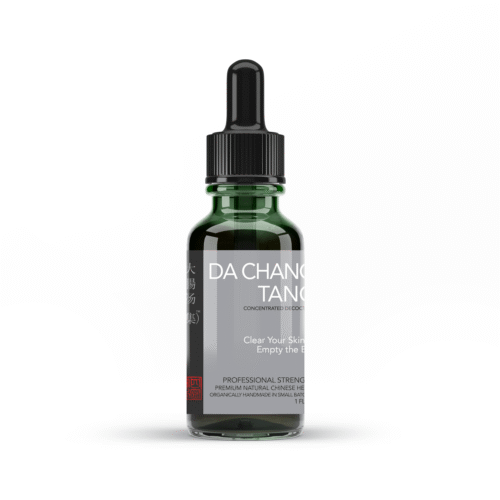
Da Chang Tang 大腸湯
Login to view prices

Reviews
There are no reviews yet.