Enjoy Free US Domestic Shipping on Orders Over $400+

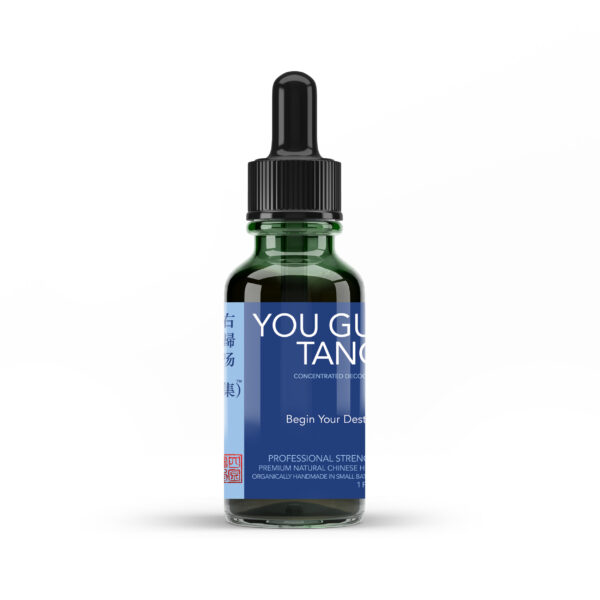
You Gui Tang 右歸湯
Login to view prices
- ACM/CCM/TCM Global Status: Safe & Effective
Begin Your Destiny™
This is Si Jin Bao’s version of a classical formula that dates back to the 17th century. It is well known for addressing symptoms of insufficiency of the Kidney-Yang and decline of fire from Ming Men as well as Wei Syndrome (Atrophy disorder) due to Kidney Qi and Yang Deficiency .
Classical Formula · Ming Dynasty · c. 1624
右歸湯
Restore the Right (Kidney) Decoction
Begin Your Destiny™
Over Four Centuries in Continuous Clinical Use
The Formula
Rekindle the Fire at the Root
Yòu Guī Tāng, the Restore the Right (Kidney) Decoction, is Si Jin Bao’s version of Zhang Jing-yue’s classical formula for a Kidney Yang grown cold. It warms and rebuilds the fire of the right Kidney, the Ming Men, and replenishes the Essence that fire depends on.
The right Kidney holds the Ming Men, the gate of vitality, the warm fire at the body’s root. When that fire declines, cold rises from within. The lower back and knees ache and weaken, the limbs never quite warm, desire and fertility fade, and the stools loosen before dawn. This formula was built to rekindle it.
Classical Foundation
Seek the Yang within the Yin
The formula appears in the Jǐng-Yuè Quán Shū (Collected Treatises of Zhang Jing-Yue), completed in 1624. Zhang Jing-yue built a matched pair, Yòu Guī for the right Kidney and its Yang, Zuǒ Guī for the left and its Yin, on a rule he stated plainly: to tonify the Yang well, one must seek it within the Yin. So he warmed the Kidney with Aconite and Cinnamon, then set that fire in a bed of rich Yin and Blood tonics, so the warmth would have something to hold to.
A Note on the Preparation
The classical rendering included deer-antler gelatin, an animal tonic of the Yang and Essence. Si Jin Bao prepares the formula vegan, without that ingredient, leaning on warming Aconite and Cinnamon and on the seeds and roots that replenish the Essence: Dù Zhòng, Tù Sī Zǐ, and Shú Dì Huáng.
The Pattern
Kidney Yang Deficiency · 腎陽虛
The pattern is a decline of the Kidney Yang and the Ming Men fire. It shows as cold that comes from within: aversion to cold and cool limbs, aching and weakness of the lower back and knees, impotence or infertility, loose stools or dawn diarrhea, and at times a swelling of the legs as the Yang fails to move the water.
Clinical Indications
- Aversion to cold and coolness of the extremities
- Aching and weakness of the lower back and knees
- Impotence, infertility, spermatorrhea
- Loose stools; edema of the lower legs; lumbar and limb pain
Classical tongue & pulse: a pale, swollen tongue with a white coating; a deep, weak, and slow pulse.
How It Works
Warm the Fire, and Feed It
Zhì Fù Zǐ and Ròu Guì bring the warmth, rekindling the Ming Men fire and driving out the deep cold. Warmth alone would only scatter, so Shú Dì Huáng, Shān Zhū Yú, Gǒu Qǐ Zǐ, and Dāng Guī fill the Yin and Blood that give the fire a place to settle.
Dù Zhòng and Tù Sī Zǐ strengthen the lower back and secure the Essence, and Shān Yào anchors the whole in the Spleen and Kidney. Warm the fire, and feed it, and the Yang returns without burning itself out.
Clinical Recognition
When to Reach for It
Reach for Yòu Guī Tāng for a declined Kidney Yang: aversion to cold and cool limbs, aching and weak knees and lower back, impotence or infertility, and loose stools before dawn, with a pale, swollen tongue and a deep, slow pulse.
Western conditions and terminology that are commonly associated with these TCM patterns:
- Infertility, impotence, spermatorrhea
- Menopausal syndrome, abnormal uterine bleeding
- Osteoporosis; nephrotic syndrome
- Anemia, leukopenia; asthma
溫陽
The Si Jin Bao Preparation
Si Jin Bao’s Yòu Guī Tāng is a concentrated decoction prepared in small batches by traditional methods. It is vegan and alcohol-free, with no fillers, so the formula reaches the patient as the nine herbs and nothing else.
Materia Medica · 本草
右歸湯
Yòu Guī Tāng
Restore the Right (Kidney) Decoction
Begin Your Destiny™
When the fire at the body’s core burns low, the cold comes from within: the back and knees ache and give way, the limbs never quite warm, desire and fertility fade, the stools loosen before dawn. Zhang Jing-yue set out to rebuild that fire, but not with heat alone. He held to a rule of his own, that to tonify the Yang well one must seek it within the Yin, and so he warmed the Kidney with Aconite and Cinnamon while feeding it with rich Rehmannia and the seeds and fruits that replenish the Essence. Below is each herb on its own terms: its nature, the channels it enters, its classical actions, and the part it plays here.
01
Herb 01
肉桂
Cortex Cinnamomi
Cinnamon Bark
CategoryWarm the Interior
Nature & FlavorAcrid, Sweet; Hot
ChannelsKidney · Spleen · Heart · Liver
Actions
Warms the Kidney and fortifies the Yang, stokes the Ming Men fire, disperses cold, and guides errant fire back to its source.
Indications
Kidney Yang deficiency with aversion to cold, cold limbs, and weak, aching low back.
Classical Reference
Recorded in the Shén Nóng Běn Cǎo Jīng (神農本草經), long used to warm the Kidney and return fire to its root.
Role in this Formula
Rekindles the Ming Men fire, the warm core the whole formula is built to restore.
02
Herb 02
附子
Radix Aconiti Lateralis Praeparata
Prepared Aconite Root
CategoryWarm the Interior
Nature & FlavorAcrid, Sweet; Hot (prepared)
ChannelsHeart · Kidney · Spleen
Actions
Restores the devastated Yang, warms the Kidney and Spleen Yang, disperses deep cold, and relieves cold pain.
Indications
Kidney and Spleen Yang deficiency with profound cold; cold pain of the lower body.
Classical Reference
Recorded in the Shén Nóng Běn Cǎo Jīng (神農本草經). Used only in its prepared form, which tempers the potency of the raw root.
Role in this Formula
With Ròu Guì, drives out the deep cold and rebuilds the Kidney Yang.
03
Herb 03
山藥
Rhizoma Dioscoreae
Chinese Yam
CategoryTonify Qi
Nature & FlavorSweet; Neutral
ChannelsSpleen · Lung · Kidney
Actions
Tonifies the Spleen, Lung, and Kidney; benefits the Qi and Yin; secures the Essence.
Indications
Spleen and Kidney deficiency with poor appetite, loose stool, and leakage of the Essence.
Classical Reference
Recorded in the Shén Nóng Běn Cǎo Jīng (神農本草經), a gentle tonic that secures without cloying.
Role in this Formula
Anchors the formula in the Spleen and Kidney and secures the Essence.
04
Herb 04
熟地黃
Radix Rehmanniae Praeparata
Prepared Rehmannia Root
CategoryTonify Blood
Nature & FlavorSweet; Slightly Warm
ChannelsLiver · Kidney
Actions
Tonifies the Blood and nourishes the Yin; replenishes the Essence and Marrow.
Indications
Blood and Yin deficiency; depletion of the Kidney Essence.
Classical Reference
The principal Yin and Blood tonic of the classical tradition, prepared by repeated steaming until dark and rich.
Role in this Formula
Richly fills the Yin and Essence, the bed in which the restored Yang can settle.
05
Herb 05
枸杞子
Fructus Lycii
Goji (Lycium) Fruit
CategoryTonify Yin & Blood
Nature & FlavorSweet; Neutral
ChannelsLiver · Kidney · Lung
Actions
Nourishes and tonifies the Liver and Kidney; benefits the Essence; brightens the eyes.
Indications
Liver and Kidney deficiency with sore back, dizziness, and blurred vision.
Classical Reference
Recorded in the Shén Nóng Běn Cǎo Jīng (神農本草經), long prized as a gentle tonic of the Essence.
Role in this Formula
Enriches the Kidney and Liver Yin and Essence, deepening the reserve.
06
Herb 06
杜仲
Cortex Eucommiae
Eucommia Bark
CategoryTonify the Yang
Nature & FlavorSweet; Warm
ChannelsLiver · Kidney
Actions
Tonifies the Liver and Kidney; strengthens the sinews and bones and the lower back.
Indications
Kidney Yang deficiency with weak, aching lower back and knees.
Classical Reference
Recorded in the Shén Nóng Běn Cǎo Jīng (神農本草經) as a principal herb for the low back and the Kidney Yang.
Role in this Formula
Strengthens the lower back and knees while tonifying the Kidney Yang.
07
Herb 07
菟絲子
Semen Cuscutae
Chinese Dodder Seed
CategoryTonify the Yang
Nature & FlavorAcrid, Sweet; Neutral
ChannelsKidney · Liver · Spleen
Actions
Tonifies the Kidney Yang and Yin, secures the Essence, and benefits the Jing.
Indications
Kidney deficiency with leakage of the Essence, sore back, and infertility.
Classical Reference
Recorded in the Shén Nóng Běn Cǎo Jīng (神農本草經), valued for tonifying the Yang without drying the Yin.
Role in this Formula
Secures the Essence and gently tonifies both the Yang and the Yin of the Kidney.
08
Herb 08
山茱萸
Fructus Corni
Asiatic Cornelian Cherry
CategoryStabilize & Bind · Tonify
Nature & FlavorSour, Astringent; Slightly Warm
ChannelsLiver · Kidney
Actions
Tonifies the Liver and Kidney, secures the Essence, and stems leakage.
Indications
Kidney deficiency with leakage of the Essence, sweating, and frequent urination.
Classical Reference
Recorded in the Shén Nóng Běn Cǎo Jīng (神農本草經), both a tonic and an astringent of the Kidney.
Role in this Formula
Enriches and secures the Essence, holding what the fire would otherwise let escape.
09
Herb 09
當歸
Radix Angelicae Sinensis
Chinese Angelica Root
CategoryTonify Blood
Nature & FlavorSweet, Acrid; Warm
ChannelsLiver · Heart · Spleen
Actions
Tonifies and invigorates the Blood; warms and frees the channels.
Indications
Blood deficiency, particularly where cold has slowed the circulation.
Classical Reference
Recorded in the Shén Nóng Běn Cǎo Jīng (神農本草經) as a principal herb to tonify and move the Blood.
Role in this Formula
Nourishes the Blood, completing the Yin-and-Blood bed the warming herbs settle into.
10
Herb 10
蔬菜甘油
Glycerinum Vegetabile
Vegetable Glycerin
Nature (性)
Neutral · 平 Píng
Taste (味)
Sweet · 甘 Gān
Category
Excipient · Carrier
Traditional Actions (功效)
Harmonizes and guides the other medicinals to their target tissues. It is analogous to synovial fluid, providing a medium for smooth movement and deep delivery throughout the decoction.
Role in this Formula
Excipient function: Dissolves and stabilizes the botanical constituents of the formula, ensuring consistent delivery in decoction form. Mucosal hydration: By attracting and retaining water, glycerin keeps the oral and digestive mucosa moist. Patient tolerance: Its naturally sweet, neutral profile makes the formula palatable for children and adults alike.
Modern Research
International Journal of Pharmaceutics · 2023
Glycerin serves as a co-solvent and humectant in oral liquid formulations, enhancing solubility of poorly water-soluble compounds, stabilizing active ingredients, and improving mucosal hydration.
Journal of Clinical Pharmacology · 2018
Oral glycerol has been widely used as an osmotic agent. Doses of 1–1.5 g/kg are safe and well-tolerated; its mechanism involves osmotic fluid redistribution between compartments.
Clinical Oral Investigations · 2022
Glycerin-containing oral moisturizers significantly improved xerostomia symptoms compared with water-based controls, enhancing mucosal hydration and prolonging moisture retention in the oral cavity.
Clinical Translation
Gān Yóu guides the physical delivery of the formula, ensuring the preparation reaches its target tissues and is tolerated long enough to do its work. It is a naturally sweet, neutral carrier that makes the decoction palatable for adults and children alike.
11
Herb 11
蒸餾水
Aqua Destillata
Distilled Water
Nature (性)
Neutral · 平 Píng
Taste (味)
Tasteless
Category
Vehicle · Neutral Carrier
Traditional Actions (功效)
Not a classical herb in its own right. It functions as a neutral carrier, a pharmaceutically pure vehicle that allows the active constituents of the classical herbs in the formula to extract, stabilize, and deliver without interference.
Role in this Formula
Biomedical role: A pharmaceutically pure solvent, ensuring consistent extraction and delivery of active compounds without introducing mineral ions, microbial contaminants, or chemical interference. Clinical relevance: Acts as a safe vehicle, analogous to saline in biomedicine, so that every dose of the formula performs identically, from the first bottle to the last.
Modern Research
Pharmacopeial Standard · Herbal Decoction Stability
Distilled water ensures stability, reproducibility, and safety in herbal decoction preparations by eliminating mineral ions and microbial contaminants that would otherwise compromise extraction consistency and shelf life.
Clinical Pharmacology · Oral Solution Vehicles
Distilled water is recognized in clinical pharmacology as the neutral carrier of choice for both intravenous and oral solutions, chosen specifically for its non-reactive profile with active ingredients.
Clinical Translation
Li Shi-zhen devoted an entire section of the Ben Cao Gang Mu (本草綱目) to the classification of waters, recognizing that the water in which a formula is prepared shapes the clinical outcome. SJB honors this principle by using pharmaceutically distilled water as the neutral vehicle for every decoction.
溫陽
Warm the Fire, and Feed It
Zhang Jing-yue’s insight holds the formula together: a fire that is only stoked will gutter, but a fire set in a full reserve of Yin and Essence will hold. Two herbs warm the Kidney, the rest fill and secure it, and the Yang returns to a place prepared to keep it.
Dosage & Preparation · 用法用量
How to Prepare & Dose
Si Jin Bao Concentrated Decoctions™ are activated in hot water, steeped briefly, and taken warm. Follow the four steps below, then refer to the age-appropriate dosing grid.
Preparation
The Four Steps
-
Step 01ShakeShake the bottle well before each use.
-
Step 02Add Hot WaterAdd the age-appropriate dosage into 1 oz of hot water, as you would for tea.
-
Step 03SteepCover and steep for 5 minutes, then allow to cool to a warm, drinkable temperature.
-
Step 04DrinkDrink warm, twice daily or as directed by your practitioner.
For best results: take on an empty stomach — approximately 30 minutes before or after food or drink.
Dosage
By Age Group
Newborn
3drops
Twice daily
1 Year
7drops
Twice daily
2–6 Years
10drops
Twice daily
7 Years to Adult
20drops
Twice daily
Treatment Protocols
Suggested Clinical Course
Acute
10 Days
Then Reevaluate
Subacute
30 Days
Then Reevaluate
Chronic
90 Days
Then Reevaluate
Bottle Longevity
11½ days
at standard adult dosage
Research · 研究
右歸湯
Yòu Guī Tāng
The Modern Evidence
Nine Studies on the Herbs in You Gui Tang
A Kidney Yang that has run cold is felt in the low back and the knees, in limbs that will not warm and a vitality that has dimmed. Yòu Guī Tāng rebuilds that fire, and while the effect belongs to the whole formula, each of its nine herbs has also drawn modern study on its own. What follows is that record, taken herb by herb.
01
Study 01
肉桂
Traditional Uses & Pharmacology Review
Molecules · 2019
Design
Comprehensive review
Active Compounds
Cinnamaldehyde, essential oils
Relevance
Direct, warms the Kidney Yang
Background
Ròu Guì, the bark of Cinnamomum cassia, warms the Kidney and stokes the Ming Men fire. This review compiled its traditional uses, chemistry, and pharmacology.
Findings
Its cinnamaldehyde and essential oils are documented for anti-inflammatory, cardioprotective, and glucose- and lipid-regulating activity.
Relevance to You Gui Tang
Ròu Guì rekindles the Ming Men fire, the warm core the whole formula is built to restore.
Citation
Cinnamomum cassia Presl: A Review of Its Traditional Uses, Phytochemistry, Pharmacology and Toxicology. Molecules. 2019;24(19):3473.
02
Study 02
附子
Cardiotonic Mechanism Review
Front. Pharmacol. · 2022
Design
Mechanism review (cardiotonic effects and toxicity)
Active Compounds
Cardiotonic alkaloids (demethyl coclaurine, aconitine)
Relevance
Direct, warms and restores the Yang
Background
Zhì Fù Zǐ, the processed lateral root of aconite, restores and warms the Yang. This review examined the molecular mechanisms behind the cardiotonic action of the processed root, along with its toxicity.
Findings
The cardiotonic activity of the processed root is documented as arising from alkaloids and glycosides, and the review underscores that processing is what makes clinical use possible.
Relevance to You Gui Tang
With Ròu Guì, the prepared Fù Zǐ drives out the deep cold and rebuilds the Kidney Yang.
Citation
Processed lateral root of Aconitum carmichaelii Debx.: A review of cardiotonic effects and cardiotoxicity on molecular mechanisms. Front. Pharmacol. 2022;13:1026219.
03
Study 03
山藥
Nutraceutical Review
Foods · 2024
Design
Review
Active Compounds
Dioscin, polysaccharides, allantoin
Relevance
Direct, tonifies the Spleen and Kidney
Background
Shān Yào tonifies the Spleen and Kidney and secures the Essence. This review compiled its chemistry and nutraceutical pharmacology.
Findings
Its dioscin and polysaccharides are documented for antioxidant, immunomodulatory, and metabolism-supporting activity.
Relevance to You Gui Tang
Shān Yào anchors the formula in the Spleen and Kidney and secures the Essence.
Citation
A Frontier Review of Nutraceutical Chinese Yam. Foods. 2024;13(10):1426. PMCID: PMC11119861.
04
Study 04
熟地黃
Experimental Study
Chin. Med. · 2016
Design
Experimental study
Active Compounds
Catalpol (iridoid glycoside)
Relevance
Direct, nourishes the Yin and Essence
Background
Shú Dì Huáng richly nourishes the Yin, Blood, and Essence. This study examined catalpol, one of its principal constituents.
Findings
Catalpol is documented for antidiabetic and antioxidant activity in an experimental model.
Relevance to You Gui Tang
Shú Dì Huáng richly fills the Yin and Essence, the bed in which the restored Yang can settle.
Citation
Antidiabetic and antioxidant effects of catalpol extracted from Rehmannia glutinosa (Di Huang) on rat diabetes induced by streptozotocin and high-fat, high-sugar feed. Chin. Med. 2016. PMCID: PMC4864906.
05
Study 05
枸杞子
Comprehensive Review
Front. Pharmacol. · 2025
Design
Comprehensive review
Active Compounds
Lycium polysaccharides, carotenoids, flavonoids
Relevance
Direct, enriches the Kidney Essence
Background
Gǒu Qǐ Zǐ nourishes the Liver and Kidney and benefits the Essence, a classical herb for a depleted reserve. This review examined its mechanisms in male infertility, a modern reading of Kidney Essence deficiency.
Findings
Lycium polysaccharides are documented for protecting reproductive function and for antioxidant activity.
Relevance to You Gui Tang
Gǒu Qǐ Zǐ enriches the Kidney and Liver Yin and Essence, deepening the reserve.
Citation
Therapeutic mechanisms of Lycii Fructus in male infertility: a comprehensive review. Front. Pharmacol. 2025;16:1613156. PMCID: PMC12497719.
06
Study 06
杜仲
Health-Promoting Properties Review
Evid. Based Complement. Alternat. Med. · 2016
Design
Review
Active Compounds
Lignans, iridoids, flavonoids
Relevance
Direct, tonifies the Kidney and strengthens the bones
Background
Dù Zhòng tonifies the Liver and Kidney and strengthens the sinews, bones, and lower back. This review compiled its constituents and health-promoting properties.
Findings
Its lignans and iridoids are documented for antioxidant, cardioprotective, and bone-supporting activity.
Relevance to You Gui Tang
Dù Zhòng strengthens the lower back and knees while tonifying the Kidney Yang.
Citation
Health-Promoting Properties of Eucommia ulmoides: A Review. Evid. Based Complement. Alternat. Med. 2016;2016:5202908.
07
Study 07
菟絲子
Systematic Review
J. Ethnopharmacol. · 2014
Design
Systematic review
Active Compounds
Flavonoids (kaempferol, hyperoside, quercetin)
Relevance
Direct, tonifies the Kidney and secures the Essence
Background
Tù Sī Zǐ tonifies the Kidney Yang and Yin and secures the Essence, recorded in the earliest classics as a top-grade kidney tonic. This review compiled its ethnopharmacology and pharmacology.
Findings
Its flavonoids are documented for antioxidant, reproductive-supporting, and kidney-tonifying activity.
Relevance to You Gui Tang
Tù Sī Zǐ secures the Essence and gently tonifies both the Yang and the Yin of the Kidney.
Citation
Cuscuta chinensis Lam.: A systematic review on ethnopharmacology, phytochemistry and pharmacology of an important traditional herbal medicine. J. Ethnopharmacol. 2014.
08
Study 08
山茱萸
Chemical & Pharmacological Review
Chin. Med. · 2018
Design
Review
Active Compounds
Loganin, morroniside (iridoid glycosides)
Relevance
Direct, secures the Essence
Background
Shān Zhū Yú tonifies the Liver and Kidney and secures the Essence, both a tonic and an astringent. This review compiled its chemistry and pharmacology.
Findings
Its iridoid glycosides, loganin and morroniside, are documented for antioxidant and organ-protective activity.
Relevance to You Gui Tang
Shān Zhū Yú enriches and secures the Essence, holding what the fire would otherwise let escape.
Citation
Corni Fructus: a review of chemical constituents and pharmacological activities. Chin. Med. 2018;13:34. PMCID: PMC6020197.
09
Study 09
當歸
Experimental Study
Front. Pharmacol. · 2024
Design
Experimental / potency study
Active Compounds
Polysaccharides, ferulic acid
Relevance
Direct, nourishes the Blood
Background
Dāng Guī tonifies and moves the Blood. This study examined its blood-enriching polysaccharides.
Findings
Angelica sinensis polysaccharides are documented for hematopoietic, blood-enriching activity, promoting the production of red blood cells.
Relevance to You Gui Tang
Dāng Guī nourishes the Blood, completing the Yin-and-Blood bed the warming herbs settle into.
Citation
Structural analysis and blood-enriching effects comparison based on biological potency of Angelica sinensis polysaccharides. Front. Pharmacol. 2024;15:1405342. PMCID: PMC11215113.
Mechanism Notes
How the formula’s herbs work at a biochemical level.
Ròu Guì
Cinnamaldehyde and essential oils documented for anti-inflammatory, cardioprotective, and metabolic-regulating activity (Molecules 2019;24:3473).
Zhì Fù Zǐ
Cardiotonic alkaloids (demethyl coclaurine, aconitine) documented for cardiotonic activity in the processed root, whose processing tempers its toxicity (Front Pharmacol 2022;13:1026219).
Shān Yào
Dioscin and polysaccharides documented for antioxidant, immunomodulatory, and metabolism-supporting activity (PMC11119861, 2024).
Shú Dì Huáng
Catalpol documented for antidiabetic and antioxidant activity (PMC4864906, 2016).
Gǒu Qǐ Zǐ
Lycium polysaccharides documented for protecting reproductive function and for antioxidant activity (PMC12497719, 2025).
Dù Zhòng
Lignans and iridoids documented for antioxidant, cardioprotective, and bone-supporting activity (Evid Based Complement Alternat Med 2016;2016:5202908).
Tù Sī Zǐ
Flavonoids (kaempferol, hyperoside) documented for antioxidant, reproductive-supporting, and kidney-tonifying activity (J Ethnopharmacol 2014).
Shān Zhū Yú
Iridoid glycosides (loganin, morroniside) documented for antioxidant and organ-protective activity (PMC6020197, 2018).
Dāng Guī
Polysaccharides and ferulic acid documented for hematopoietic, blood-enriching activity (PMC11215113, 2024).
Western Terminology
Western conditions and terminology commonly associated with these TCM patterns:
Menopausal Syndrome · Abnormal Uterine Bleeding · Nephrotic Syndrome · Osteoporosis · Infertility · Anemia · Leukopenia · Asthma · Spermatorrhea
溫陽
Warm the Fire, and Feed It
Each herb has been examined on its own, and the pattern of the findings mirrors the pattern of the formula: two herbs that warm, and a company of seeds, barks, and roots that fill and secure. Four centuries on, the mechanisms now carry names for the rule Zhang Jing-yue set down: to tonify the Yang well, seek it within the Yin.
Related products
-

An Mian Tang 安眠湯
Login to view prices -
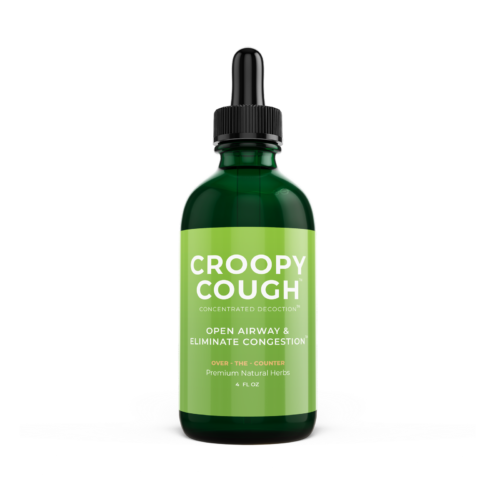
Croopy Cough Concentrated Decoction™
Minimum Order Quantity: 5 Login to view prices -
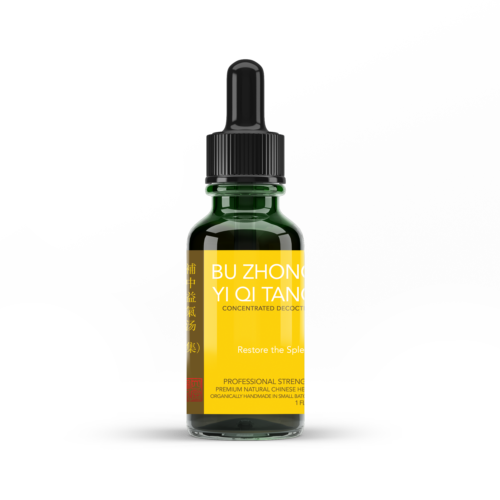
Bu Zhong Yi Qi Tang 補中益氣湯
Login to view prices -
Bao Ji Tang 保济湯
Login to view prices

Reviews
There are no reviews yet.