Enjoy Free US Domestic Shipping on Orders Over $400+

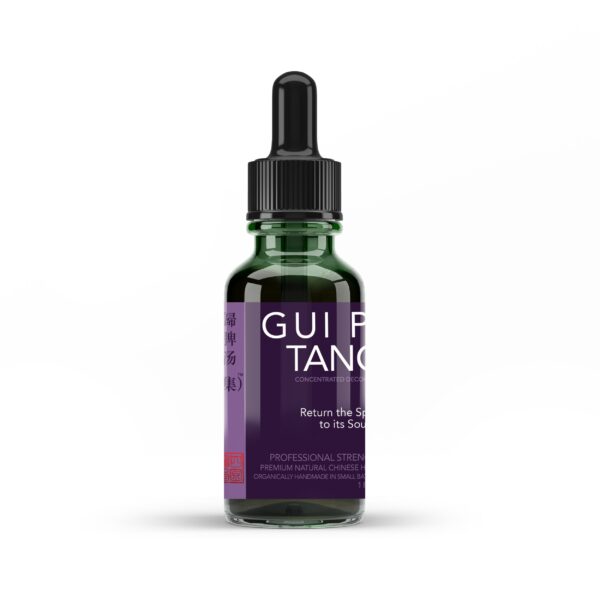
Gui Pi Tang 歸脾湯
Login to view prices
- ACM/CCM/TCM Global Status: Safe & Effective
Return the Spirit to its Source™
This is Si Jin Bao’s version of a classical formula that dates back to the 13th century. It is well known for addressing symptoms of chronic bleeding as well as digestive and emotional problems by strengthening the spleen and the heart.
Classical Formula · Song Dynasty · c. 1253
歸脾湯
Restore the Spleen Decoction
Return the Spirit to its Source™
Over Seven Centuries in Continuous Clinical Use
The Formula
Rebuild the Blood, Settle the Spirit
Guī Pí Tāng, the Restore the Spleen Decoction, is Si Jin Bao’s version of Yan Yong-he’s classical formula for a Heart and Spleen worn thin together. It rebuilds the Spleen so that the Blood is both made and held, and nourishes the Heart so that the spirit, no longer starved, can rest.
The Spleen is the source of the Blood, and the Heart is where the Blood settles the mind. Long worry and overwork drain the two at once. The Spleen falls behind and can no longer generate enough Blood or keep it inside its vessels, and the Heart, left short, grows restless. What results is a particular pairing: fatigue and poor appetite on the one hand, broken sleep, forgetfulness, and unease on the other, and often bleeding that will not stop.
Classical Foundation
From Yan Yong-he to the Ming
The formula was recorded by Yan Yong-he in the Jì Shēng Fāng (Formulas to Aid the Living) in 1253, during the Song. His original rebuilt the Spleen and quieted the Heart. Later physicians of the Ming refined it, adding Dāng Guī to deepen its nourishment of the Blood, and it is in that fuller form that it reaches the modern clinic.
A Note on the Name
歸脾 means to return to the Spleen. The name points to the method. Whatever the presenting sign, whether bleeding, sleeplessness, or exhaustion, the treatment turns back to the Spleen, the organ that makes the Blood on which the rest depends.
The Pattern
Heart-Spleen Dual Deficiency · 心脾兩虛
The pattern is a deficiency of Spleen Qi and Heart Blood together. From the Spleen side come fatigue, poor appetite, a sallow complexion, and bleeding the Qi can no longer contain, heavy or prolonged periods most of all. From the Heart side come palpitations, broken sleep, excessive dreaming, poor memory, and a low, tearful unease.
Clinical Indications
- Fatigue, poor appetite, nervous exhaustion
- Palpitations, insomnia, excessive dreams, poor memory
- Restlessness, tearfulness, dizziness
- Heavy or prolonged menstruation and other chronic bleeding
Classical tongue & pulse: a pale tongue with a thin white coating; a thin, weak pulse.
How It Works
Tonify the Spleen, Nourish the Heart
Rén Shēn, Huáng Qí, Bái Zhú, and Zhì Gān Cǎo rebuild the Spleen Qi, the engine that makes the Blood, while Fú Líng steadies the middle and calms the spirit. Dāng Guī and Lóng Yǎn Ròu nourish the Blood the Heart depends on, and Suān Zǎo Rén quiets the Heart so that sleep returns.
Mù Xiāng keeps the Qi moving so the rich, sweet tonics do not clog the middle, and a little Shēng Jiāng warms and harmonizes the Stomach so that all of it is digested. Tonify the Spleen and nourish the Heart, and the Blood is both made and settled.
Clinical Recognition
When to Reach for It
Reach for Guī Pí Tāng when a depleted Spleen and a restless Heart appear together: fatigue and poor appetite alongside palpitations, insomnia, and forgetfulness, or chronic bleeding, heavy menstruation above all, in someone worn down by worry, with a pale tongue and a thin, weak pulse.
Western conditions and terminology that are commonly associated with these TCM patterns:
- Anemia; chronic bleeding and allergic purpura
- Anxiety, depression, insomnia, nervous exhaustion, perimenopausal syndrome
- Postconcussion headache; myasthenia gravis
- Congestive heart failure, supraventricular tachycardia
- Colitis, peptic ulcers, cervicitis
歸脾
The Si Jin Bao Preparation
Si Jin Bao’s Guī Pí Tāng is a concentrated decoction prepared in small batches by traditional methods. It is vegan and alcohol-free, with no fillers, so the formula reaches the patient as the ten herbs and nothing else.
Materia Medica · 本草
歸脾湯
Guī Pí Tāng
Restore the Spleen Decoction
Return the Spirit to its Source™
Worry and overwork wear on two organs at once. The Spleen, which should build the Blood, falls behind, and the Heart, which the Blood should settle, grows restless: sleep breaks up, the memory slips, the periods run heavy and will not stop. Yan Yong-he’s formula turns back to the Spleen to rebuild what has been spent, and quiets the Heart with the Blood it makes. Below is each herb on its own terms: its nature, the channels it enters, its classical actions, and the part it plays here.
01
Herb 01
人參
Radix Ginseng
Ginseng Root
CategoryTonify Qi
Nature & FlavorSweet, Slightly Bitter; Slightly Warm
ChannelsSpleen · Lung · Heart
Actions
Powerfully tonifies the Original (Yuán) Qi; tonifies the Spleen and Lung; generates fluids and calms the spirit.
Indications
Spleen and Lung Qi deficiency with fatigue and poor appetite; deficiency of Qi with a restless spirit.
Classical Reference
Recorded in the Shén Nóng Běn Cǎo Jīng (神農本草經) as the foremost herb to tonify the Original Qi.
Role in this Formula
Leads the Qi tonification, rebuilding the Spleen that makes the Blood.
02
Herb 02
黃耆
Radix Astragali
Astragalus Root
CategoryTonify Qi · Raise the Yang
Nature & FlavorSweet; Slightly Warm
ChannelsSpleen · Lung
Actions
Tonifies the Qi and raises the yang; augments the protective (Wèi) Qi and secures the exterior; strengthens the Spleen’s hold on the Blood.
Indications
Spleen Qi deficiency with fatigue; Qi too weak to contain the Blood.
Classical Reference
Recorded in the Shén Nóng Běn Cǎo Jīng (神農本草經) as a principal herb to tonify the Qi and raise the yang.
Role in this Formula
With Rén Shēn, tonifies the Spleen Qi and helps it hold the Blood within its vessels.
03
Herb 03
白朮
Rhizoma Atractylodis Macrocephalae
White Atractylodes Rhizome
CategoryTonify Qi · Dry Dampness
Nature & FlavorBitter, Sweet; Warm
ChannelsSpleen · Stomach
Actions
Strengthens the Spleen and augments the Qi; dries Dampness; stabilizes the exterior.
Indications
Spleen deficiency with poor appetite, loose stool, and fatigue.
Classical Reference
Recorded in the Shén Nóng Běn Cǎo Jīng (神農本草經) as a principal herb to strengthen the Spleen.
Role in this Formula
Strengthens the Spleen alongside Rén Shēn and Huáng Qí, firming the source of the Blood.
04
Herb 04
炙甘草
Radix Glycyrrhizae Praeparata
Honey-Prepared Licorice Root
CategoryTonify Qi · Harmonize
Nature & FlavorSweet; Neutral (Warm when honey-prepared)
ChannelsHeart · Lung · Spleen · Stomach
Actions
Tonifies the Spleen and augments the Qi; harmonizes and moderates the other herbs in a formula.
Indications
Spleen qi deficiency; the need to harmonize a formula.
Classical Reference
Recorded in the Shén Nóng Běn Cǎo Jīng (神農本草經); honey-frying deepens its warming, Spleen-tonifying nature.
Role in this Formula
Tonifies the Spleen Qi and harmonizes the whole, binding the tonifying and the calming into one action.
05
Herb 05
茯苓
Poria
Poria (Hoelen)
CategoryDrain Dampness · Calm the Spirit
Nature & FlavorSweet, Bland; Neutral
ChannelsHeart · Spleen · Kidney
Actions
Promotes urination and drains Dampness; strengthens the Spleen; calms the Heart and quiets the spirit.
Indications
Spleen deficiency with Dampness; palpitations and restless sleep from an unsettled Heart.
Classical Reference
Recorded in the Shén Nóng Běn Cǎo Jīng (神農本草經), valued both to drain Damp and to settle the Heart.
Role in this Formula
Steadies the Spleen and calms the spirit, supporting the return of sleep.
06
Herb 06
當歸
Radix Angelicae Sinensis
Chinese Angelica Root
CategoryTonify Blood
Nature & FlavorSweet, Acrid; Warm
ChannelsLiver · Heart · Spleen
Actions
Tonifies and invigorates the Blood; regulates the menses.
Indications
Blood deficiency with a sallow complexion and palpitations; irregular menstruation.
Classical Reference
Recorded in the Shén Nóng Běn Cǎo Jīng (神農本草經); its addition by later physicians deepened the formula’s nourishment of the Blood.
Role in this Formula
Nourishes the Blood the Heart depends on, and strengthens the formula’s hold on the Blood.
07
Herb 07
龍眼肉
Arillus Longan
Longan Fruit Flesh
CategoryTonify Blood · Calm the Spirit
Nature & FlavorSweet; Warm
ChannelsHeart · Spleen
Actions
Tonifies the Blood and nourishes the Heart; calms the spirit; strengthens the Spleen.
Indications
Heart and Spleen deficiency with palpitations, forgetfulness, and broken sleep.
Classical Reference
A sweet, gentle tonic of the Heart and Spleen, valued in the classical literature for nourishing the Blood without burdening the middle.
Role in this Formula
Nourishes the Heart Blood and settles the spirit, a mild tonic well suited to a depleted patient.
08
Herb 08
酸棗仁
Semen Ziziphi Spinosae
Sour Jujube Seed
CategoryCalm the Spirit · Nourish the Heart
Nature & FlavorSweet, Sour; Neutral
ChannelsHeart · Liver · Gallbladder · Spleen
Actions
Nourishes the Heart and Liver Blood and calms the spirit; quiets restlessness; arrests spontaneous sweating.
Indications
Restlessness, irritability, and insomnia from deficiency of Heart and Liver Blood.
Classical Reference
Recorded in the Shén Nóng Běn Cǎo Jīng (神農本草經), long the principal seed for quieting a restless Heart.
Role in this Formula
Quiets the Heart and restores sleep, working with Lóng Yǎn Ròu to settle the spirit.
09
Herb 09
木香
Radix Aucklandiae
Costus Root
CategoryRegulate Qi
Nature & FlavorAcrid, Bitter; Warm
ChannelsSpleen · Stomach · Large Intestine · Gallbladder
Actions
Regulates and moves the Qi, relieves pain, and awakens the Spleen.
Indications
Qi stagnation of the Spleen and Stomach with distension and reduced appetite.
Classical Reference
Documented in the classical materia medica as a principal herb to move the Qi of the middle.
Role in this Formula
Keeps the Qi moving so the rich, sweet tonics do not clog the middle.
10
Herb 10
生薑
Rhizoma Zingiberis Recens
Fresh Ginger Rhizome
CategoryRelease the Exterior (Warm)
Nature & FlavorAcrid; Warm
ChannelsLung · Spleen · Stomach
Actions
Warms the middle and harmonizes the Stomach; stops nausea; harmonizes a formula.
Indications
A cold or weak Stomach with nausea; the need to harmonize rich tonics.
Classical Reference
Recorded in the Shén Nóng Běn Cǎo Jīng (神農本草經), a long-standing harmonizing herb of the middle.
Role in this Formula
Warms and harmonizes the Stomach so that the whole formula is comfortably digested.
11
Herb 11
蔬菜甘油
Glycerinum Vegetabile
Vegetable Glycerin
Nature (性)
Neutral · 平 Píng
Taste (味)
Sweet · 甘 Gān
Category
Excipient · Carrier
Traditional Actions (功效)
Harmonizes and guides the other medicinals to their target tissues. It is analogous to synovial fluid, providing a medium for smooth movement and deep delivery throughout the decoction.
Role in this Formula
Excipient function: Dissolves and stabilizes the botanical constituents of the formula, ensuring consistent delivery in decoction form. Mucosal hydration: By attracting and retaining water, glycerin keeps the oral and digestive mucosa moist. Patient tolerance: Its naturally sweet, neutral profile makes the formula palatable for children and adults alike.
Modern Research
International Journal of Pharmaceutics · 2023
Glycerin serves as a co-solvent and humectant in oral liquid formulations, enhancing solubility of poorly water-soluble compounds, stabilizing active ingredients, and improving mucosal hydration.
Journal of Clinical Pharmacology · 2018
Oral glycerol has been widely used as an osmotic agent. Doses of 1–1.5 g/kg are safe and well-tolerated; its mechanism involves osmotic fluid redistribution between compartments.
Clinical Oral Investigations · 2022
Glycerin-containing oral moisturizers significantly improved xerostomia symptoms compared with water-based controls, enhancing mucosal hydration and prolonging moisture retention in the oral cavity.
Clinical Translation
Gān Yóu guides the physical delivery of the formula, ensuring the preparation reaches its target tissues and is tolerated long enough to do its work. It is a naturally sweet, neutral carrier that makes the decoction palatable for adults and children alike.
12
Herb 12
蒸餾水
Aqua Destillata
Distilled Water
Nature (性)
Neutral · 平 Píng
Taste (味)
Tasteless
Category
Vehicle · Neutral Carrier
Traditional Actions (功效)
Not a classical herb in its own right. It functions as a neutral carrier, a pharmaceutically pure vehicle that allows the active constituents of the classical herbs in the formula to extract, stabilize, and deliver without interference.
Role in this Formula
Biomedical role: A pharmaceutically pure solvent, ensuring consistent extraction and delivery of active compounds without introducing mineral ions, microbial contaminants, or chemical interference. Clinical relevance: Acts as a safe vehicle, analogous to saline in biomedicine, so that every dose of the formula performs identically, from the first bottle to the last.
Modern Research
Pharmacopeial Standard · Herbal Decoction Stability
Distilled water ensures stability, reproducibility, and safety in herbal decoction preparations by eliminating mineral ions and microbial contaminants that would otherwise compromise extraction consistency and shelf life.
Clinical Pharmacology · Oral Solution Vehicles
Distilled water is recognized in clinical pharmacology as the neutral carrier of choice for both intravenous and oral solutions, chosen specifically for its non-reactive profile with active ingredients.
Clinical Translation
Li Shi-zhen devoted an entire section of the Ben Cao Gang Mu (本草綱目) to the classification of waters, recognizing that the water in which a formula is prepared shapes the clinical outcome. SJB honors this principle by using pharmaceutically distilled water as the neutral vehicle for every decoction.
歸脾
Make the Blood, and Hold It
Seven centuries ago Yan Yong-he saw that a bleeding, a sleeplessness, and an exhaustion could share one root, a Spleen and a Heart worn thin together. His answer was to turn back to the Spleen, rebuild the Blood at its source, and quiet the Heart with what the Spleen makes.
Dosage & Preparation · 用法用量
How to Prepare & Dose
Si Jin Bao Concentrated Decoctions™ are activated in hot water, steeped briefly, and taken warm. Follow the four steps below, then refer to the age-appropriate dosing grid.
Preparation
The Four Steps
-
Step 01ShakeShake the bottle well before each use.
-
Step 02Add Hot WaterAdd the age-appropriate dosage into 1 oz of hot water, as you would for tea.
-
Step 03SteepCover and steep for 5 minutes, then allow to cool to a warm, drinkable temperature.
-
Step 04DrinkDrink warm, twice daily or as directed by your practitioner.
For best results: take on an empty stomach — approximately 30 minutes before or after food or drink.
Dosage
By Age Group
Newborn
3drops
Twice daily
1 Year
7drops
Twice daily
2–6 Years
10drops
Twice daily
7 Years to Adult
20drops
Twice daily
Treatment Protocols
Suggested Clinical Course
Acute
10 Days
Then Reevaluate
Subacute
30 Days
Then Reevaluate
Chronic
90 Days
Then Reevaluate
Bottle Longevity
11½ days
at standard adult dosage
Research · 研究
歸脾湯
Guī Pí Tāng
The Modern Evidence
Twelve Studies on Gui Pi Tang and Its Herbs
A bleeding that will not stop, a sleep that will not come, an exhaustion that rest does not touch: in the Heart-Spleen pattern these are not three complaints but one, a Spleen too weak to make and hold the Blood and a Heart left restless without it. The modern research reads the formula along both of those lines. Two studies look at Guī Pí whole, in depression and in anemia, and the rest take up its ten herbs one at a time. What follows is that record.
01
Study 01
歸脾湯
Meta-Analysis (9 RCTs)
Chin. J. Integr. Med. · 2017
Design
Meta-analysis of 9 RCTs, 620 patients
Intervention
Formula plus an antidepressant vs the antidepressant alone
Relevance
Direct, the restless-Heart side of the pattern
Background
A Heart deprived of Blood grows low and unsettled. This review pooled randomized trials of the formula as an adjunct in depression.
Findings
Added to standard antidepressant therapy, the formula was associated with a significantly greater improvement in depression scores than antidepressant therapy alone.
Relevance to Gui Pi Tang
The formula, in its classical composition, was studied for the low mood and unease that Heart Blood deficiency produces.
Citation
Is the Chinese medicinal formula Guipi Decoction effective as an adjunctive treatment for depression? A meta-analysis of randomized controlled trials. Chin. J. Integr. Med. 2017;23(5):386-395. PMID: 26453561.
02
Study 02
歸脾湯
Systematic Review & Meta-Analysis (13 RCTs)
Medicine (Baltimore) · 2025
Design
Meta-analysis of 13 RCTs, 954 patients
Intervention
Formula as adjuvant therapy for anemia
Relevance
Direct, the depleted-Blood side of the pattern
Background
When the Spleen cannot make enough Blood, the classical picture is one of Blood deficiency, which modern medicine reads as anemia. This review pooled randomized trials of the formula as an adjuvant treatment.
Findings
Added to standard care, the formula was associated with significant improvements in hemoglobin, red blood cell count, and serum iron compared with standard care alone.
Relevance to Gui Pi Tang
A second reading of the same formula, this time on the Blood deficiency it is built to rebuild.
Citation
Systematic review and meta-analysis of Guipi Decoction in the treatment of anemia. Medicine (Baltimore). 2025. PMCID: PMC12303479.
03
Study 03
人參
Systematic Review
Front. Pharmacol. · 2020
Design
Clinical and preclinical systematic review
Active Compounds
Ginsenosides, polysaccharides
Relevance
Direct, tonifies the Qi
Background
Rén Shēn is the foremost herb to tonify the Original Qi. This review gathered its clinical and preclinical evidence for fatigue.
Findings
Ginseng and its ginsenosides are documented for anti-fatigue activity, supporting energy metabolism and reducing markers of exhaustion.
Relevance to Gui Pi Tang
Rén Shēn leads the Qi tonification, rebuilding the Spleen that makes the Blood.
Citation
Clinical and Preclinical Systematic Review of Panax ginseng C. A. Mey and Its Compounds for Fatigue. Front. Pharmacol. 2020;11:1031. PMCID: PMC7379339.
04
Study 04
黃耆
Pharmacological Review
Front. Pharmacol. · 2020
Design
Pharmacological review
Active Compounds
Astragalus polysaccharides (APS), flavonoids, saponins
Relevance
Direct, tonifies the Qi and holds the Blood
Background
Huáng Qí tonifies the Qi and raises the yang. This review summarized the pharmacology of its principal polysaccharide.
Findings
Astragalus polysaccharides are documented for immunoregulatory, hematopoietic, and anti-fatigue activity.
Relevance to Gui Pi Tang
With Rén Shēn, Huáng Qí tonifies the Spleen Qi and helps it hold the Blood within its vessels.
Citation
A Review of the Pharmacological Action of Astragalus Polysaccharide. Front. Pharmacol. 2020;11:349. PMCID: PMC7105737.
05
Study 05
白朮
Ethnopharmacology & Pharmacology Review
Front. Pharmacol. · 2021
Design
Comprehensive review
Active Compounds
Atractylenolides, polysaccharides
Relevance
Direct, strengthens the Spleen
Background
Bái Zhú strengthens the Spleen and dries Dampness. This review compiled its chemistry and pharmacology.
Findings
Its atractylenolides and polysaccharides are documented for regulating gastrointestinal function and for anti-inflammatory and immunoregulatory activity.
Relevance to Gui Pi Tang
Bái Zhú strengthens the Spleen alongside Rén Shēn and Huáng Qí, firming the source of the Blood.
Citation
A Review of the Ethnopharmacology, Phytochemistry, and Pharmacology of the Dried Rhizome of Atractylodes macrocephala. Front. Pharmacol. 2021;12:727154. PMCID: PMC8595830.
06
Study 06
甘草
Phytochemical / Pharmacological Review
Phytother. Res. · 2018
Design
Phytochemical / pharmacological review
Active Compounds
Glycyrrhizin, glycyrrhetinic acid
Relevance
Supporting, tonifies and harmonizes
Background
Gān Cǎo, here honey-fried, tonifies the Spleen and harmonizes a formula. This review summarized the chemistry and pharmacology of licorice.
Findings
Glycyrrhizin and glycyrrhetinic acid are documented for anti-inflammatory and immunomodulatory activity, with wide use across formulas to moderate and harmonize.
Relevance to Gui Pi Tang
Zhì Gān Cǎo tonifies the Spleen Qi and harmonizes the whole, binding the tonifying and calming actions into one.
Citation
Liquorice (Glycyrrhiza glabra): A phytochemical and pharmacological review. Phytother. Res. 2018. PMCID: PMC7167772.
07
Study 07
茯苓
Multidimensional Review
J. Ethnopharmacol. · 2025
Design
Comprehensive review
Active Compounds
Triterpenes (pachymic, poricoic acids), polysaccharides
Relevance
Direct, strengthens the Spleen and calms the spirit
Background
Fú Líng drains Dampness, strengthens the Spleen, and calms the Heart. This review compiled its chemistry and pharmacology.
Findings
Its triterpenes and polysaccharides are documented for diuretic, spleen-supporting, and sedative activity.
Relevance to Gui Pi Tang
Fú Líng steadies the Spleen and calms the spirit, supporting the return of sleep.
Citation
A multidimensional perspective on Poria cocos: ethnopharmacology, phytochemistry, and pharmacology. J. Ethnopharmacol. 2025. PMID: 40280371.
08
Study 08
當歸
Experimental Study
Front. Pharmacol. · 2024
Design
Experimental / potency study
Active Compounds
Polysaccharides, ferulic acid, ligustilide
Relevance
Direct, nourishes the Blood
Background
Dāng Guī is the classical herb to tonify and move the Blood. This study examined its blood-enriching polysaccharides.
Findings
Angelica sinensis polysaccharides are documented for hematopoietic, blood-enriching activity, promoting the production of red blood cells.
Relevance to Gui Pi Tang
Dāng Guī nourishes the Blood the Heart depends on, and strengthens the formula’s hold on the Blood.
Citation
Structural analysis and blood-enriching effects comparison based on biological potency of Angelica sinensis polysaccharides. Front. Pharmacol. 2024;15:1405342. PMCID: PMC11215113.
09
Study 09
龍眼肉
Experimental Study
J. Ethnopharmacol. · 2025
Design
Experimental study (AD mouse model, cell work)
Active Compounds
Longan Aril polysaccharides
Relevance
Direct, nourishes the Heart and Spleen, benefits memory
Background
Lóng Yǎn Ròu nourishes the Heart and Spleen, the Blood, and the mind, a classical indication for forgetfulness. This study tested its polysaccharides on cognitive impairment.
Findings
Longan Aril polysaccharides ameliorated cognitive impairment in the model, acting through restoration of the immune function of microglia.
Relevance to Gui Pi Tang
Lóng Yǎn Ròu nourishes the Heart Blood and settles the spirit, a mild tonic well suited to a depleted patient.
Citation
Longan Aril polysaccharides ameliorate cognitive impairment in AD mice via restoration of the immune phagocytosis of microglia. J. Ethnopharmacol. 2025. PMID: 39923958.
10
Study 10
酸棗仁
Clinical Evidence & Mechanism Review
Front. Pharmacol. · 2018
Design
Clinical evidence and mechanism review
Active Compounds
Jujuboside A, spinosin, sanjoinine A
Relevance
Direct, quiets the Heart and restores sleep
Background
Suān Zǎo Rén is the principal seed for a restless Heart and insomnia. This review compiled its clinical evidence and mechanisms.
Findings
Its sedative and hypnotic action is documented as mediated primarily through the GABAergic and serotonergic systems.
Relevance to Gui Pi Tang
Suān Zǎo Rén quiets the Heart and restores sleep, working with Lóng Yǎn Ròu to settle the spirit.
Citation
Suanzaoren Formulae for Insomnia: Updated Clinical Evidence and Possible Mechanisms. Front. Pharmacol. 2018;9:76. PMCID: PMC5811769.
11
Study 11
木香
Systematic Review
J. Ethnopharmacol. · 2021
Design
Systematic review
Active Compounds
Costunolide, dehydrocostus lactone
Relevance
Direct, regulates the Qi of the middle
Background
Mù Xiāng is a principal herb to move the Qi of the middle and relieve stagnation. This review compiled its ethnopharmacology and pharmacology.
Findings
Its sesquiterpene lactones, costunolide and dehydrocostus lactone, are documented for regulating gastrointestinal motility and for anti-inflammatory activity.
Relevance to Gui Pi Tang
Mù Xiāng keeps the Qi moving so the rich, sweet tonics do not clog the middle.
Citation
Aucklandiae Radix and Vladimiriae Radix: A systematic review in ethnopharmacology, phytochemistry and pharmacology. J. Ethnopharmacol. 2021.
12
Study 12
生薑
Review
Eur. Rev. Med. Pharmacol. Sci. · 2015
Design
Review
Active Compounds
Gingerols, shogaols
Relevance
Supporting, warms and harmonizes the Stomach
Background
Shēng Jiāng warms and harmonizes the Stomach and stops nausea. This review examined ginger for indigestion, nausea, and vomiting.
Findings
Ginger extracts are documented to accelerate gastric emptying and stimulate antral contractions, effects attributed to its gingerols and shogaols.
Relevance to Gui Pi Tang
Shēng Jiāng warms and harmonizes the Stomach so that the whole formula is comfortably digested.
Citation
Can nausea and vomiting be treated with ginger extract? Eur. Rev. Med. Pharmacol. Sci. 2015;19(7):1291-1296. PMID: 25912592.
Mechanism Notes
How the formula’s herbs work at a biochemical level.
Rén Shēn
Ginsenosides and polysaccharides documented for anti-fatigue activity and support of energy metabolism (PMC7379339, 2020).
Huáng Qí
Astragalus polysaccharides documented for immunoregulatory, hematopoietic, and anti-fatigue activity (PMC7105737, 2020).
Bái Zhú
Atractylenolides and polysaccharides documented for regulating gastrointestinal function and for anti-inflammatory activity (PMC8595830, 2021).
Zhì Gān Cǎo
Glycyrrhizin and glycyrrhetinic acid documented for anti-inflammatory and immunomodulatory activity, harmonizing the formula (PMC7167772, 2018).
Fú Líng
Triterpenes (pachymic, poricoic acids) and polysaccharides documented for diuretic, spleen-supporting, and sedative activity (PMID 40280371, 2025).
Dāng Guī
Polysaccharides and ferulic acid documented for hematopoietic, blood-enriching activity (PMC11215113, 2024).
Lóng Yǎn Ròu
Longan Aril polysaccharides documented for ameliorating cognitive impairment through restoration of microglial immune function (PMID 39923958, 2025).
Suān Zǎo Rén
Jujuboside A and spinosin documented for sedative-hypnotic activity, mediated through the GABAergic and serotonergic systems (PMC5811769, 2018).
Mù Xiāng
Costunolide and dehydrocostus lactone documented for regulating gastrointestinal motility and for anti-inflammatory activity (J Ethnopharmacol 2021).
Shēng Jiāng
Gingerols and shogaols documented for accelerating gastric emptying and stimulating antral contractions (PMID 25912592, 2015).
Western Terminology
Western conditions and terminology commonly associated with these TCM patterns:
Anemia · Colitis · Anxiety · Myasthenia Gravis · Postconcussion Headache · Allergic Purpura · Congestive Heart Failure · Supraventricular Tachycardia · Cervicitis · Peptic Ulcers · Depression · Perimenopausal Syndrome · Insomnia
歸脾
Make the Blood, and Hold It
Studied whole, the formula has been read into the modern clinic along the two lines its pattern predicts: the low, unsettled mood of a Heart short of Blood, and the anemia of a Spleen that can no longer make enough. Beneath it, each of the ten herbs has been examined on its own, from Ginseng and Astragalus rebuilding the Qi to the Longan and Jujube seed that settle the spirit. Seven centuries on, the mechanisms now carry names for the single instruction Yan Yong-he set down: return to the Spleen, and the Blood is both made and held.
Related products
-

Da Chang Tang 大腸湯
Login to view prices -
Ban Xia Xie Xin Tang 半夏瀉心湯
Login to view prices -
A.I.R. 停止咳嗽免疫支持湯(集)
Minimum Order Quantity: 5 Login to view prices -
Bai He Gu Jin Tang 百合固金湯
Login to view prices

Reviews
There are no reviews yet.